Extendable Dining Tables: Are They Worth It?
Estimated reading time: 7 minutes
Extendable dining tables offer a useful compromise between the space you need every day and the space you occasionally need for guests. A smaller table preserves room for daily movement. An extension creates a larger dining surface when the occasion calls for it.
However, flexibility is only valuable when it is practical to use. A table that expands easily but blocks the kitchen entrance may not improve your dining area. Equally, a generously sized fixed table can occupy space that would be more useful during the rest of the week.
The question is whether two table sizes serve your household better than one. Here is how to assess that decision before buying.
Start with how you actually use your dining area
Think about an ordinary week before planning for a special occasion. How many people eat together? Does someone work at the table during the day? Would a permanently larger surface be useful, or would it mostly hold things waiting to be put away?
An extendable table makes particular sense when your everyday seating needs are modest but you regularly invite people over. It allows the dining area to respond to those different patterns of use.
The balance changes if you need the larger configuration most days. In that case, compare it with a fixed table of a similar size. The extension may still be useful, but its smaller setting offers less benefit if you rarely use it.
For a broader explanation of room proportions, see our guide to choosing the right dining table for your space.
The everyday-use test
If you bought the table today, would you leave it closed or extended tomorrow? Your answer helps identify which configuration needs to work best, rather than choosing around an imagined version of your home.
Measure extendable dining tables in both configurations
The closed dimensions tell you only part of the story. Map out the extended tabletop as well, then position chairs around that outline.
Allow room for people to pull their chairs out and stand up. Where someone needs to walk behind a seated diner, assess that route separately. A gap that works beside an empty chair may feel very different once someone is sitting in it.
Temporary changes can be reasonable when entertaining. Moving a lightweight occasional chair for a dinner party is different from shifting a heavy sideboard every time you want to open the table. Decide which adjustments you would realistically make.
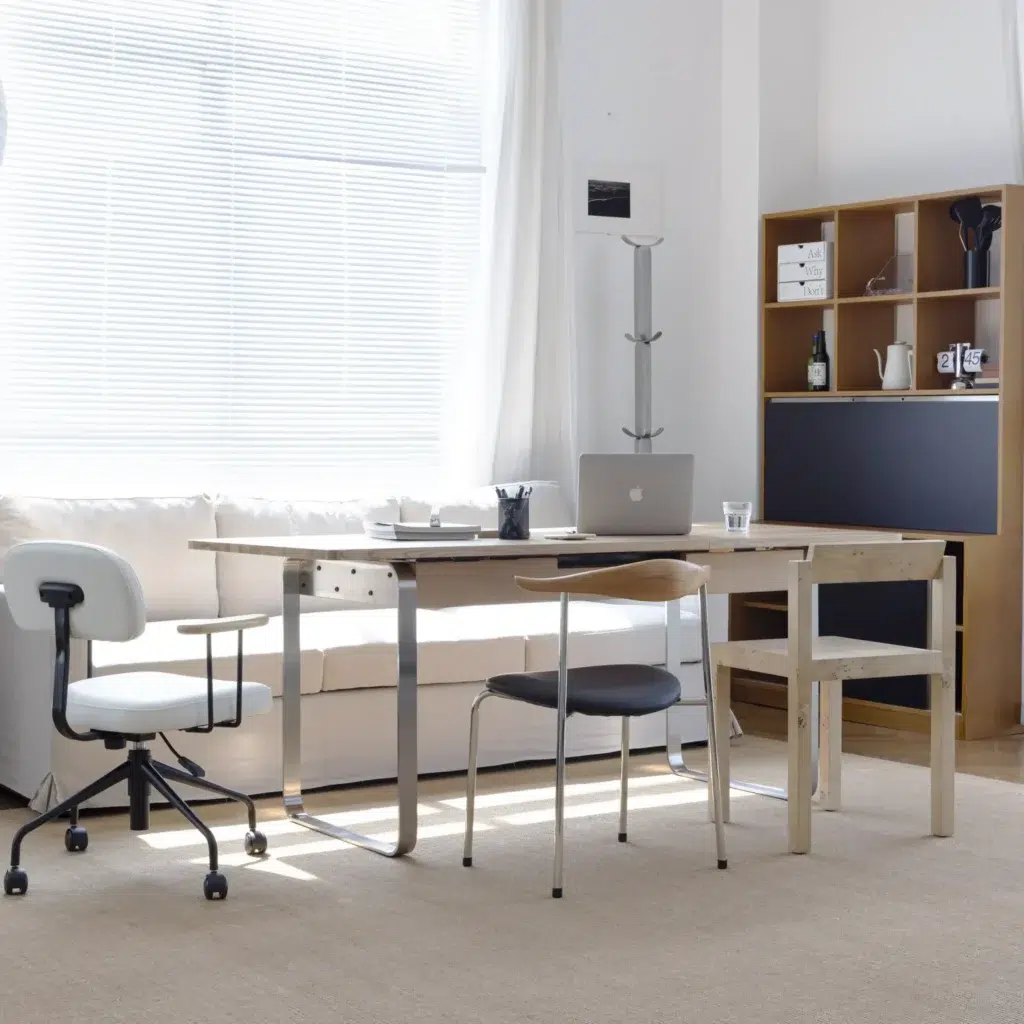


A practical example: the BAUHAUS
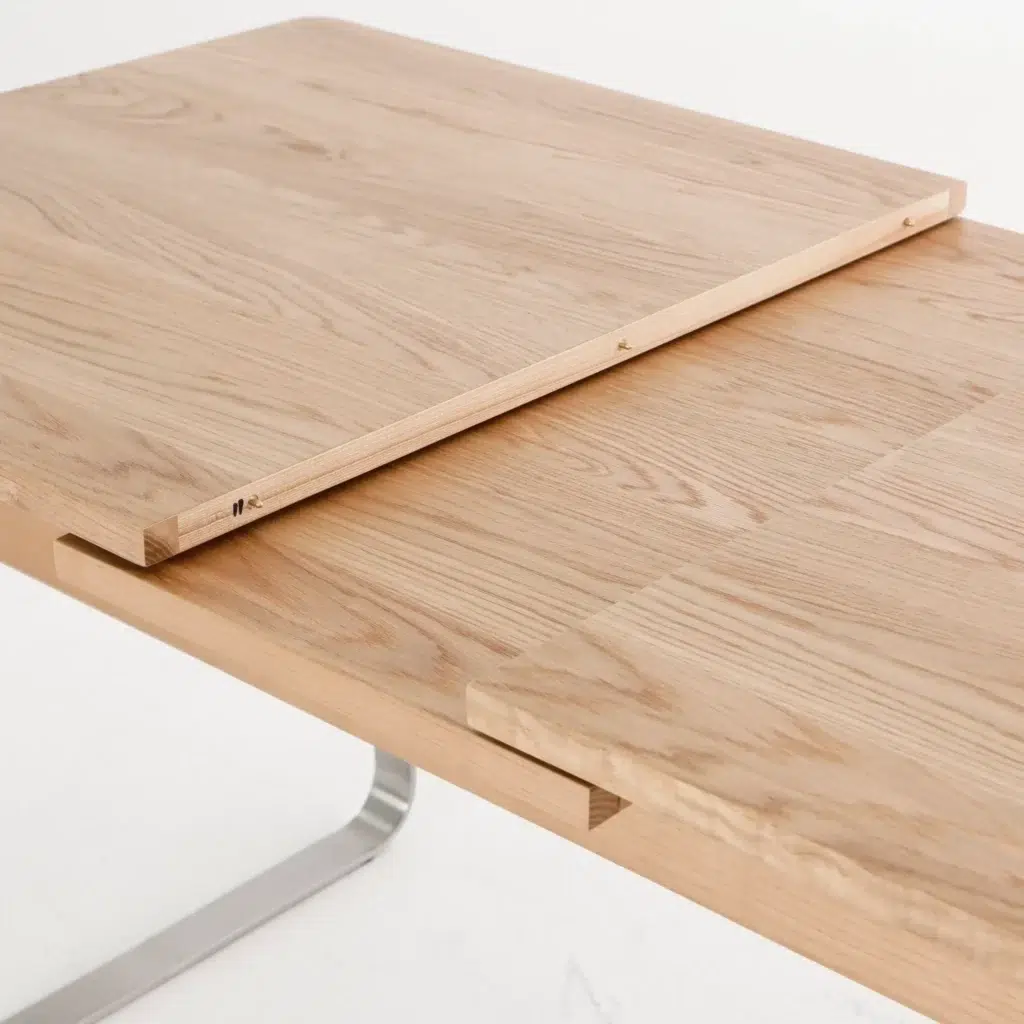
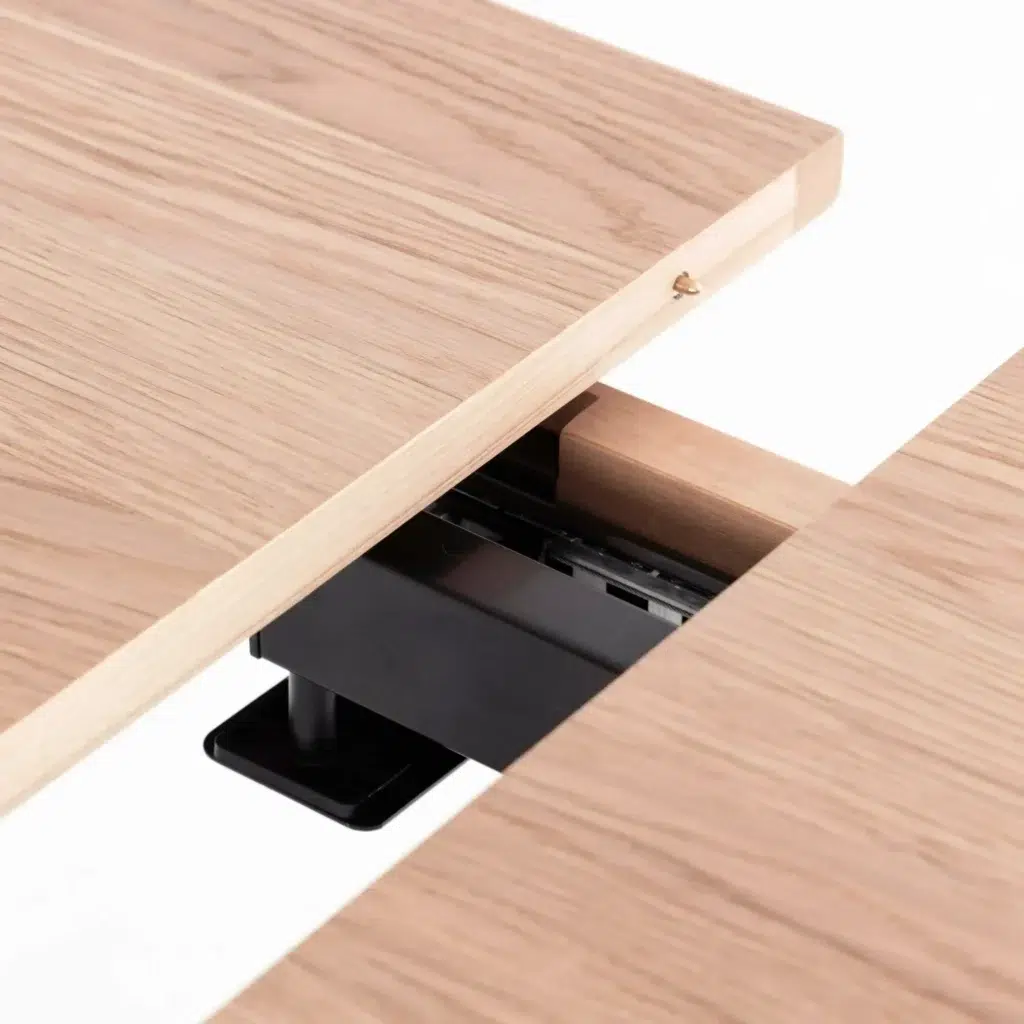
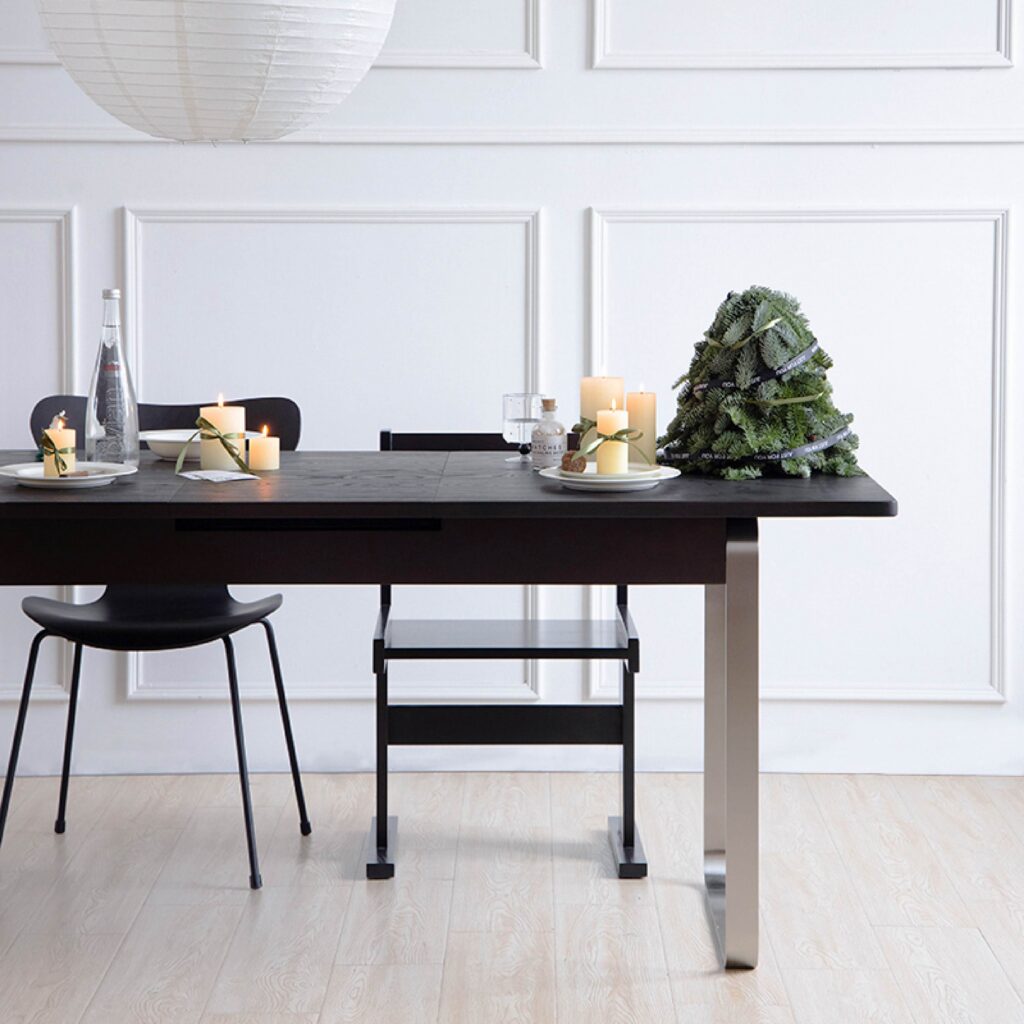
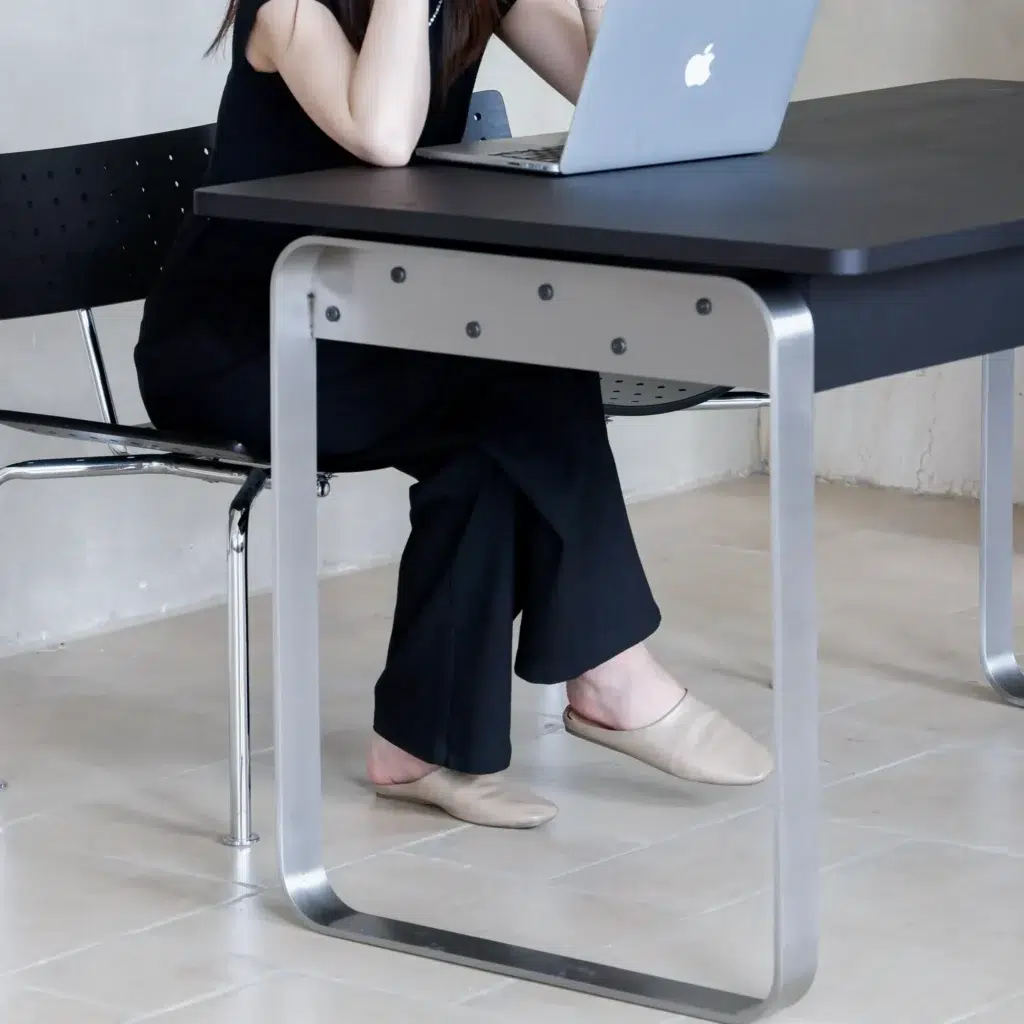
The BAUHAUS Extendable Dining Table (pictured above) extends from 1,400 mm to 1,800 mm. Its closed dimensions are 1,400 × 800 × 750 mm.
That adds 400 mm of tabletop length. Before ordering, mark both lengths on your floor and check how the longer setting affects access around each end. The extra surface is useful only if the surrounding room can accommodate its use.
Try the room at full size
Use painter’s tape to mark the extended footprint, testing it first on your flooring. Place your existing chairs around it and sit down. Open nearby cupboard doors and walk your usual route through the room. This reveals more than measuring the tabletop alone.
Compare how the extension works
“Extendable” describes a function, not a single mechanism. Designs vary in how the tabletop opens and where the additional section is kept.
Some use a separate leaf that you insert when required. Others store the extension within the table, including folding designs often described as butterfly leaves. Ask for a demonstration of the specific model rather than assuming that all extension systems operate alike.
Consider who will open the table. If you expect to do it alone, confirm whether the manufacturer intends one-person operation. Check whether you need to clear the entire surface first and how the extended position is secured.
The aim is to understand the effort involved. A mechanism that suits occasional celebrations may feel inconvenient if you plan to change the table size several times a week.
Extra tabletop length does not guarantee extra seats
A seating recommendation is a useful starting point, but the fit also depends on your chairs and the position of the table base.
Wide upholstered chairs occupy more space than narrow frames. Armrests may meet the underside of the tabletop, while table legs can interrupt the positions where you would otherwise place a seat. Check the usable space between supports in both configurations.
Think about the meal as well. A table arranged for individual plates may feel crowded once shared dishes occupy the centre. Assess the setting you actually plan to use, including the width of your chosen dining chairs.
Comfort deserves equal attention. Our article on what makes a dining chair comfortable can help you assess seating beyond its appearance.
Plan where the extra chairs will live
The table may become smaller after guests leave, but the additional chairs still need a place in your home.
You might use them elsewhere between gatherings, provided they suit that purpose. Alternatively, consider seating specifically designed to stack or fold. Confirm those features on the individual product rather than judging from its shape.
Include this storage question in your comparison from the beginning. An extension table offers less of a space advantage if spare chairs permanently crowd the room around it.

Consider construction and care alongside flexibility
An extension mechanism is one part of the table. The surface finish and supporting structure also need to suit everyday use.
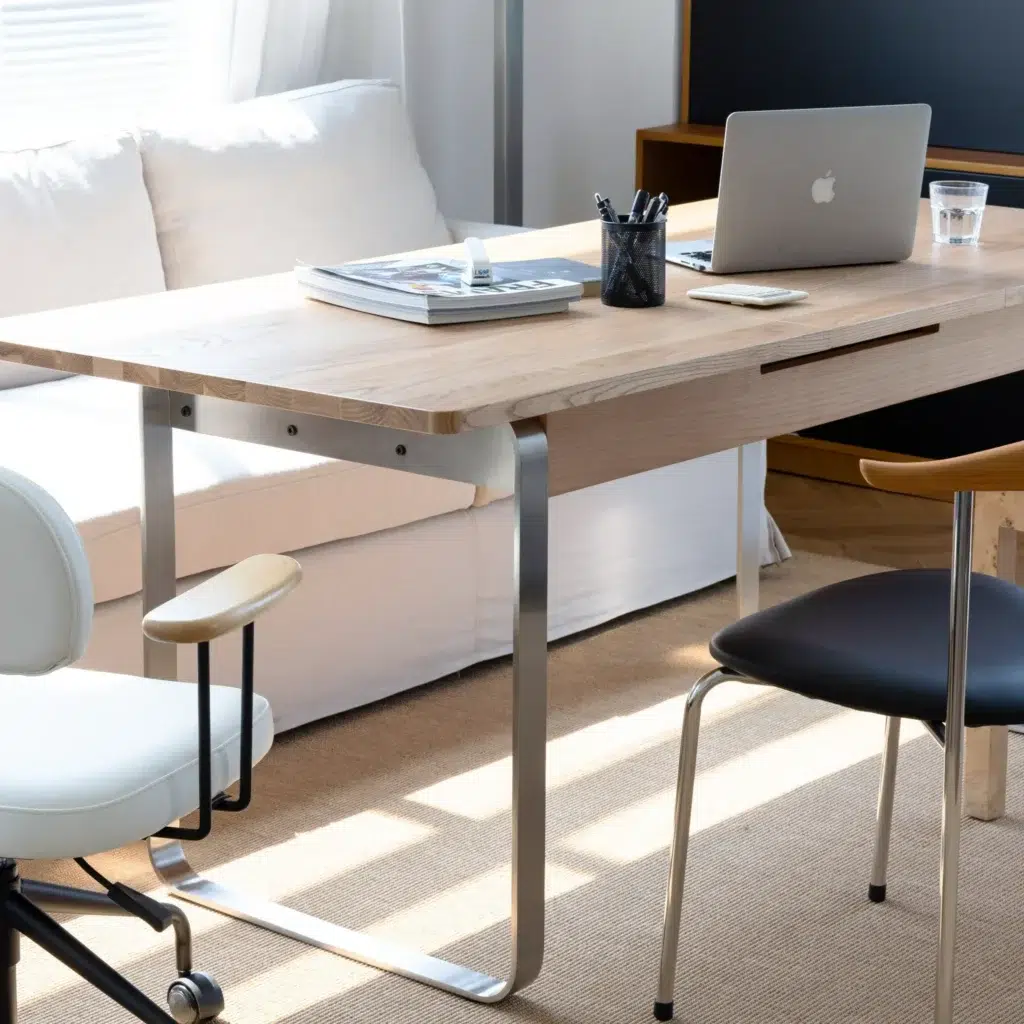
Ask what the tabletop is made from beneath its visible surface. For example, the BAUHAUS combines white oak veneer with finger-jointed rubberwood boards and a stainless steel base. At benssur, we share construction details to help you make an informed decision about the piece you are considering.
With any extendable design, ask how to care for the joins and any removable sections. Follow the product instructions when opening or closing it, and investigate unexpected resistance rather than forcing the mechanism.
Are extendable dining tables worth the investment?
They can be worth it when you will use both sizes and the larger configuration works comfortably in your room. Their value comes from making a space useful in different circumstances.
Compare the total setup with a fixed alternative, including any additional seating you need. Avoid judging value by maximum size alone. A table that technically accommodates a gathering may still be inconvenient if using it requires substantial rearrangement.
|
An extendable table may suit you when… |
A fixed table may suit you when… |
|---|---|
|
You prefer a smaller footprint for everyday meals. |
You use the larger surface most days. |
|
Your guest numbers vary enough to use both settings. |
Your usual seating needs stay consistent. |
|
You have room for the extended table and occupied chairs. |
One permanent size already works comfortably. |
|
The extension process and spare seating fit your routine. |
You prefer a table without an extension mechanism. |
Explore dining furniture for your home
Browse our dining tables to compare dimensions and construction, or explore the wider dining furniture collection to plan your table and seating together.
If you are considering the BAUHAUS Extendable Dining Table, check its product page for current specifications and availability. Individual product pages indicate whether a piece is available to view in our showroom, helping you plan a visit around the furniture you want to see.