How to Choose Dining Chairs for a Round Table
Estimated reading time: 6 minutes
A round dining table creates an inviting place to gather, with everyone facing towards the centre. Choosing the right chairs helps that arrangement feel comfortable and balanced, whether you are furnishing a compact apartment or a generous dining room.
The best dining chairs for a round table suit its proportions and leave enough room for people to sit naturally. Their shape and finish also influence how the whole setting feels.
Before choosing a set, start with the table you have and how you use it each day.
Start with your table’s diameter and base
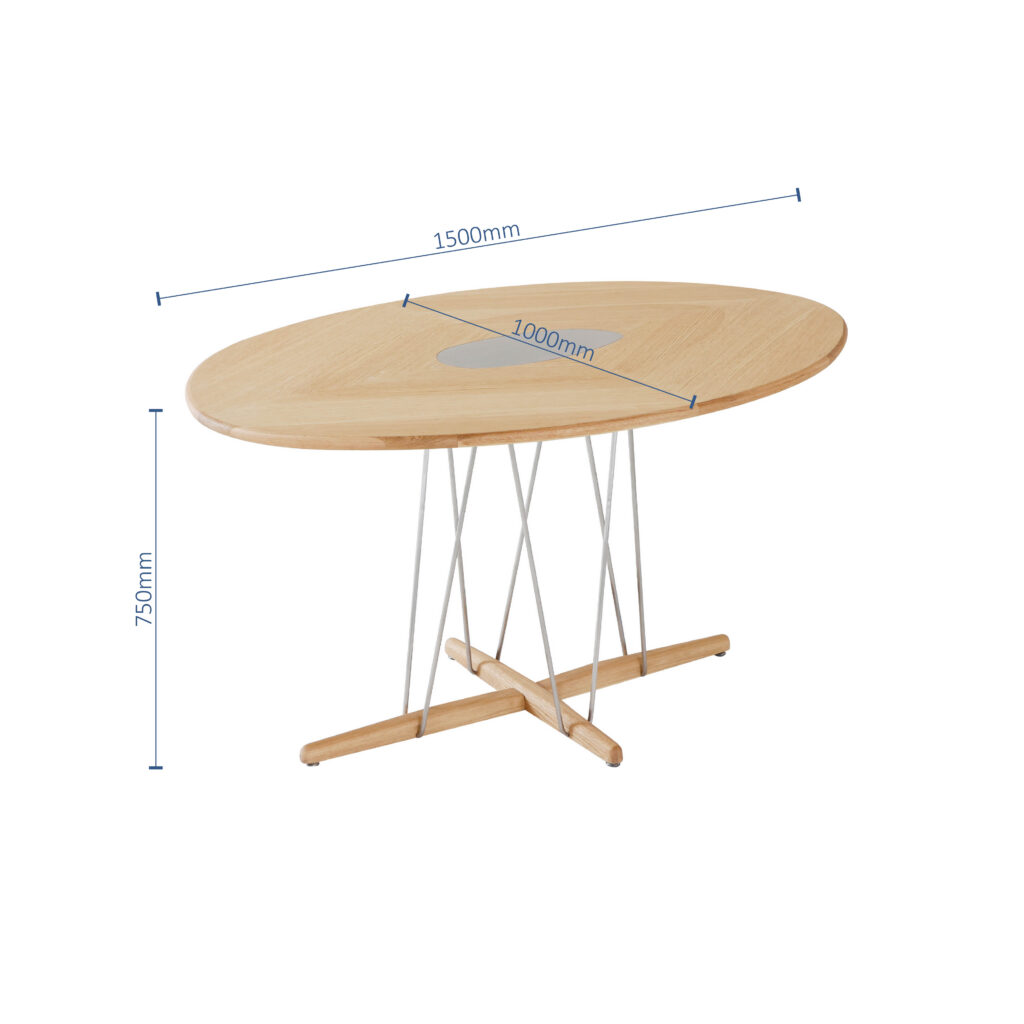
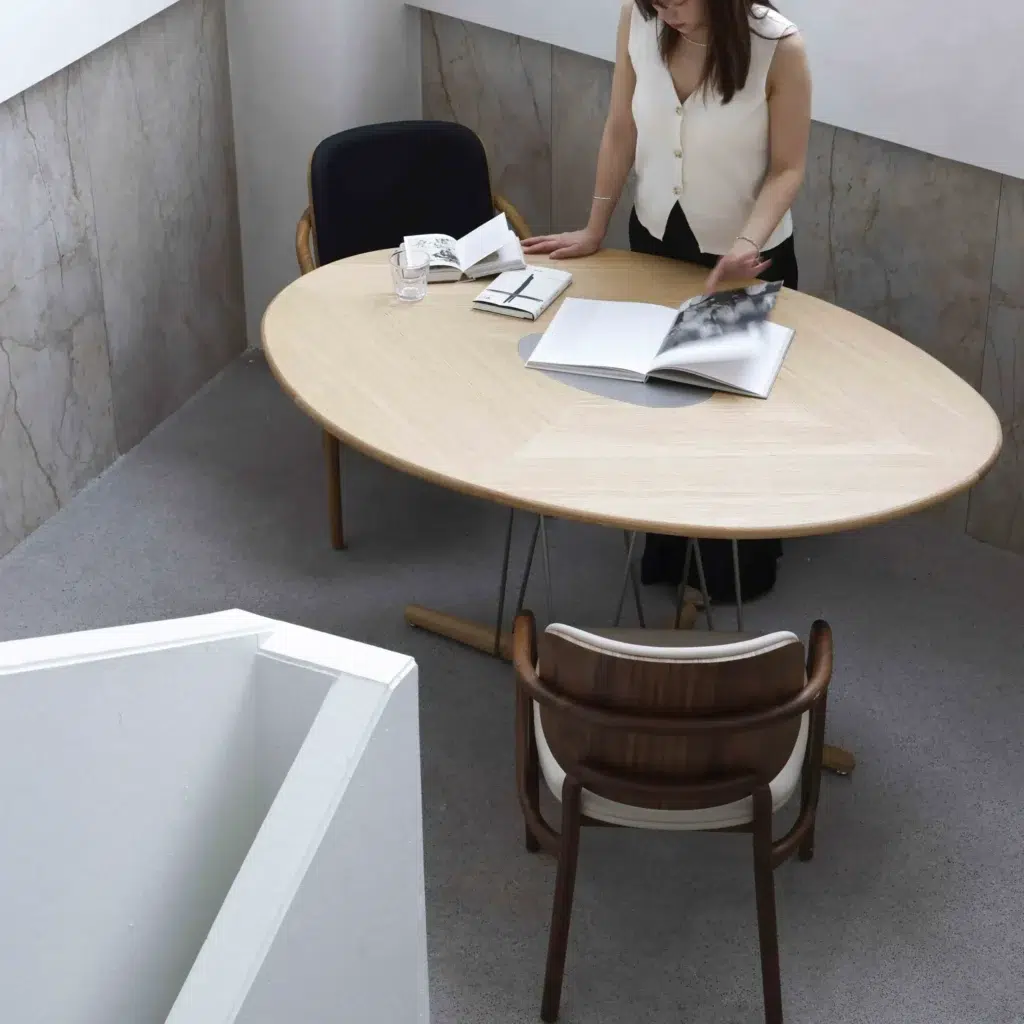
Measure the diameter of your tabletop, then look underneath. A central pedestal and a table with separate legs can offer very different seating arrangements, even when their tops are the same size.
A pedestal may give you more flexibility in positioning chairs, but a wide base can still restrict foot space. Separate legs can interrupt chair placement or stop seats from sliding in as far as you expect.
Check where each chair will sit in relation to the base. If you are shopping online, compare the table’s measurements with the chair’s full width and depth. A seat-width measurement alone may not include projecting arms or angled legs.
For advice on planning the whole dining area, read our Dining Table Size Guide.
Choose a comfortable chair count
A round table’s curved edge means chairs sit at different angles to one another. Their backs may look well spaced while the seats or arms feel crowded closer to the table. Decide how many people you need to seat regularly before choosing chair size. Four generous chairs can make more sense than squeezing in extra seats you rarely use.
Treat any advertised seating capacity as a starting point. The right number depends on chair width, the table base and how much dining space each person needs. Larger place settings and shared serving dishes also change how comfortably a table accommodates a group.
If you can test the arrangement, position every chair and sit in neighbouring seats. Check whether people can move their elbows comfortably and get in and out without shifting another chair.
Check seat height and arm clearance
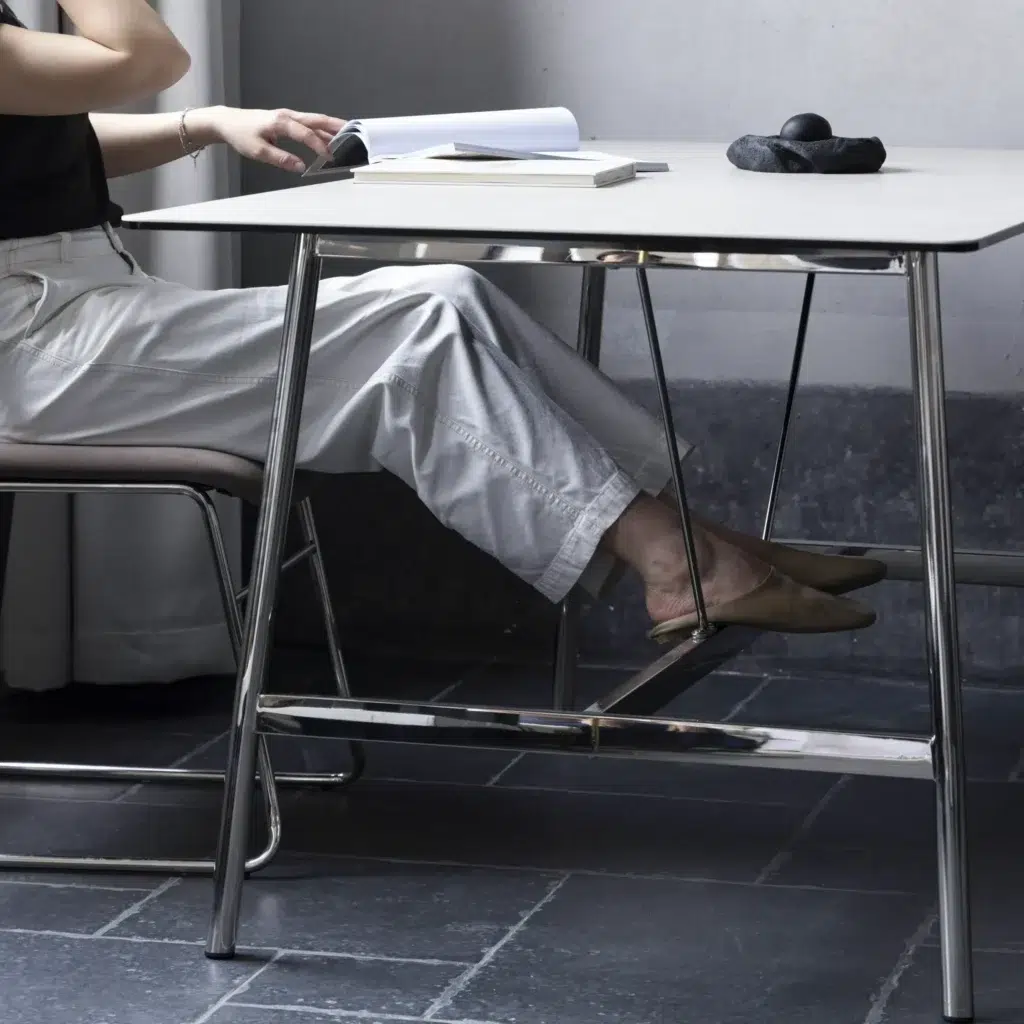
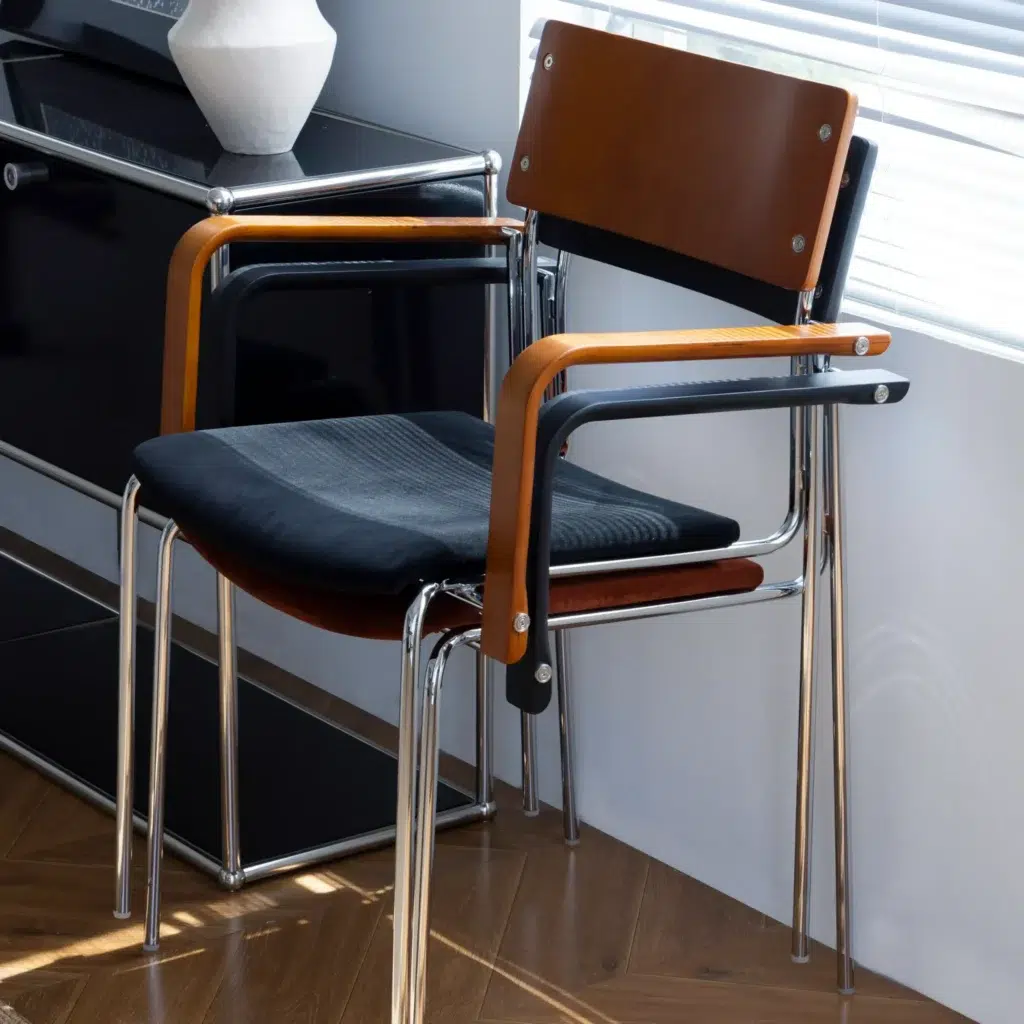
Chairs that look right together can still be uncomfortable if their seats are too high or too low for the table. Compare the chair’s seat height with the underside of the tabletop. A thick top or an apron beneath it reduces the available space for thighs, so overall table height does not tell the full story.
With upholstered chairs, notice how much the cushion compresses when someone sits down. The most useful check is whether you can sit with relaxed shoulders and reach the table comfortably.
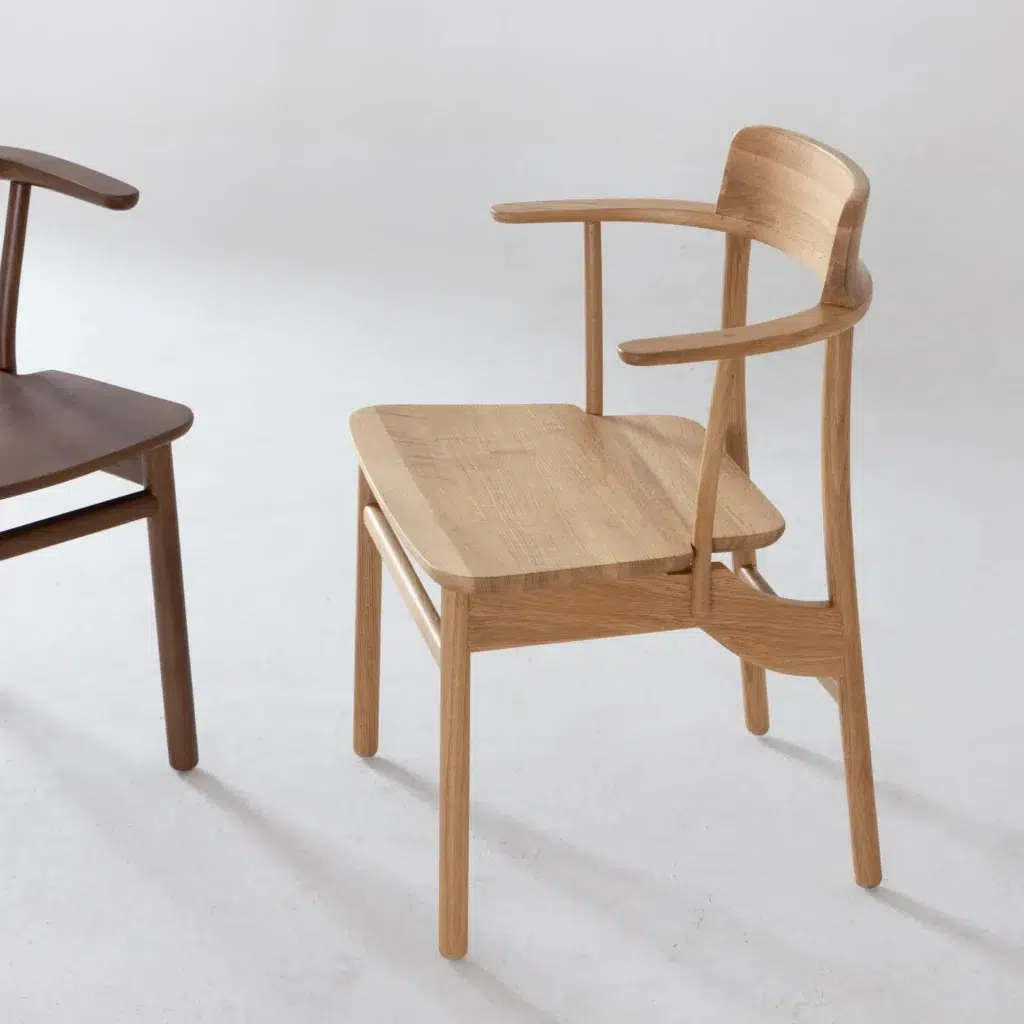
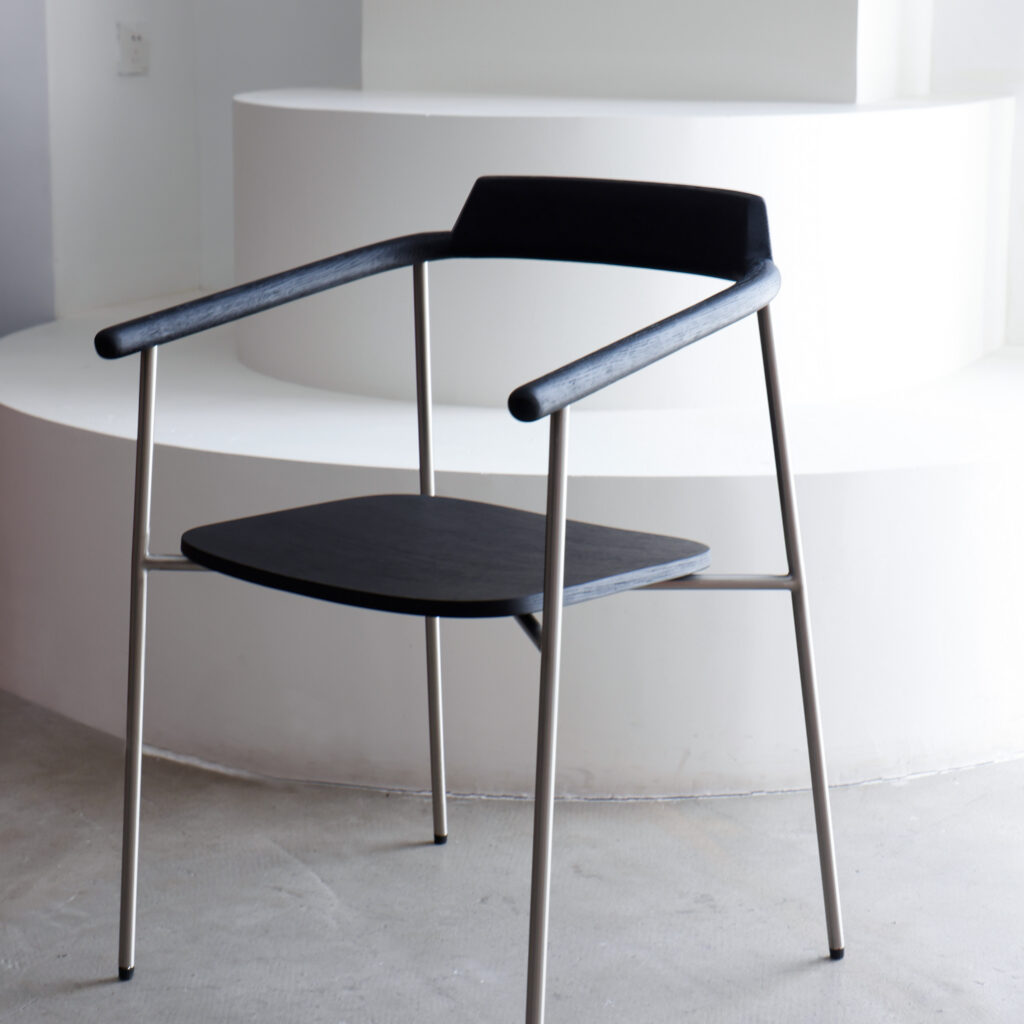
For chairs with arms, measure the arm height against the lowest obstruction beneath the table. Test how far the chair can tuck in before its arms or backrest meet the curved edge. This matters particularly when the dining area is also a walkway.
Decide between chairs with arms and armless chairs
Both can work around a round table. Your choice depends on the space available and the feeling you want to create.
|
Chair style |
When it may suit |
What to check |
|---|---|---|
|
Armless chairs |
Compact settings or layouts where chairs need to tuck in closely |
Full width, including any splayed legs |
|
Chairs with arms |
Roomier settings or households that enjoy extra support during long meals |
Arm clearance and space between neighbouring chairs |
|
Upholstered chairs |
Settings where a softer seat is a priority |
Cushion feel, care requirements and overall bulk |
|
Open-back chairs |
Spaces where you want the table and surrounding room to remain visible |
Back support and comfort in use |
A slimmer chair is not automatically more comfortable or a better fit. Look at the complete arrangement and try the seat where possible.
Balance the shapes
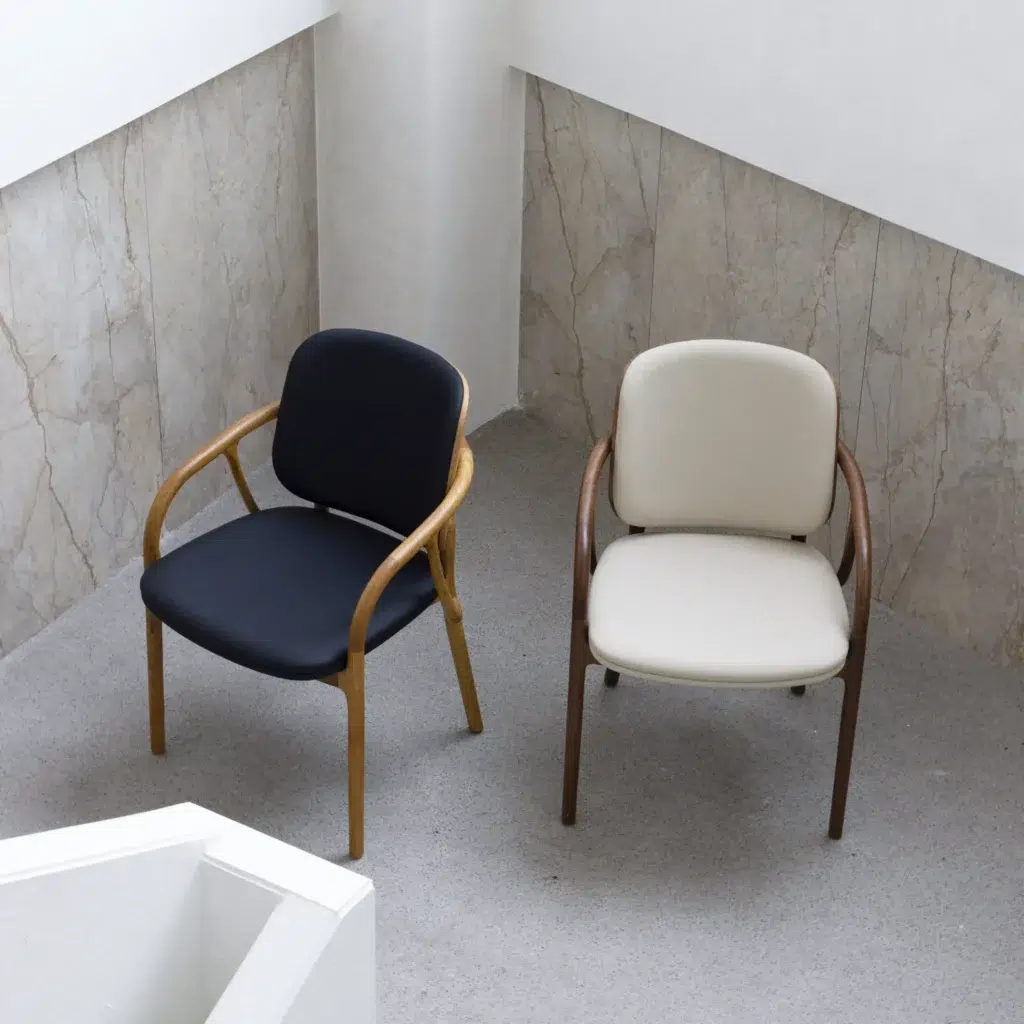
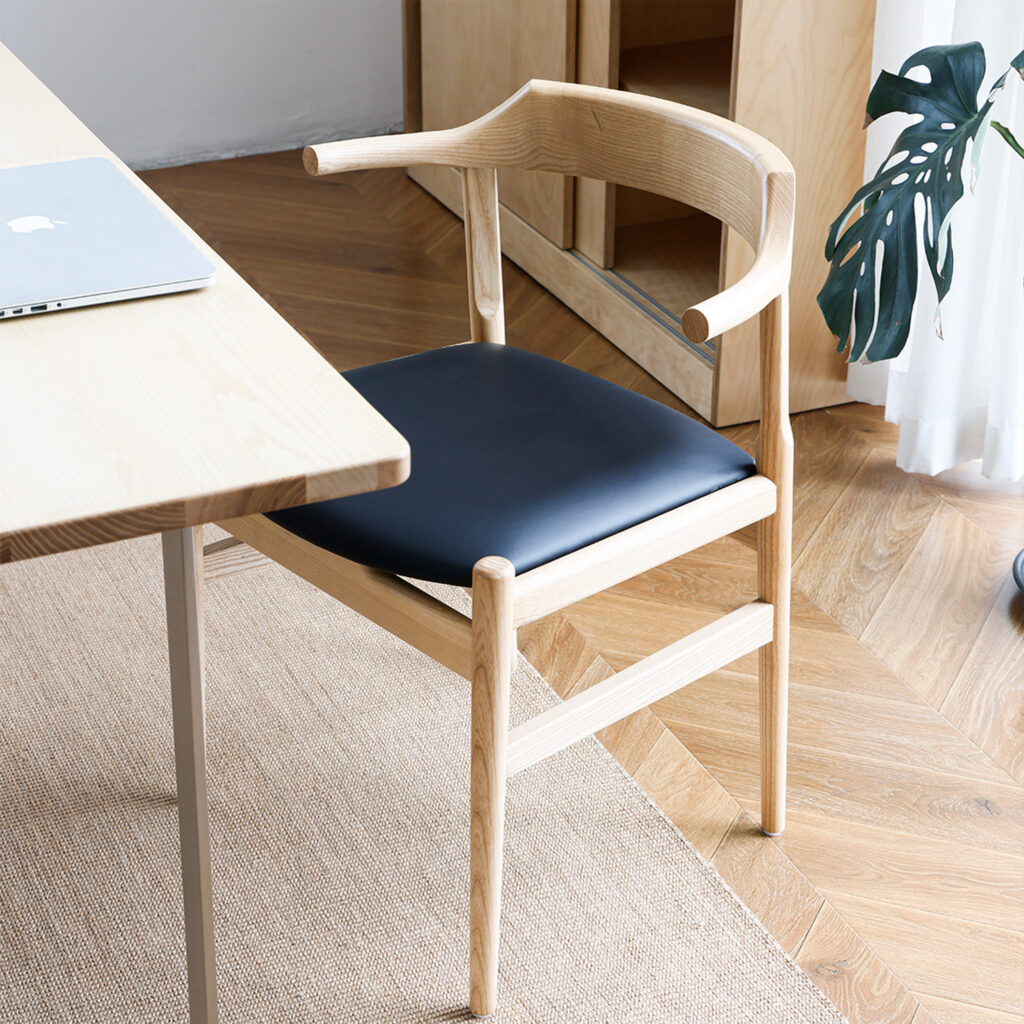
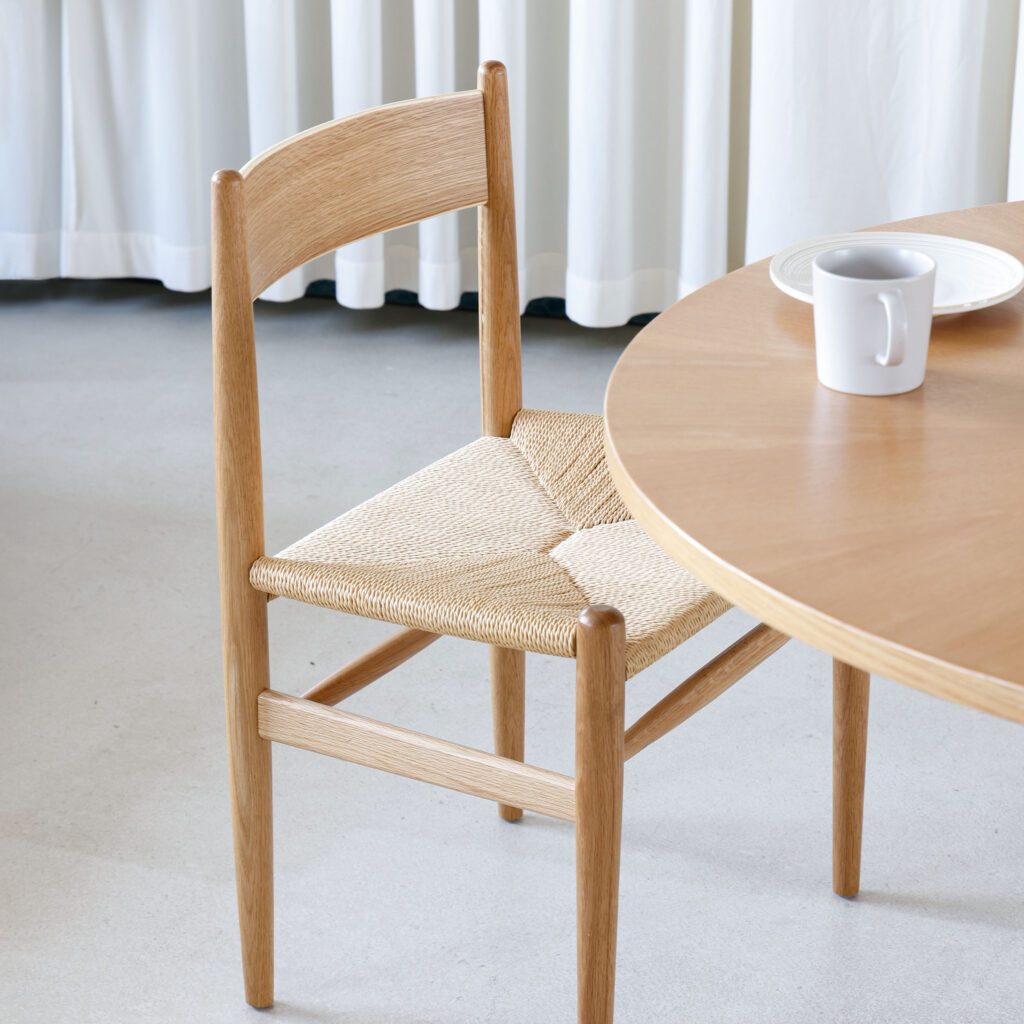
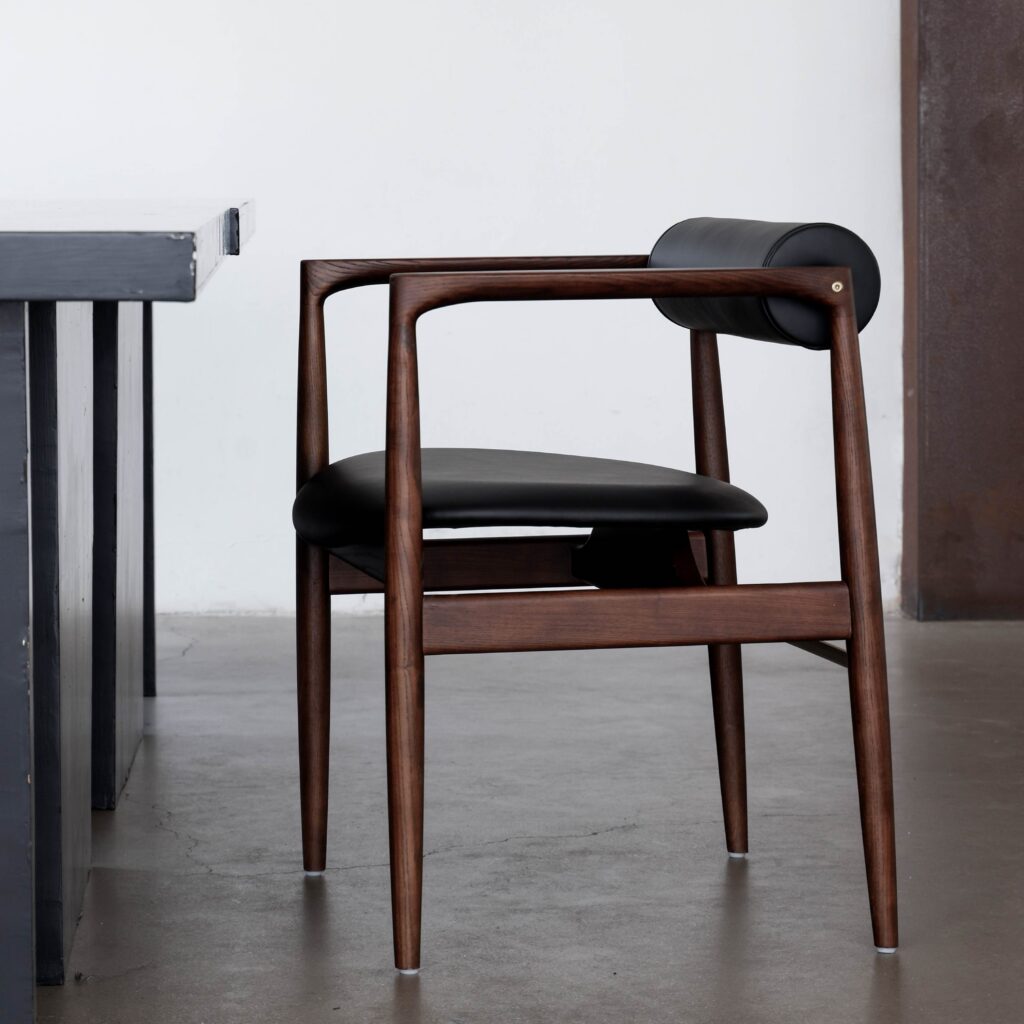
Curved chair backs can echo a round tabletop and create a gentle, cohesive look. More angular chairs introduce contrast and can give the setting a sharper architectural feel. Neither approach requires every shape to match. A useful way to choose is to consider which piece should draw attention.
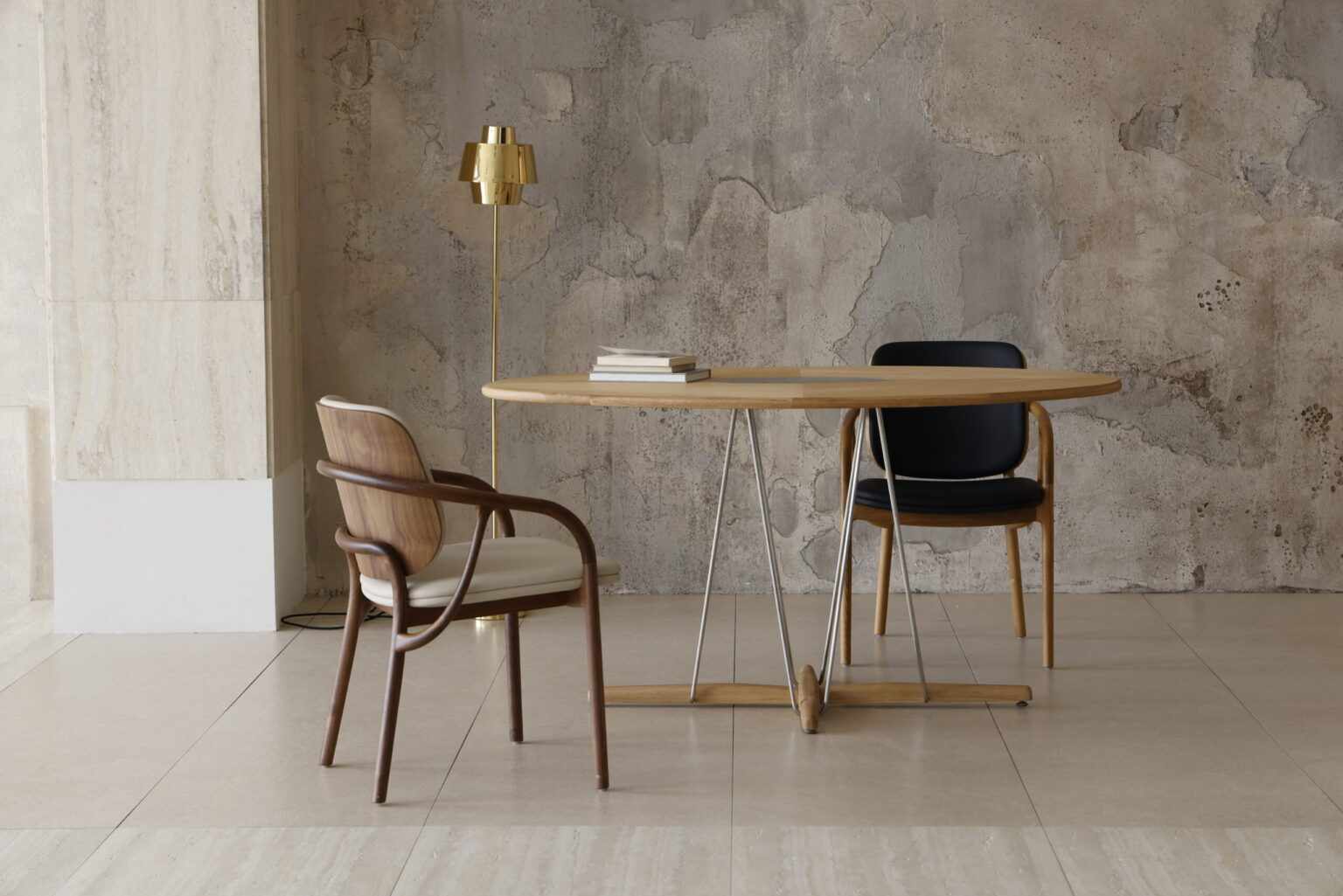
If the table has a substantial sculptural base, chairs with lighter profiles can give it room to stand out. A restrained table can support a more expressive chair design. View the arrangement from across the room as well as from above. Tall backs and broad upholstered seats can change the visual weight of a setting, even when their measurements fit.
Coordinate finishes without matching everything
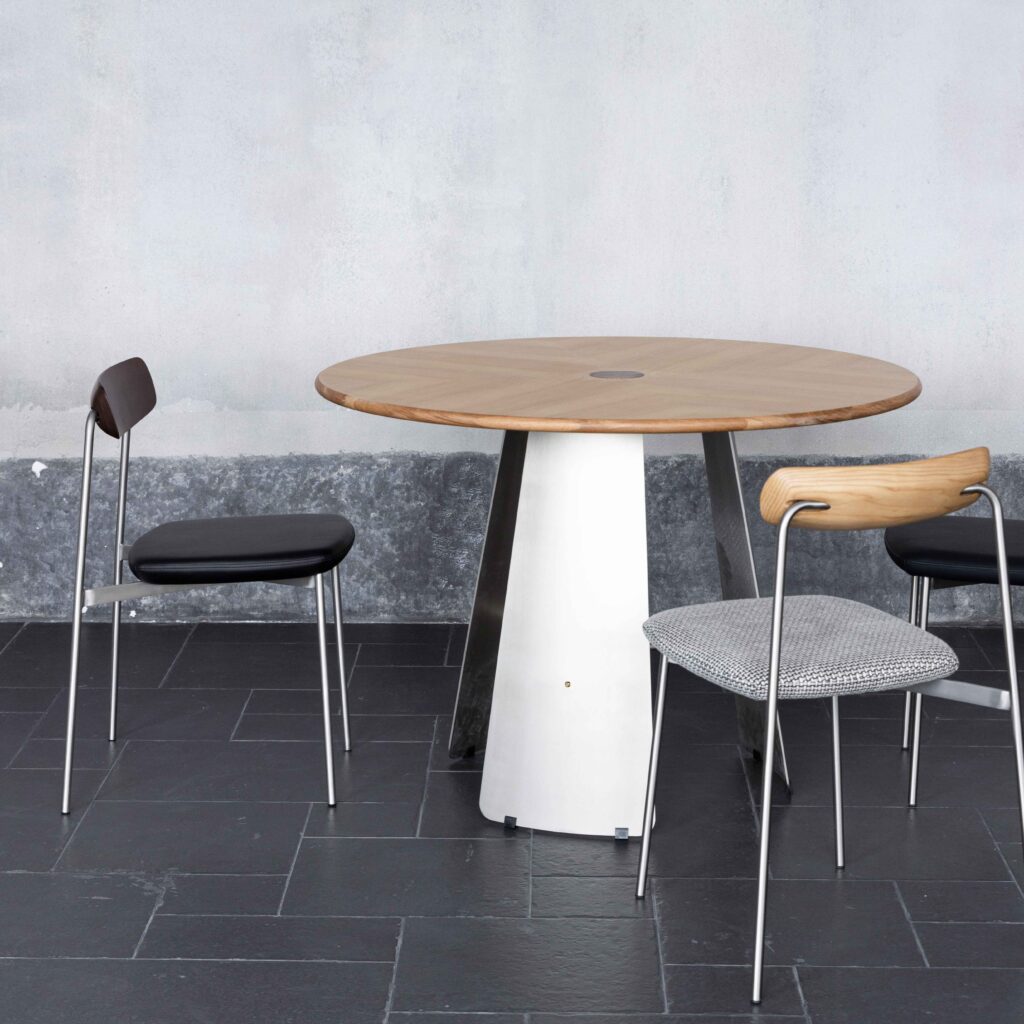
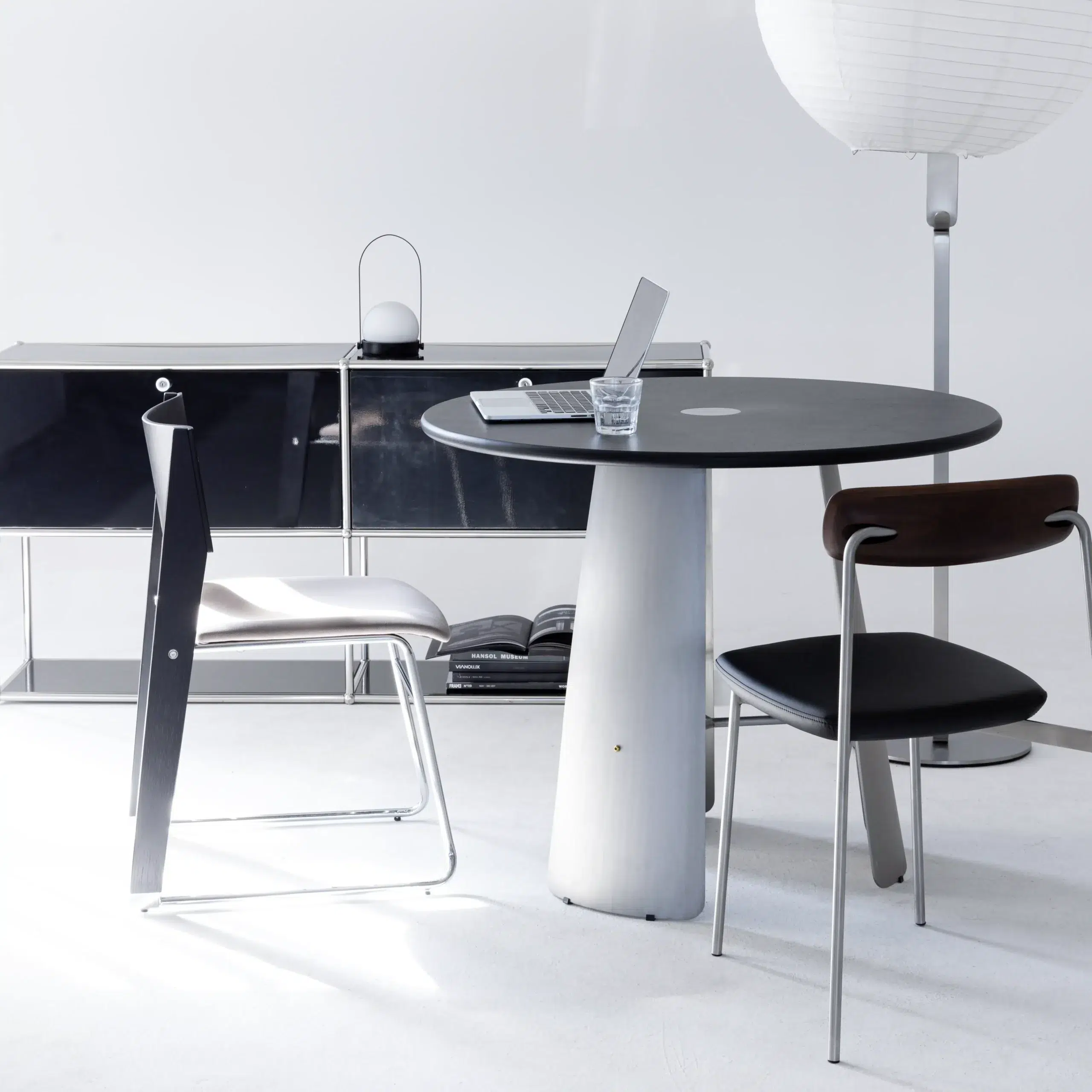
Your chairs do not need to use exactly the same timber or colour as the table. Black chairs can create definition around a pale timber table. Natural timber chairs can soften a darker setting, while upholstery introduces a different texture.
When combining timbers, compare their undertones and grain in daylight. Two finishes described as “natural” may look quite different beside one another. An intentional contrast can be easier to work with than a near match. Connect the chairs to another feature in the room, such as cabinetry or a nearby shelving unit. This helps the dining setting feel part of the interior rather than an isolated purchase.
If you are considering different chair designs, keep a shared element across the set, such as finish or back height. Around a smaller round table, repeating one chair design is often the simplest way to create visual balance.
Leave room beyond the tabletop
Chairs need space when someone is using them, not just when they are pushed in.
As a planning starting point, allow around 90 cm between the table edge and a wall or other furniture. A busy passage behind occupied chairs may need more. Test the layout against the way people actually move through your home. Mark the table’s footprint on the floor with removable tape, then place a chair at its edge. Pull it out, sit down and ask someone to walk behind it if that route needs to remain accessible.
A round top removes corners, but the chairs still determine much of the setting’s footprint.
Try the combination before committing
Photos help you compare styles. Sitting at the table helps you judge the fit. Bring your table measurements when trying chairs, including its diameter and underside clearance. A photo of the base is useful too.
At benssur, you can explore dining chairs alongside our dining table collection. Check individual product dimensions before choosing a combination, and contact us to confirm which samples are available to view.
Need help choosing dining chairs for your round table?
Contact the benssur team with your table dimensions, a photo and the number of people you usually seat. We can help you compare suitable options.
One Last Tip: Check Your Flooring
Before choosing your dining chairs, consider how they’ll move across your floor. Suitable felt pads can help protect timber from scratches, while a dining rug should be large enough for the chair legs to remain on it when pulled out.
A little planning here can make everyday dining more comfortable and help protect your space.
FAQs
Read More From Us