
Wardrobes
Wardrobes should fit the clothes you need to organise, not simply offer a large outer cabinet. Start with what hangs, what folds and what needs to be reached every day. Compare those groups with the selected wardrobe’s actual interior, including any rails, shelves or drawers expressly specified.
Read moreRead less
Then measure the bedroom with doors open and the normal route past the furniture still in use. Assembly and any supplied fixing instructions belong to the plan too. This guide puts useful storage before the finish choice. Browse any listed wardrobes by their complete layout and dimensions, or explore bedroom storage when another storage form would better suit part of the clothing routine.
Showing the single result
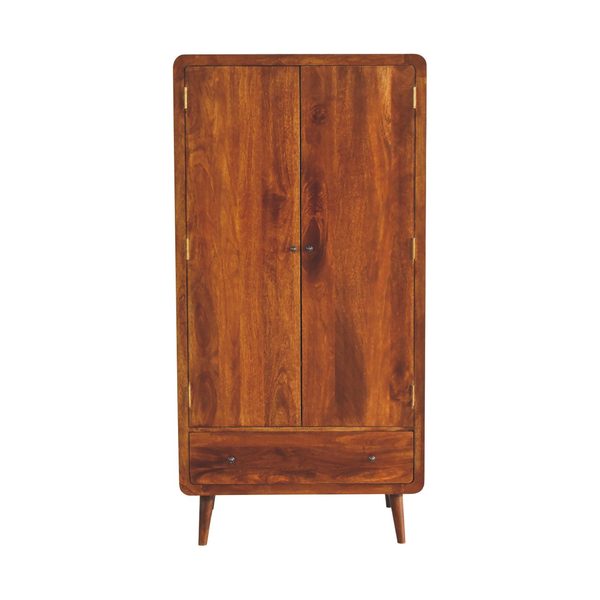

Choose the interior from your real clothes
List the clothing groups to be stored and measure the longest hanging items in their normal arrangement. Compare usable hanging height and width with the selected wardrobe’s actual rails and compartments. Outer cabinet dimensions do not establish room beneath a rail.
For folded items, assess the real shelf dimensions and reach. Read any specified drawer interiors rather than assume all wardrobes include them. Decide how frequently used clothes will be reached without moving other belongings first. Choose an interior mix that serves this routine, not a maximum cabinet size that leaves the essential clothing groups awkwardly allocated or depends on storage components that were never stated for the selected furniture.
Measure opening space and the occupied bedroom route
Mark the full wardrobe body, including depth, doors and any stated drawer travel. Compare those openings with the bed, nearby furniture and room door. A cabinet can fit against a wall while its everyday access makes the bedroom difficult to move through.
Choose the actual door arrangement and interior reach rather than infer sliding or hinged operation from a generic image. The wider bedroom furniture guide helps coordinate that occupied room plan. Keep useful clothing access and the household path together, so storage capacity does not become a reason to accept a wardrobe that must be closed or worked around every time someone uses the bedroom.
Plan assembly, fixing and the furniture finish
Read supplied assembly and fixing instructions, including any required wall attachment. Check access into the room and the space needed for the actual assembly process. Do not assume a tall furniture body can be treated as secure from its appearance or weight.
Compare the finish after the usable interior and full room setup are clear. Explore mango wood wardrobes when timber character is important, reading actual component construction and care. If two proposed interiors fit the same clothes, compare their full door or drawer openings beside the bed. Choose the arrangement that makes regular garments easy to reach while the bedroom route remains usable, then settle the front finish and its actual care.