
Mango Wood Wardrobes
Mango wood wardrobes bring a named timber preference to a large clothing-storage piece. Where fronts are specified as mango wood, compare their whole visible grain; a broad area can become a major room detail. Read the other named wood components too. Mango can show golden-brown tones and darker streaks, while the actual finish changes the appearance.
Read moreRead less
Read where the mango wood is used before assuming the entire wardrobe has one construction. Then compare its actual interior with your clothes and the bedroom’s opening space. This guide joins that material preference with useful storage. Browse any listed pieces by their full specification, or start with the wider wardrobe guide to plan clothing groups and interior fit before choosing the timber character.
Showing the single result
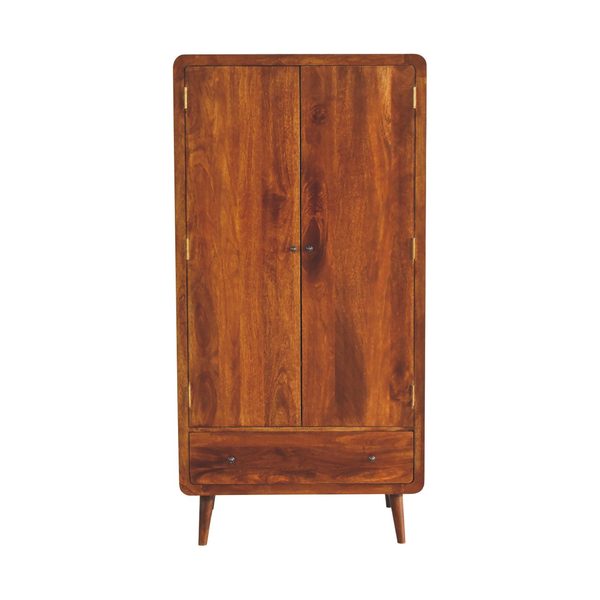

Compare grain across the specified wood faces
Where doors or fronts are specified as mango wood, look at their complete faces rather than one grain patch. Compare any other named wood parts too, deciding how much variation should appear beside the bedding, wall and floor.
Read solid timber, veneer and other component details accurately. Ask about expected natural variation where a particular appearance matters, rather than require an identical photographed grain. Choose a deliberate relationship with existing bedroom furniture instead of assuming a species name creates a matched suite. Use the finished component’s full visible area in that comparison, because a face seen across the room can look different from a small grain sample.
Keep the wood preference within a useful clothing layout
List hanging and folded clothes, then compare the selected wardrobe’s actual usable compartments. Check rail position, shelf dimensions and any specified drawers. Mango wood does not establish interior capacity, adjustment or a particular storage feature.
Measure the longest hanging items and the room needed to reach everyday belongings. The bedroom storage guide helps compare another storage form where the clothing mix calls for it. Choose the complete wardrobe around actual contents and access, so a preferred wood detail does not distract from an awkward interior or create expectations of rails and shelves that the selected furniture has not stated in its specification.
Plan opening, assembly and finish care together
Mark the full body and actual door movement beside the bed and other furniture. Include any specified drawer travel and the normal bedroom route. A warm timber appearance can soften the view without reducing the wardrobe’s real occupied access space.
Read assembly and fixing requirements, including any stated wall attachment, and assess room access for the actual setup. The bedroom furniture guide helps coordinate the wider plan. Follow the selected wood coating’s care rather than apply a treatment based solely on mango as a species. View the specified wood faces from the bed and doorway once the open-door layout works. Decide whether their grain should be the main room feature or a quieter partner to the bedding, with the selected coating’s care and required setup kept in the same comparison.