
Bookends
Bookends should help keep a chosen group of books upright while fitting the shelf around them. Start with the books: their height, depth and how often you remove them. Then compare the bookend’s contact face, base footprint and intended use. A sculptural appearance alone does not establish support for every heavy volume.
Read moreRead less
Settle the practical holding task before the decorative choice. Check whether a listing supplies a pair or one piece, and include both ends of the book group in your space plan. Marble bookends and travertine bookends focus on named stone details. Browse with your shelf dimensions and book group in mind before choosing colour or form.
Showing all 7 resultsSorted by recommended
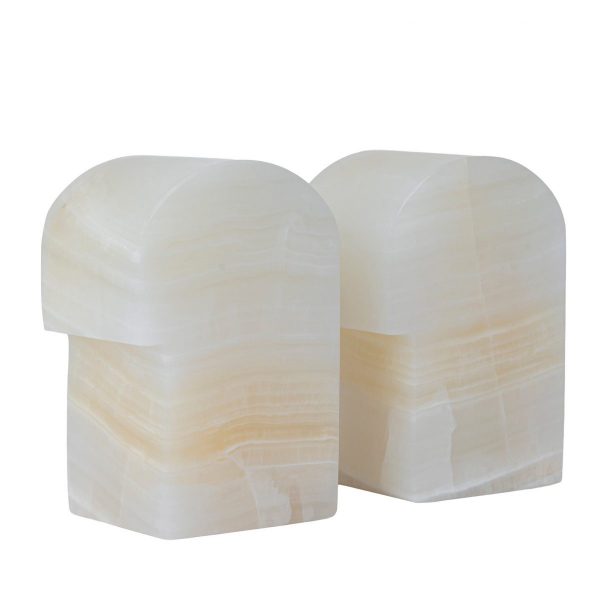

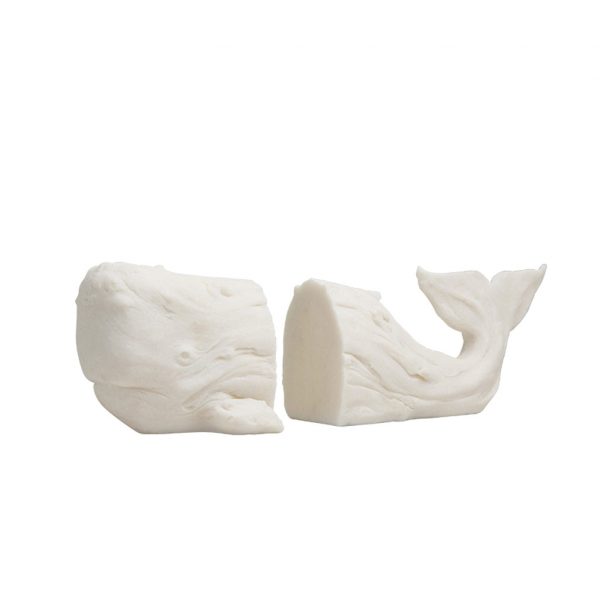
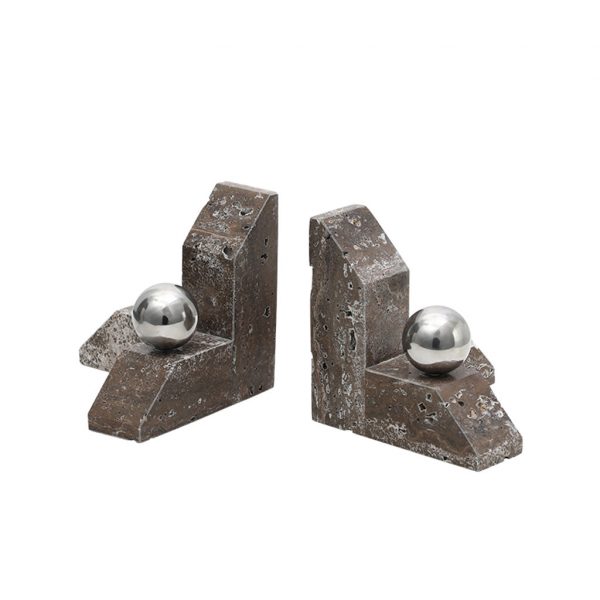

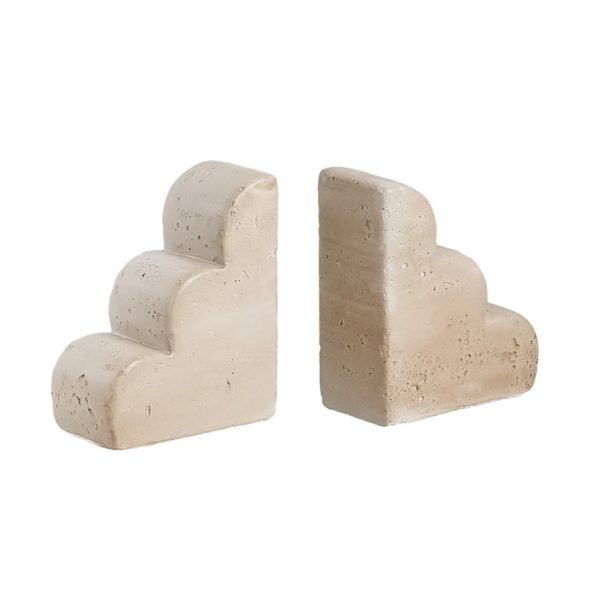
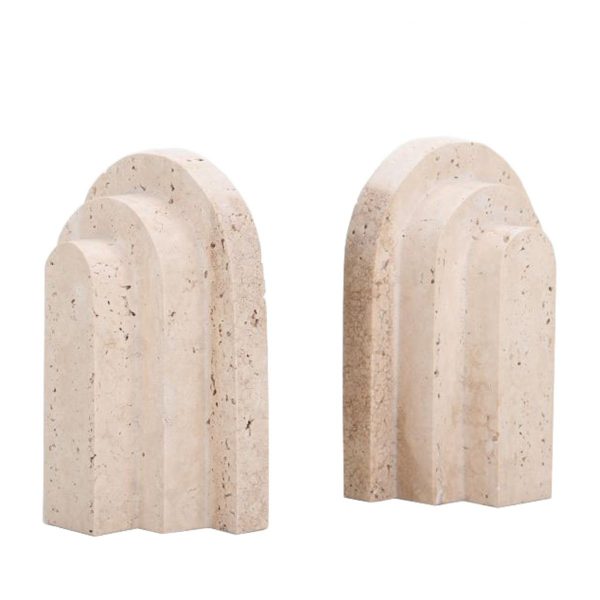
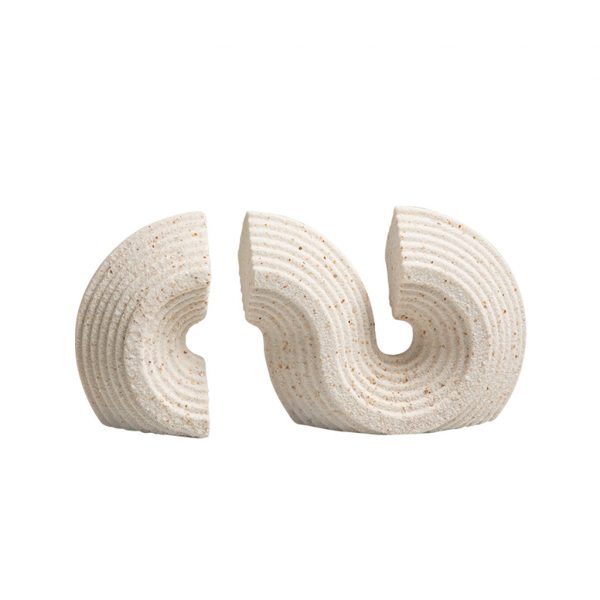
Which books are the bookends expected to support?
Consider the tallest and deepest books in the group, not only their spines viewed from the front. Large hardbacks and slimmer volumes create different arrangements. Compare the contact face with the area of the book that needs support, and follow the product’s intended use.
Check how the group changes when you remove a book. A shelf arrangement should remain practical rather than rely on a tightly packed decorative display. Do not infer load capacity from size, material or appearance alone. Ask about missing dimensions or guidance when supporting larger books is central to your decision. The useful starting point is the real reading collection, not a styled image with different objects.
How much shelf space does the base need?
Measure the shelf’s depth and usable width, including the bookends as well as the books. A projecting base can take more room than the visible vertical shape suggests. Keep the pieces positioned fully on a suitable level surface rather than balanced at an edge.
Read any base or surface-protection information and consider the shelf finish. Do not assume felt pads, non-slip material or another protective feature is included. Bookcases and shelving are a separate comparison if the support surface itself needs changing. Select the bookends for the shelf you actually have, with their footprint and contact understood before arranging decorative objects nearby.
Should the bookends be a feature or a quiet boundary?
Once support and space work, decide how the shapes relate to the books. A quiet colour can leave spines in focus, while a stronger form makes the whole group more decorative. Include surrounding objects rather than styling each bookend in isolation.
Material can add texture, but read the actual construction and care. Beige bookends and grey bookends provide colour comparisons without establishing stone. If the purpose is a broader shelf composition, bookshelf decor offers that separate direction. Keep practical access to books central; the decorative choice should make the shelf more resolved without making the books awkward to remove or support.
Frequently Asked Questions
Refine the palette through white bookends after support, supplied quantity and shelf fit are clear.