
Beige Bookends
Beige bookends can frame a group of books quietly, letting the spines remain the main colour on the shelf. Compare the actual beige with the shelf and nearby objects: a sandy tone can relate differently to warm timber from a cooler greige. The shade name does not establish one material or a perfect neutral match.
Read moreRead less
Keep support as the first job. Read the bookend’s dimensions, base and supplied quantity, then compare them with your books and shelf depth. The bookend category covers those practical checks. Compare the warm colour boundary, while travertine bookends are a separate material question when the actual stone is part of your brief.
Showing the single result
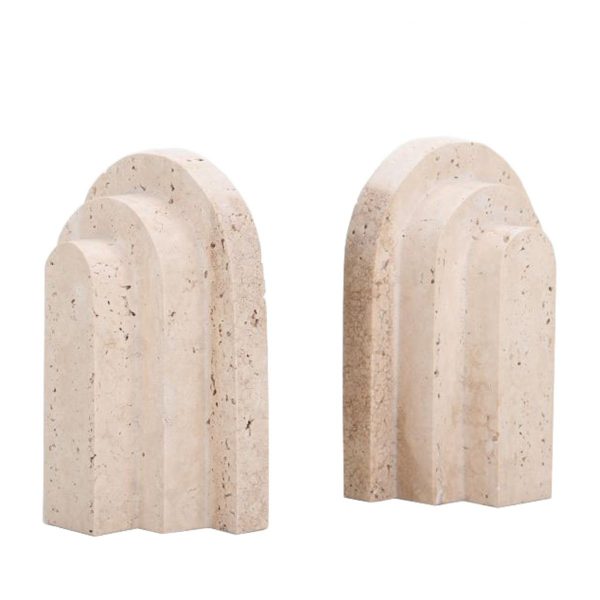

Which beige lets your book spines remain in focus?
Look at the colours already in the book group. A quiet warm boundary can support varied spines without adding another strong accent, but it should still have a clear relationship with the shelf. Beige beside a white shelf may show more warmth than the same shade beside timber.
Compare the amount of visible surface and the shape from the front and side. A large sculptural piece contributes more colour than a small contained support. Decide whether that is useful to the arrangement. White bookends offer another light direction if warmth is not the goal, with the actual tone and material checked rather than assumed from either name.
Does beige come from stone or another surface?
Read the material specification. Beige may appear on stone or another stated construction, so it should not be used as proof of travertine, marble or natural variation. A colour-led search and a material-led search are different decisions.
Check care for the actual surface and base, including any stated protective detail. Do not choose a stone cleaner simply because the piece looks beige and solid in a photograph. If you want a named stone, compare the material collections using their actual product descriptions. The warm tone can be the room choice, but accurate construction information is still needed before deciding how the bookend is handled and maintained.
Can the quiet accent hold the books you use?
Compare the contact face and base with the height and depth of your book group. Include the full footprint in the shelf’s usable width. A subtle colour cannot establish stability or capacity, so follow the product’s stated use and ask when heavier books are important.
Check whether the listing supplies one piece or a pair. Plan how the group remains usable when a book is taken out, leaving access rather than packing decorative objects tightly around it. Bookshelf decor helps with broader composition, but the bookends’ holding task stays separate. A calm shelf should be practical to read from as well as visually settled.
Frequently Asked Questions
Compare grey bookends for a different neutral relationship while keeping the book group and shelf measurements fixed.