
Grey Bookends
Grey bookends can give a group of books a restrained boundary without adding a strong hue. Decide whether the grey should blend with the shelf or stand apart from it. Lighter and darker greys, and different undertones, can create quite different relationships with white shelving, timber or colourful book spines.
Read moreRead less
Colour is only one part of the choice. Check the actual material, base dimensions and quantity supplied before arranging the books. A grey stone-like appearance does not establish marble or a capacity for every heavy book. The bookend category helps with those support questions. Choose the neutral contrast after the practical arrangement is understood.
Showing the single result
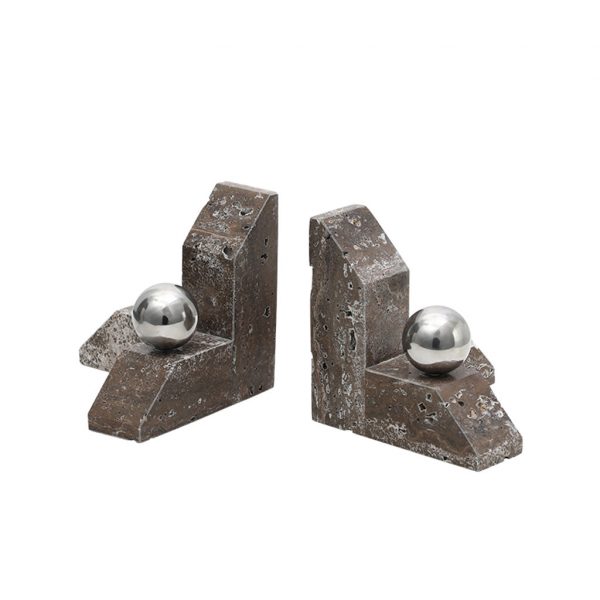
Should the grey blend into the shelf or define the books?
Compare the shade with the shelf background and the end books in the group. A close grey-on-grey relationship can make the support quieter, while a clearer change in depth frames the books more strongly. Decide which role you want rather than assuming neutral means invisible.
Include the visible shape. A larger grey sculpture becomes part of the shelf composition even if its colour is restrained. Beige bookends offer a warmer boundary, while white bookends provide another light contrast. Keep the same books and shelf dimensions when comparing colours, so a palette decision does not obscure the practical support and footprint you need.
What does the grey surface actually contain?
Read the stated material and finish rather than inferring stone from a muted colour or patterned photograph. Grey can appear on different surfaces, with different cleaning and handling requirements. If marble is central to your brief, marble bookends offer that separate named-material comparison.
Check any described base detail and protective feature. A smooth-looking underside does not guarantee shelf protection or a non-slip contact. Ask about missing information when the shelf finish is sensitive to marks. The useful grey choice combines a considered colour relationship with an accurate understanding of what sits against the books and the shelf, rather than a visual material guess.
How does the support work with books removed?
Plan the group as something you use, not only a fixed display. Compare the bookend contact area with the books’ height and depth, and check the full base footprint. Follow intended-use information rather than making a support claim from the colour or apparent weight.
Include space to take a book out without knocking nearby objects. Confirm whether the product is supplied as a pair or a single piece. If the shelf itself is too shallow or unsuitable, bookcases and shelving are the separate place to address that problem. A neutral bookend should finish a workable arrangement, not compensate for a shelf or book group that does not fit.
Frequently Asked Questions
Use bookshelf decor for the wider shelf composition after the bookends’ holding task has been resolved.