
Marble Sideboards
Marble sideboards combine a stone feature with storage that needs its own practical comparison. Begin with where marble is documented: a top, front panel or another component has a different contact role. Review the actual veining and finish across that surface, rather than assuming a stone-labelled cabinet has the same material everywhere. Check whether the selected surface is natural marble or a stated marble-look material.
Read moreRead less
If the stone forms the top, consider the objects and drinks placed there. Marble is sensitive to acids, so appearance and daily care belong in the same decision. Buffets and sideboards provide the wider cabinet-layout guide. Dining room storage connects the piece with meal-time use. Choose the stone feature within storage whose compartments and opening space already serve the room.
Showing the single result
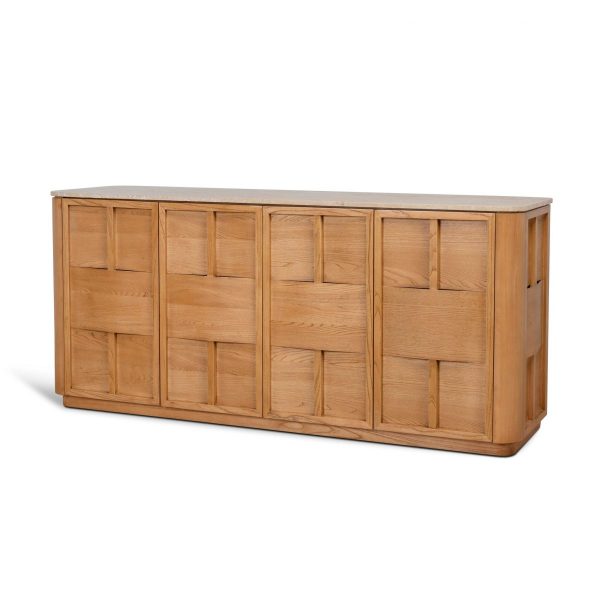
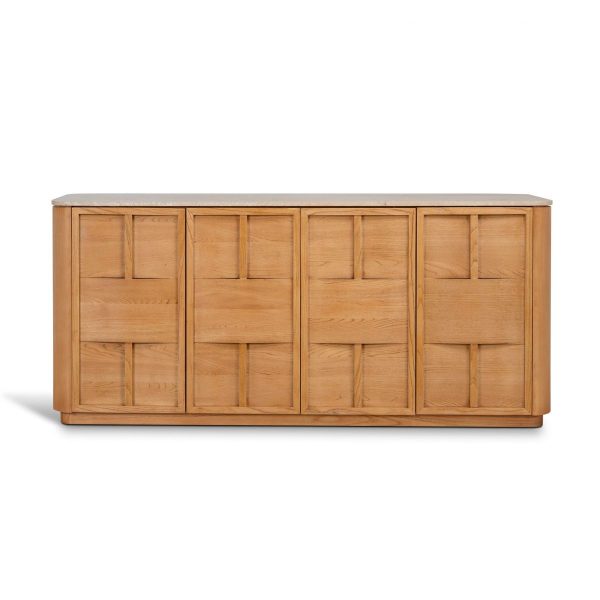
Choose the veining at the scale of the cabinet
Read the actual material on top, front and sides separately. Review the full stone area: a small close-up does not show how a larger vein or quieter patch relates to doors, edges and other cabinet materials. Product photographs are useful references, but ask about expected natural variation where pattern is a deciding requirement.
Compare the stated finish with room light and objects above the cabinet. Polished and honed are different surface directions where documented; do not assign either by the collection name. Keep the stone feature clear in the whole room composition. Glass sideboards offer another surface-and-display route if the intended visual role matters more than marble specifically.
Decide whether the marble top suits the contact routine
For a documented marble top, separate appearance from care. Acidic contact can etch the surface, leaving a finish change rather than simply a stain. A suitable sealer can improve stain resistance, but ordinary penetrating sealers do not stop acid etching or make marble stain-proof. Read the selected stone and finish instructions.
Consider coasters and the placement of serving or display objects. Follow supported guidance for hot-dish contact and cleaning rather than treating a buffet top as an unrestricted work surface. Buffet and sideboard retrieval advice helps plan temporary landing space. Choose the marble feature only when its actual upkeep works with how the cabinet will be used.
Keep the storage and installation practical below the stone
Measure the objects against usable internal dimensions and the documented compartment layout. Stone on top does not explain the cabinet’s wood, dividers or fittings beneath it. Sideboards with shelves help compare stacked groups, while sideboards with drawers focus on smaller sorting. Choose the useful interior separately from the stone pattern.
Plot opening and retrieval space with surrounding furniture in use. Read assembled and delivery-component information, handling guidance and any required securing. Do not estimate weight or installation requirements from the marble label. Ask benssur about missing surface or compartment details before ordering. Compare the exposed veining around display or serving objects once the compartments and open room layout suit daily use.