
Mango Wood Sideboards
Mango wood sideboards make varied wood character part of a broad lower-storage front. Start with the components actually described as mango, then review their grain and selected finish across the doors, sides and top. Mango commonly has golden-brown areas and can show darker streaks or other tones; the coating and selected wood change the finished appearance. A species name does not establish one uniform cabinet colour.
Read moreRead less
Compare that whole front with your floor and dining furniture while checking practical storage. Timber sideboards provide the wider construction comparison. Buffets and sideboards help assess compartments, while natural timber sideboards explore a broader grain-led direction.
Showing the single result
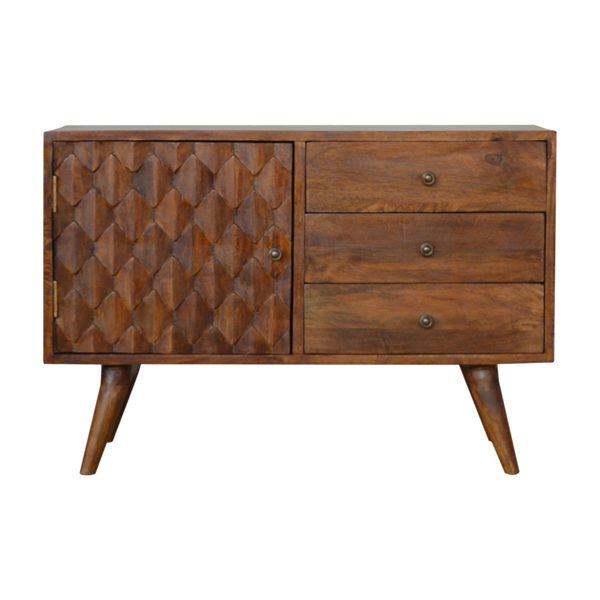

Compare mango variation across the doors and top
Look across the full front rather than choosing one close-up. Golden-brown areas and darker or mottled patches can appear differently on adjacent doors, narrow edges and a broader top. Decide whether that variation should lead the wall or sit beneath a quieter display. Door gaps and handles also divide the visible grain.
Compare the selected finish with the floor and table without expecting an exact species-based match. Ask about the photographed item and expected variation when a particular pattern matters. Read which parts use mango and how each is built; a mango front does not explain the hidden back, internals or supports. Choose the exposed wood area together with the room view and useful compartments rather than expecting every mango sideboard to look alike.
Match the compartments to the objects behind the wood front
Measure the household groups you need to store and the space required to lift them out. Compare usable internal width, depth and height with the actual fittings. Species does not determine those dimensions or supply drawers, shelves or adjustment. Read the complete configuration rather than estimating capacity from a broad timber face.
Sideboards with drawers and sideboards with shelves offer more focused interior routes. Plot opening movement with nearby furniture in use, including dining chairs where relevant. A preferred mango finish should not lead you to accept difficult access. Choose useful capacity and retrieval first so the wood cabinet serves the routine as clearly as the room appearance.
Choose finish care and ask about sourcing
Read the selected coating’s contact and cleaning guidance. Mango wood does not mean unfinished timber or permission to apply oil and wax. Consider the top’s documented purpose and loading separately from the front appearance. Ask about the finish when maintenance information is missing rather than importing a method from another wood species.
Keep any sourcing requirement tied to the specific product. A species name alone does not establish reclaimed material, certification or a particular origin. Dining room storage brings the cabinet into the meal layout where needed. Follow assembly and installation instructions, then ask benssur about uncertain construction or usable dimensions. Choose the mango grain across the visible front after the compartments, opening access and top care fit your daily use.