
Leather Coffee Tables
Leather coffee tables are a covering-led choice for a living room where the central piece should contribute texture as well as surface. Start with what the product actually specifies: leather, a leather-look material and other coverings are different descriptions. Check where the covering appears, especially whether it forms the usable top or another component. The table’s role must remain clear beside your sofa.
Read moreRead less
Use this collection to compare the surface with everyday drinks, trays and reading items. Do not assume a covered-looking piece is intended as seating. Coffee tables cover the wider height and reach guide. Leather side tables provide a related smaller-surface direction when leather detail would work better beside a seat than centrally.
Showing all 2 resultsSorted by recommended
-
On SaleOriginal price was: $1,412.00.$1,341.00Current price is: $1,341.00.
-


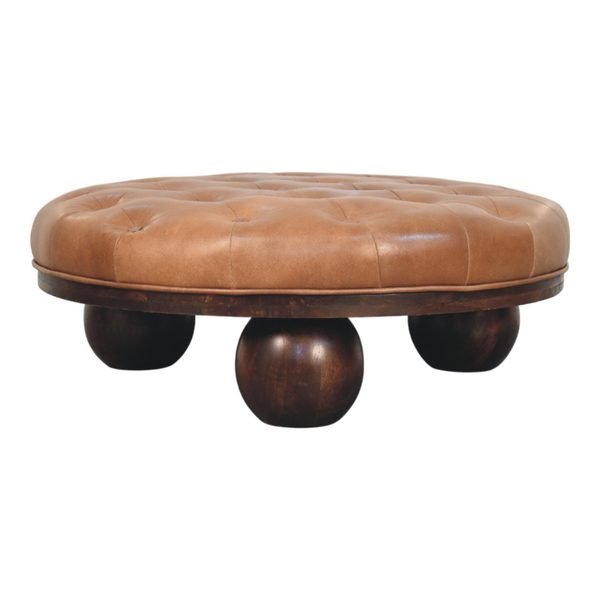
Identify the covering and the components it actually covers
Read the stated material for the top, sides, base and any visible trim. A leather component does not establish leather across the whole table, while a similar-looking covering should retain its actual description. Ask about composition or finish where that information is missing and important to your purchase.
Look at seams, junctions and the surface shape in several views. They affect the tactile-looking outline and how objects sit on the top. Compare the table with a leather sofa through actual colour and surface character rather than assuming two leather descriptions establish a match. A deliberate difference may give the central piece a clearer role in the room.
Check a covered top for the objects you put down
If the usable top is covered, confirm its intended function and support for ordinary objects. A soft-looking profile does not prove that a cup or tray will sit as you expect. Compare the surface dimensions and product guidance, then ask about using a protective tray if that is part of your routine. Do not assume one is supplied.
Read any loading or use limits. A table should not be treated as a seat or footrest without an explicit intended-use statement. Glass coffee tables and timber coffee tables offer hard-surface directions to compare if the covered top does not suit your serving needs. Choose through the actual working surface, not appearance alone.
Plan leather care and the complete room footprint
Follow the selected covering’s care instructions before applying a cleaner or treatment. Products suitable for a different leather item may not suit this finish. Consider spills, contact with tray bases and normal handling, then choose according to the guidance you can follow. The material label does not establish resistance to marks.
Plot assembled dimensions beside the sofa and walking route. Check height and reach as well as visual softness, including any broad covered edges. Small coffee tables offer another footprint direction when space is limited. Confirm supplied components and assembly, then ask benssur about covering or use details that remain unclear before committing to the tactile centre piece.