
Travertine Table Clocks
Travertine table clocks combine a time display with the visual presence of stone. Start by deciding where you will read the clock: from a desk chair, across a room or beside the bed. A beautiful stone outline is less useful if its hands and face are hard to read from that position.
Read moreRead less
Compare the full clock dimensions, visible face and stated stone material, then check the movement and power details on the particular listing. Use clocks for the broader choice, or desk clocks when close working-distance readability is the main need. Do not infer a silent movement or alarm from a decorative form.
Showing the single result
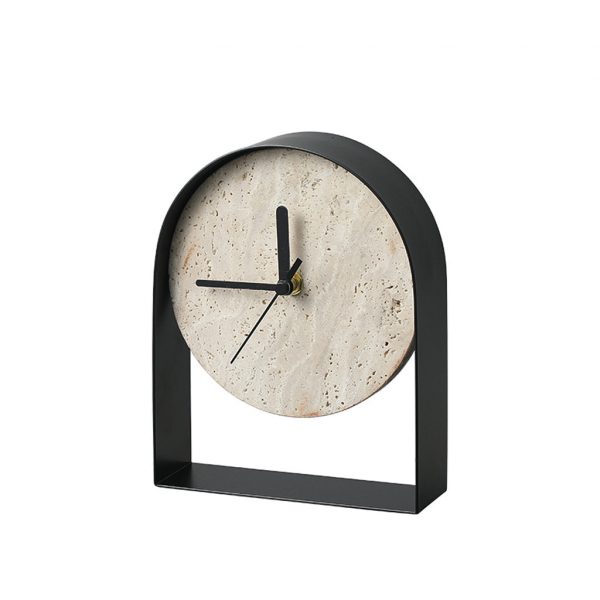
Choose the face for its real reading distance
Look at hand contrast, marker style and the amount of visible face. A close photograph may make small hands look clearer than they will from a sofa or doorway. Check the overall dimensions and judge how much of that size belongs to the time display rather than the stone surrounding it.
Consider the angle from your normal seat and whether nearby objects would hide part of the face. Strong reflections or a similar background colour can reduce clarity. If the main purpose is keeping time while working, put readability before decorative impact. A smaller clock nearby and a larger clock across the room answer different viewing needs.
Confirm the movement and a stable tabletop position
Read the power source, stated movement and any functions on the actual product page. Check whether batteries are included if relevant, and ask about audible operation when that matters beside a bed or quiet desk. Do not assume that a stone body changes the mechanism or guarantees silence.
Choose a level, suitable surface away from its edge and check the clock’s base footprint. Leave access for setting the time and changing the power source as described. Consider the support surface’s stated load and the clock’s weight where available. A decorative object that looks small in a photograph still needs a placement suited to its actual size and materials.
Keep travertine detail clear and care specific
Where genuine travertine is stated, its colour movement and stone texture can give the body an individual appearance. Check the finish and any filled or open cavities described for the product rather than expecting the exact pattern in one photograph to repeat.
Keep the clock away from drink spills and wet plant pots. Natural travertine can react to acidic spills or cleaners, leaving etching: a dull mark where the surface has changed. A penetrating sealer should not be treated as protection against that acid reaction. Follow the actual finish and care directions without introducing moisture to the movement. Compare travertine decorative objects for a companion accent, while keeping the readable clock face clear.
Frequently Asked Questions
For a wider arrangement of timepieces and objects, explore decorative accessories.