
Desk Clocks
Desk clocks give time a separate place on a working surface. Start with the view from your normal sitting position and the space left beside a screen, papers or everyday objects. A small clock is useful only when its face remains easy to read without interrupting the work area.
Read moreRead less
Then check actual support, sound and power details. Desk placement does not establish an alarm or silent mechanism, and a compact appearance does not tell you the full depth. This guide helps compare a close time display practically. Browse any listed pieces with the desk arrangement in mind, or explore the wider clock category when the main need is reading time from elsewhere in the room.
Showing the single result
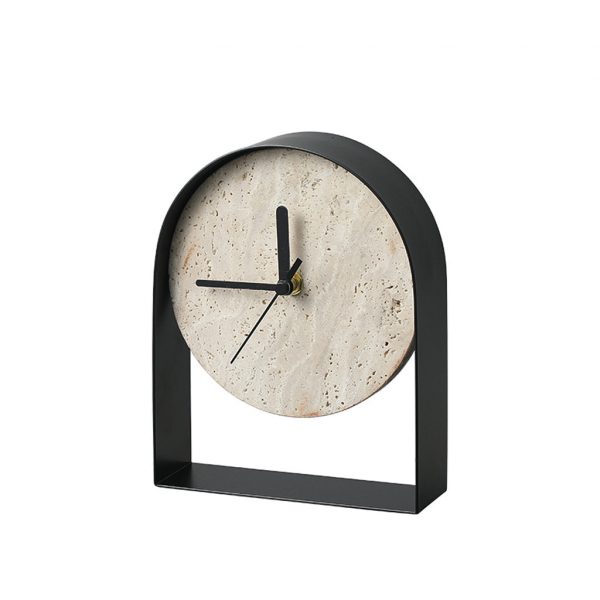
Keep the face visible from the normal sitting position
Choose a position that does not require turning around a monitor or reaching across papers to see the time. Compare actual face markings, contrast and any specified display angle from the seat you use. A decorative close-up cannot establish legibility beside a working screen.
Consider light on the face and reflections at different times of day. The clock can be a small visual detail, but reading time should remain the primary task. Measure face and overall dimensions rather than assuming small objects are always clear at close range. If the shape is partly hidden by the desk arrangement, change the position or form instead of relying on decorative appeal alone.
Measure the whole object within the working surface
Include the base and depth, not only face width. Some clock forms project behind the display or need another support arrangement. Confirm freestanding use and what is included before planning a shelf or narrow desk corner around the image.
Keep space for papers, keyboard movement and ordinary objects beside it. If placed near a lamp, check the view without obstructing the light or switch. Explore homewares for a wider surface arrangement while keeping items purposeful. Keep the clock outside the area you clear for papers or other work, so it stays visible while the desk is in use.
Check sound, power and daily setting access
Read movement and sound information if ticking matters in the work area. Do not infer silence from a minimal design. Check the actual power source and how it is accessed, with any supplied parts or additional requirements clearly understood.
Confirm alarms, lighting or other functions only where specified. Desk use is a location, not evidence of those features. Follow setting and cleaning guidance for the actual material and display. The wider decorative accessories category can help compare the clock as part of a restrained arrangement.