
Clocks
Clocks should show the time clearly from the place where you use them. Begin with that view, whether across a room or close to a desk, rather than choosing only a decorative face. Size, contrast and the position of hands or numbers affect how useful the display is.
Read moreRead less
Then check the actual form and operation. Freestanding support, mounting, power and other features must come from the product details, not assumptions based on the clock’s appearance. This guide helps connect timekeeping with considered placement. Browse any listed pieces with your intended position in mind, or explore desk clocks when a close surface display is the purpose rather than a general room view.
Showing the single result
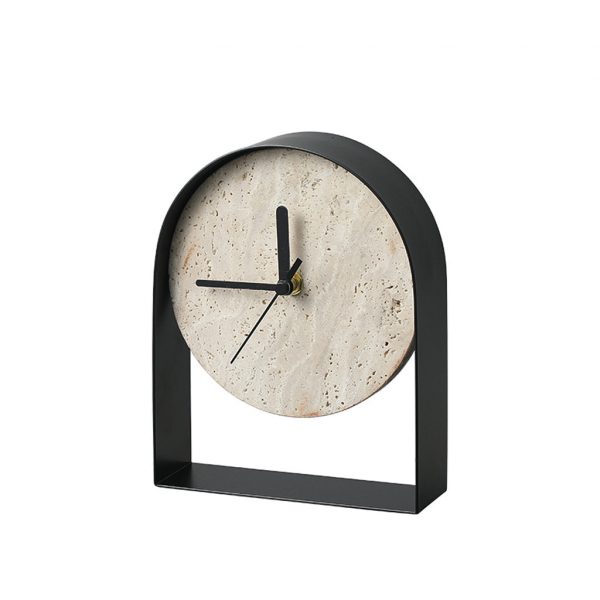
Choose the face for the distance you actually read it
Picture the clock at its planned location and the position from which time is checked. A face that looks clear in a close-up may be harder to read across the room. Compare visible markings, hand contrast or the actual display information for the item.
Include surrounding light and background. Reflections or a busy setting can change the view, while a decorative face may prioritise another visual detail. Ask about dimensions where they are not stated rather than estimating from a styled image. The useful clock gives you the time at the real viewing position, not only a form that feels proportionate in a photograph.
Choose a supported viewing position
Read whether the clock is intended to stand on a surface, be mounted or use another specified arrangement. Check what support or hardware is included. Form alone does not establish the function, and a styled wall or desk image should not replace the actual placement guidance.
Measure the complete footprint or stated mounted dimensions with nearby objects. For surface placement, the console tables guide can help keep daily items and a lamp accessible. Explore decorative accessories to compare the wider display without crowding the time view. The clock should be visible and appropriately supported while the surrounding surface or room retains its useful role.
Confirm operation before expecting extra features
Read the actual power source, setting instructions and any sound information. A decorative clock does not automatically have an alarm, silent movement, lighting or another function. Confirm those details if they are part of the reason for buying.
Check what is included and how ordinary maintenance is handled, such as access to the specified power component where applicable. Do not infer battery type or replacement method from face style. Follow care for the actual frame and display materials.