
Rectangular Outdoor Dining Tables
Rectangular outdoor dining tables organise a meal along two long sides, with end places where the actual shape and supports allow them. Start with the seats you use every day and how much serving space belongs between them. A long table should improve those places rather than simply occupy the available patio length.
Read moreRead less
Then compare the table with nearby walls, doors and planting edges. Chairs use room on both sides, and an end place can interrupt the route through a narrow outdoor area. Mark both long sides and any end places with the chairs in use before settling the rectangle’s position. Browse any listed tables by exact dimensions, or review outdoor dining tables when comparing shape and support more broadly.
Showing the single result
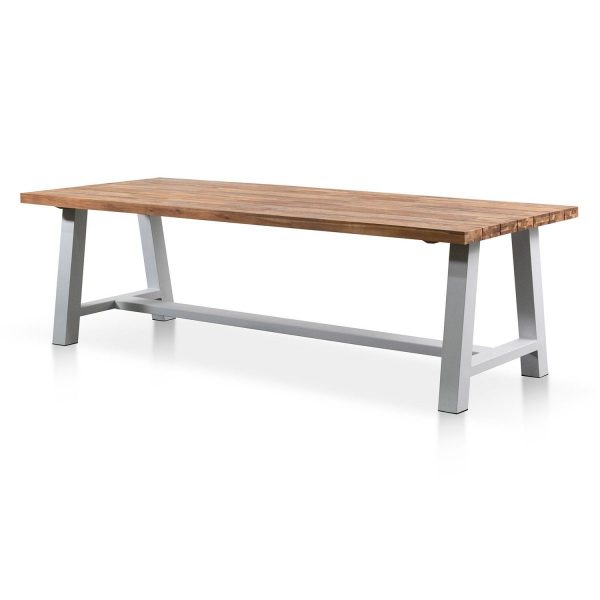

Give each long-side place useful space
Lay out the usual chairs and place settings along the actual length. Include elbows and the dishes people share. More length is valuable when it improves those repeated places, rather than leaving the centre distant or using up a route at one end.
Read the usable top between any rounded corners or narrowed profiles. Table width needs to suit both the meal and the patio, not just the seat count. Compare outdoor chairs for the intended chair widths and arms. Look at the everyday arrangement first; occasional visitors should not require the main diners to tolerate an awkward or overly cramped layout throughout the year.
Decide whether the end places work
Place the intended end chair on the measured plan. Check the supports underneath and the available approach beyond the tabletop. A leg, crosspiece or nearby doorway can make an end place less useful than the photographed layout suggests.
Do not assume every rectangular table provides the same number of comfortable end seats. Compare each structure with knees and feet in mind. If those end positions are essential, keep them in the assessment from the beginning rather than adding them after choosing length. A pedestal outdoor dining table may change where supports sit, but its actual base still needs the same careful comparison.
Keep the lengthwise patio route open
Mark the full rectangle with chairs pulled back on both long sides and at any occupied ends. Check how someone carries food past the meal, opens a door or reaches the garden. Long furniture can guide a patio layout while also becoming its narrowest point.
Compare round outdoor dining tables if the room around the rectangle is difficult to use, measuring the complete alternative rather than assuming round is smaller. Read actual exposure and care information for the chosen location. Select the rectangular table when its meal layout and occupied movement work together, with the long shape serving the people rather than the other way around.