
Round Outdoor Dining Tables
Round outdoor dining tables put the meal around a curved edge, which can suit a group wanting a shared centre. Choose the circle by its real diameter, serving space and support arrangement. The absence of corners does not remove the floor space used by chairs all around it.
Read moreRead less
Mark the circle in both directions at the intended outdoor location, then add the occupied seats. Check nearby doors and the route from the house before refining the finish. Test the regular chairs around the full curve, including the positions nearest a door or deck edge. Browse any listed tables with their real dimensions and contents in view, or compare rectangular outdoor dining tables where the site is longer than it is wide.
Showing all 6 resultsSorted by recommended


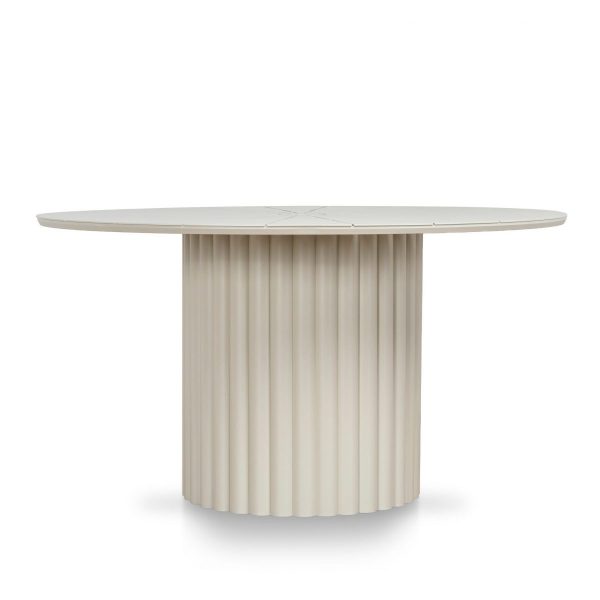
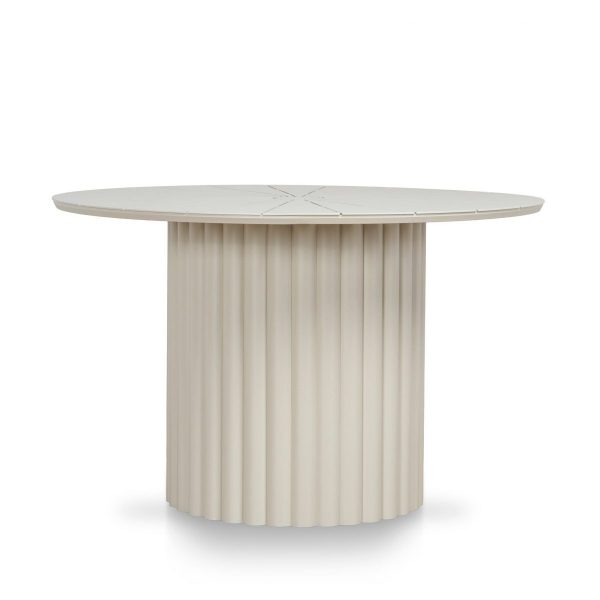
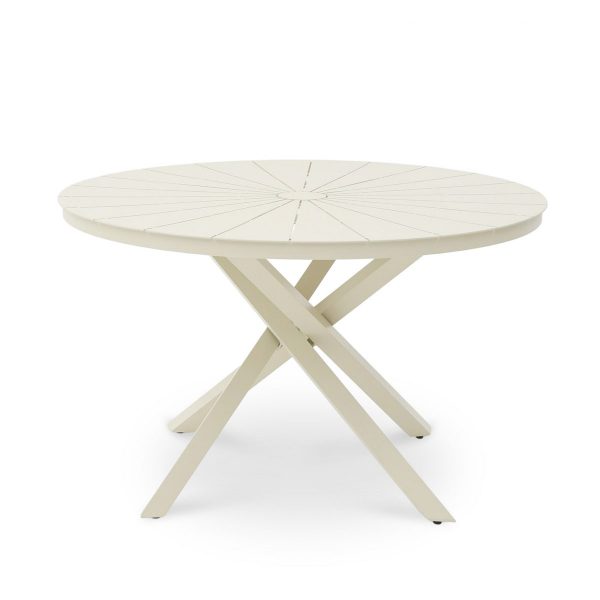

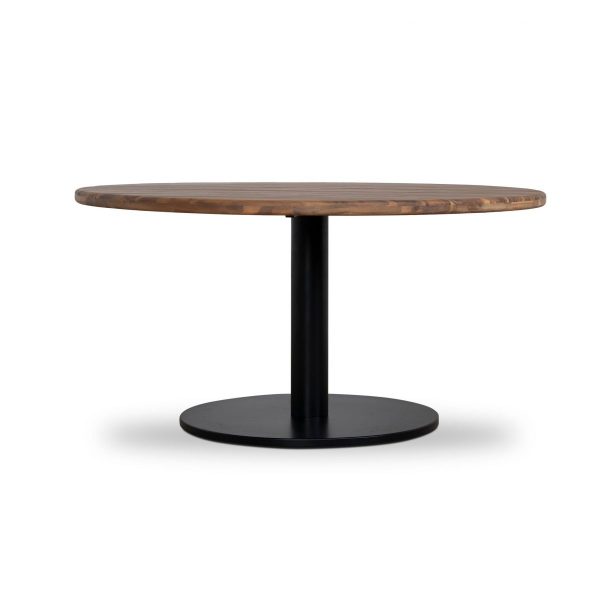
Lay out places around the curved edge
Position the usual place settings on the actual diameter. Leave room between neighbours for elbows and between settings for dishes in the centre. The outside circle may look generous while the area each diner uses remains compact.
Think about the meals you serve rather than only the maximum number shown in a photograph. Larger central space is useful if dishes can still be reached conveniently from the ordinary seats. The broader outdoor dining furniture guide helps coordinate chairs and serving habits. Choose the circle that supports this daily meal, not a diameter selected only because more chairs can be placed around its empty edge.
Check the support around the full circle
Read whether the actual table has legs, a central support or another specified structure. Place chairs where knees and feet will go. A circular top does not mean equal access beneath every part of its edge.
For a central base, compare pedestal outdoor dining tables while checking the lower footprint too. For separate legs, test the gaps at every regular place. Match the chosen outdoor chairs with underside and arm clearance. Assess chairs in the arrangement they will actually use, rather than assume you can rotate the layout indefinitely around the circle without meeting a support or nearby boundary.
Measure the occupied circle outside
Draw the diameter lengthwise and across the area, then add chairs pulled back for entry. Include the path people use while others are seated. A corner-free outline can soften the view without creating a clear route beside a house door or narrow deck edge.
Check the actual table’s allowed exposure and care at that location. Explore outdoor tables if another outdoor use or shape would work better with the site’s boundaries. Choose round dining when the measured circle, support and everyday meal agree. Its visual flow should be a benefit of a useful arrangement, rather than a reason to ignore its width in both directions.