
Round Storage Footstools
Round storage footstools should be compared through the complete curved outline, usable resting surface and compartment inside. Start with the actual diameter at the widest part, then read height and top area separately. A round name does not establish equal dimensions at the base and contact surface, or prove the hidden storage has the same shape as the exterior.
Read moreRead less
Use this collection to choose the curve within the sofa or chair arrangement. Ottomans and footstools provide the wider resting guide. Round footstools focus on shape more broadly, while fabric storage footstools compare a covered contact direction. Choose reachable foot support and practical access before assuming a corner-free form automatically saves floor space.
Showing the single result
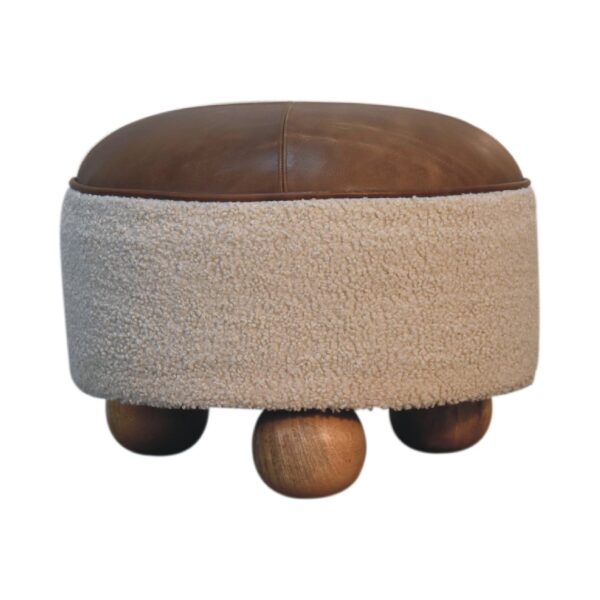

Measure the full curve and useful top separately
Read the widest assembled diameter and the actual usable surface. A shaped side or broad base can occupy part of the outer circle without adding resting area. Compare height and reach with your normal seated position rather than selecting a round form only for its visual softness.
Plot the complete outline between the sofa and surrounding furniture. Curves remove sharp-corner geometry but do not eliminate the occupied footprint. Check room to approach the seating and stand, with the footstool in use. Living furniture offers the wider arrangement. Choose the actual size and placement rather than treating round as a universal compact format or estimating space from a front photograph.
Compare the compartment with the objects rather than the exterior shape
Measure the stored groups in their practical arrangement, including lifting space. Read internal width, depth and height, plus any fittings or opening limits. The exterior can be round while the documented compartment has another useful outline. Do not infer cylindrical capacity or a removable lid from the shape label.
Read the actual access direction and mechanism instructions. If the resting surface must be cleared to open storage, include that step in the routine. Seating with storage examines the change between contact and retrieval. Choose a compartment that serves the important objects, not a round exterior that looks generous but leaves storage size or access unclear.
Fit open movement and care beside the seating
Plot the documented opening with nearby tables and the sofa in place. Include the person removing objects as well as the empty footstool outline. A curved closed body can still need substantial movement to reach its storage. Confirm operation rather than inferring controlled closing or lift assistance from appearance.
Read top, side, base and interior materials separately. Bouclé storage footstools or timber storage footstools narrow a covering or component route after shape fit is clear. Follow actual care, assembly and handling, then ask benssur about missing diameter or internal details. Choose the curve on a footstool that supports an understood resting-and-storage task in the room.