
Grey Footstools
Grey footstools are for a seating arrangement where the nearby resting piece should feel connected without drawing too much attention. Start with the actual grey beside your chair or sofa. Undertone, depth and textile texture can make two grey items quite different, so colour names do not establish a matching pair. Compare the stool against the rug or floor as well, since that is the background around its lower outline.
Read moreRead less
Use this collection to choose that neutral relationship on dimensions that suit your resting position. Grey does not establish covering or care. Ottomans and footstools provide the wider fit guide. Brown footstools offer another deeper-neutral direction if warmth rather than a grey relationship would better connect the room.
Showing the single result
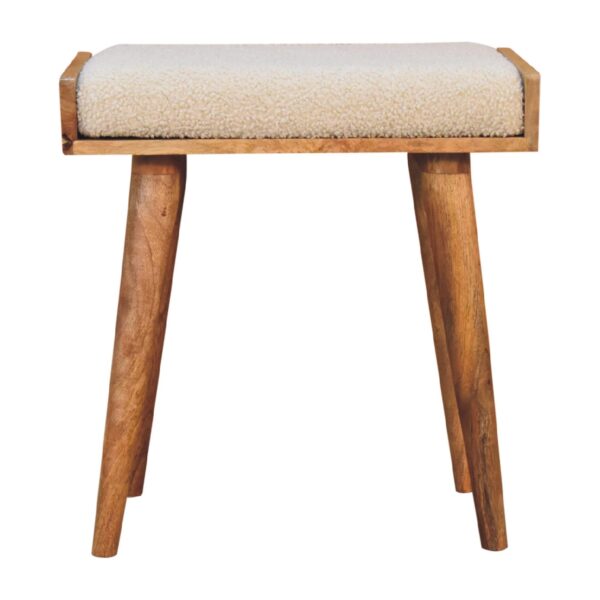

Choose how closely grey should relate to the chair
Compare the seat and footstool surfaces in actual tone and texture. A clearer difference can be easier to work with than a near match drawn from separate product photographs. Decide whether the stool should read as part of one visual group or as a quieter independent piece. Ask about finish when a close match matters.
Consider the rug beneath both. Pattern or a similar grey can change how the stool’s outline appears. A subdued colour still has shape and visible area, so review the whole body rather than a small swatch alone. Cream footstools provide a lighter comparison if the pair needs a more deliberate contrast.
Keep resting height separate from visual coordination
Compare the selected height and usable top with the chair and how you actually sit. A matching-looking stool can still place feet differently from the position you prefer. Check the support zone within any curved edges or other profile, not only the maximum external width.
Mark the full footprint in use and its parked position between uses. Preserve room to stand and move around the seat. Round footstools or square footstools offer different outline directions after the resting relationship is clear. Neutral grey should finish a practical plan, rather than encourage overlooking an inconvenient height or a body that blocks the room route.
Read the grey covering for contact and maintenance
Check the actual textile, leather or other surface specification. Grey does not establish one fabric blend, mark resistance or a cleaning advantage. Read care for everyday foot contact and ask about removability if that feature is essential. Follow the selected guidance instead of applying a method used on another grey item.
Confirm intended use and any loads before adding seating or table roles. Fabric footstools and leather footstools narrow the material comparison once the colour relationship is chosen. Check handling and supplied parts, then ask benssur about unclear measurements or covering details. A quiet neutral footrest should still have a clear purpose beside the seat.