
Grey Dressing Tables
Grey dressing tables can connect a personal-care area with bedroom textiles without making it a strong colour accent. Compare the actual grey with the bedhead, wall and floor: warm brown influences and cooler tones create different relationships. A shared grey name does not settle that close comparison.
Read moreRead less
Then look at the surface from the intended seat, with the mirror and daily objects in place. The quieter palette should make the routine clearer rather than hide the table’s size or support. Use this guide to join those choices. Browse any listed pieces, or review the wider dressing tables guide when placement and overall sitting access need to be planned before refining the grey finish.
Showing the single result
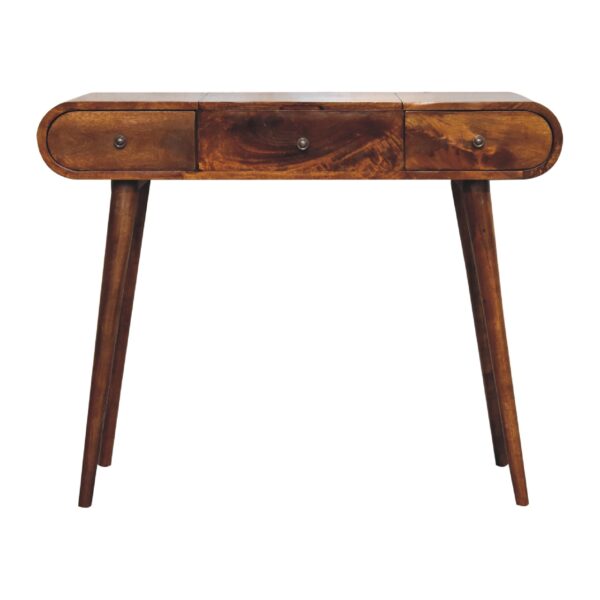

Choose grey warmth beside the bedroom fabrics
Use the bed upholstery and curtains as references, not an imagined neutral room. A cool grey table can differ visibly from a warm grey bed even though neither seems strongly coloured alone. Compare their lightness and texture together at the actual location.
Decide whether the dressing area should blend or sit a clear step darker or lighter. Near-matching tones may feel less deliberate than an intentional difference. Explore bedroom furniture while considering the wider palette. Keep complete width and depth beside the colour notes: a quiet finish can make a broad piece look less prominent, but cannot improve the actual seated footprint or route beside the bed.
Keep the neutral top clear for the routine
Lay out frequently used containers and tools within the usable top, leaving working room between them. Their colour and size influence how clearly they are seen against the actual grey surface. A display arranged from the doorway may not provide convenient seated reach.
Check mirror size and support at the intended sitting position, including what is supplied. The bedroom vanity guide helps assess that close view and reach. Choose useful object positions before adding decorative accents solely to make the grey more visible. Keep the neutral surface useful for the daily routine, with enough space and seated reach that objects do not need to be moved repeatedly.
Choose storage and finish for ordinary use
If belongings need concealment, compare dressing tables with drawers by interior dimensions and opening access. Check how the storage body relates to knee clearance and the seat. Colour cannot establish those practical relationships.
Read actual top, front and support materials and their care for intended contact. Grey is not evidence of easy cleaning or resistance to marks. Confirm mirror or seat contents, assembly and any fixing guidance too.