
Ceramic Decorative Bowls
Ceramic decorative bowls invite a close comparison of form and surface. A shaped rim, foot or glaze can make the bowl itself the focus, while its actual opening determines whether suitable small objects can also be kept there. Maximum width does not describe both tasks completely.
Read moreRead less
Read the ceramic and finish information before assuming food contact, water use or a particular cleaning method. Glazed appearance is not a complete use specification. This guide helps compare the object as a considered part of a surface arrangement. Browse any listed pieces, or review the wider decorative bowls and trays category when a flatter tray or another material may serve the same display or organisation need more clearly.
Showing the single result
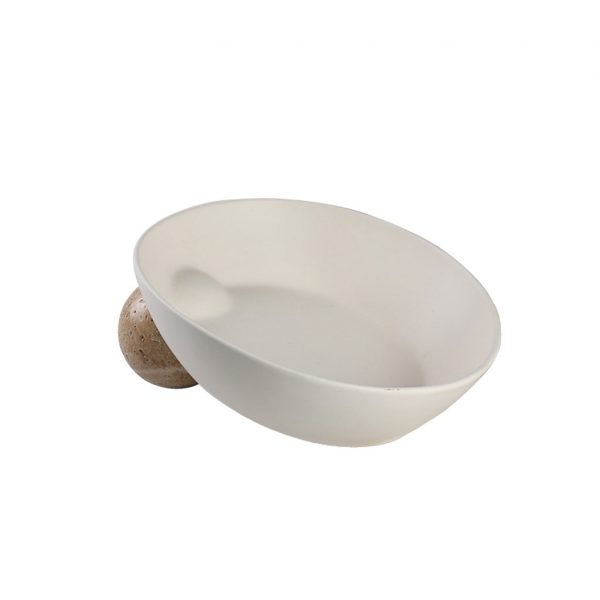
Choose the ceramic form for the view you will see
Look at the bowl from above as well as side-on. A strong rim may be most visible on a low table, while a raised foot changes the silhouette on a shelf. The placement should show the detail that is your reason for choosing the object.
Compare outer dimensions with usable opening and base. A sculptural ceramic form may offer less internal room than its widest point suggests. Ask about those measurements when contents matter. For a different way to reveal the interior, compare glass decorative bowls by actual transparency and shape. The useful ceramic choice gives its form a clear role instead of assuming every bowl is mainly a container.
Check the actual glaze and surface finish
Check the stated finish rather than inferring it from shine or colour. Glazed and other ceramic surfaces can have different appearance and care requirements. A matte-looking image cannot establish porosity, treatment or resistance to marks on its own.
Assess texture with the tabletop, lamp light and nearby objects. If the bowl is the focal piece, quieter companions may leave its shape clearer than several competing textures. Use decorative accessories to compare the overall arrangement, keeping the supporting furniture’s daily surface free. Colour and glaze should support a deliberate object, not become a reason to crowd the top with more pieces that hide the actual ceramic detail.
Confirm use and care for the actual bowl
Read whether the product permits food contact, water, washing or other intended tasks. A glaze does not automatically establish any of them. Do not treat a decorative piece as a serving bowl solely because it resembles tableware or appears with fruit in a photograph.
Follow care and handling guidance and check base protection for the furniture beneath. If using it for small belongings, keep contents suitable to the stated finish and easy to remove for cleaning. The console tables guide helps plan that usable surface.