
Walnut Veneer Coffee Table Sets
Walnut veneer coffee table sets bring a defined wood-surface direction to several living-room tables. The useful question is how the group relates to your floor, sofa and existing timber, rather than assuming walnut describes one fixed shade. Compare the selected finish and the amount of visible grain when the tables sit together. If pieces will separate, consider their appearance in those positions too.
Read moreRead less
Use this collection to assess the surfaces with the actual construction kept clear. Veneer is a wood layer over a supporting material, not proof of solid walnut throughout. Coffee table sets cover the wider arrangement choices. Oak veneer coffee table sets offer another wood-surface direction to compare within the same room plan.
Showing the single result
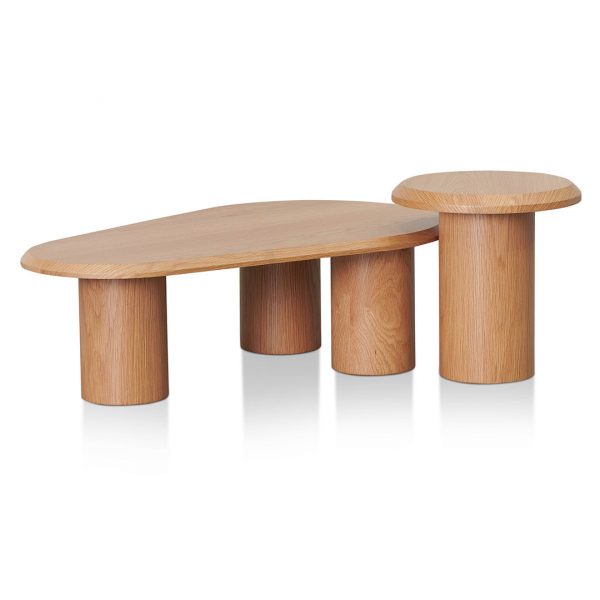

Choose the walnut grouping through its relationship to the room
Review the included tables together and compare their combined visible area with the rug and sofa. A close grouping can read as a larger wood feature; separated tables may create smaller accents at different seats. Finish and grain vary across walnut-labelled items, so use the actual product views rather than assuming a uniform dark tone.
Compare the group with existing wood furniture deliberately. It does not need an exact match, but a near match inferred from screen images can be uncertain. Natural timber coffee table sets offer a broader grain direction if the room needs a quieter relationship rather than a specific walnut surface.
Read veneer and edge details for every table
Check the tops, bases and legs in the specification. Walnut veneer may be used on selected components only, with other materials providing the structure. Read the supporting materials where stated and ask about gaps in the description. Grain photographs establish a visual direction but cannot explain hidden components.
Look at the edges exposed by the intended overlap and the view from the sofa. These details affect the outline as well as the surface pattern. Timber coffee table sets provide the wider construction comparison. Read the included-piece list, each finish and the stated layout before planning an overlap or tuck-away position. Compare the actual arrangement with the seats it needs to serve.
Keep the veneer surfaces practical for everyday living
Compare each usable top with what it needs to hold. Leave accessible room for your usual tray or drink rather than judging only the full geometric area. Check heights and walking space in the combined arrangement, then mark separate positions if they are part of the plan.
Read the finish-care guidance before applying polish, oil or a cleaner. Veneer should not be treated as permission to sand or refinish a surface. Confirm handling and assembly requirements for each piece. Nesting tables focus on documented compact arrangements if that function is essential. Ask benssur about unclear materials or care so the walnut feature remains a practical part of the room.