
Travertine Console Tables
Travertine console tables make stone texture part of a wall-side surface. The actual finish is important: natural cavities may be left visible or filled, and surface treatment changes what you see and touch. Confirm those details alongside which components use travertine before choosing the appearance.
Read moreRead less
Think about the lamp, tray or arrival objects placed on the console. They need a useful supported surface and care suited to the stone, rather than a top chosen only for its close-up texture. This guide helps assess that practical relationship. Browse any specified pieces, or review the wider console tables category for another surface whose actual finish and dimensions suit the same daily location.
Showing all 2 resultsSorted by recommended
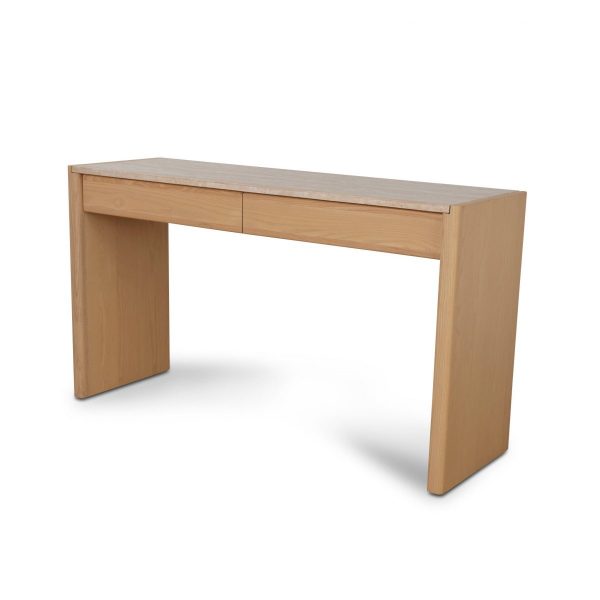

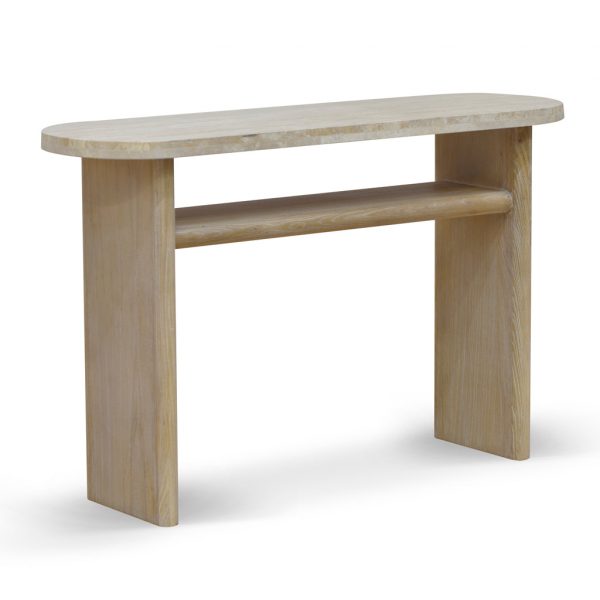
Choose the actual travertine surface, not a generic stone image
Read whether the stone is specified as filled or unfilled and how it is finished. Cavities and their filling can affect the visible texture, so a photograph of one top does not establish every surface detail. Ask about unclear information when it affects object placement or maintenance.
Compare the whole visible span for colour and pattern, including any variation expected in natural stone. A long console face and narrow top can show texture differently. Do not assume a travertine-looking effect is natural travertine; keep the material description accurate.
Plan everyday objects on the usable top
Measure object bases and compare them with the actual top shape. A lamp, tray or vase should have an appropriate supported position, not be balanced at an edge to preserve a narrow footprint. Follow the individual product’s placement and load guidance.
Consider how the surface texture meets those objects, with protection where instructions call for it. Compare narrow console tables if reduced projection is the room constraint, while checking whether enough usable area remains. For another stone look, compare marble console tables using their stated stone and finish-care details. Keep room routes and full base dimensions in the plan as well.
Decide whether stone care fits the console routine
Natural travertine can be etched by acidic liquids or cleaners, leaving a dull patch where the surface has changed. A penetrating sealer does not prevent that reaction. Filling natural cavities is a separate treatment from sealing or coating the top, so check each detail on the actual console before planning its everyday objects.
Use the selected item’s care and protection guidance for the filled areas, stone finish and any other materials. Give drinks or objects the protection that finish requires, and keep them easy to lift away for care. Avoid acidic or abrasive cleaners on natural travertine; ask about unclear coating guidance. Confirm assembly and handling too, with lamp or tray bases positioned on the usable surface rather than at a narrow edge.