
Mango Wood Wall Storage Units
Mango wood wall storage units combine a named timber choice with the position where contents will be reached. Confirm which body, shelf or front components use mango wood, keeping veneer, solid timber and other materials accurate. A warm surface cannot identify every support or the installation method.
Read moreRead less
Then compare useful compartments with the things you want to store and the full form with the room. Wall storage covers the initial contents and placement checks. Mango wood can show varied grain and colour under the chosen finish. At wall height, fronts and shelf edges may be more visible than a top surface. Compare the parts you will see from the room, alongside the depth and position needed to reach your belongings.
Showing the single result
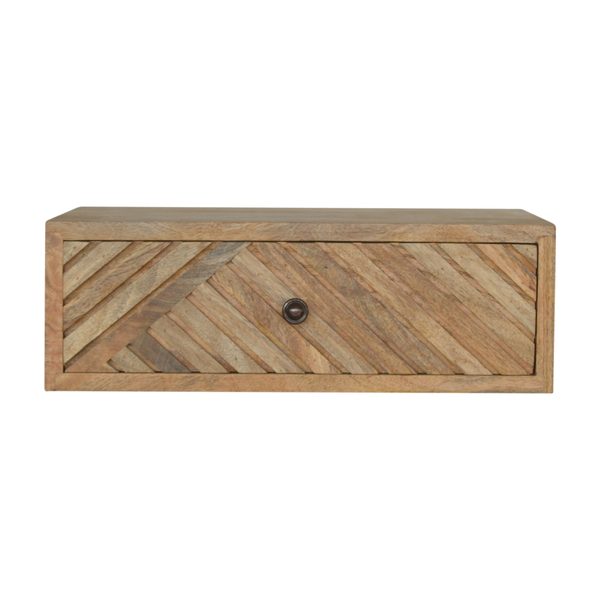

Which visible and supporting parts use mango wood?
Read body, shelves, any fronts and other components separately. Keep the species and construction statements precise wherever supplied. Interior or edge views can help understand the material list without establishing the complete structure on their own.
The wood name should not create a sourcing, origin or load-rating claim. Ask about unclear detail when the named timber is part of the brief. Wall fixing and furniture assembly require their own actual instructions; they are not determined by visible grain. If the mango wood is on the fronts, compare their grain and finish as a complete arrangement. If it is on an open shelf or body, check how much will remain visible around the contents and from the planned viewing height.
How will the timber look at the actual installed position?
Compare the complete unit from the main approach and nearby furniture, including the surfaces most visible at the proposed height. Grain on a front and on an open shelf can contribute differently according to the actual layout. Use selected-design finish and variation information.
Choose compatible warmth or a clearer contrast with flooring and existing furniture rather than demand an uncertain species match. Keep the contents’ useful height, depth and retrieval space fixed during that comparison. Wall mounted storage focuses on the placement and access task. Look at the visible grain from both the doorway and the place where you will retrieve items. A deeper unit may show different surfaces at those positions, and nearby contents can cover some of the timber detail.
Can the finish, compartments and mounting suit the room?
Measure contents against usable inside gaps and any openings, then mark full depth and access at the intended position. Include doors, switches and nearby furniture. Read stated adjustment and loading rather than infer either from timber.
Follow the coating’s care and room placement; wood responds to moisture, so a warm appearance is not an exposure or damp-content promise. Use the selected mounting guidance and suitable support for the actual wall, obtaining installation help where unclear. Storage furniture offers another format if access or setup does not suit. Check how to clean the exposed timber edges and fronts once the unit is installed. Keep frequently used contents in the most reachable gaps, leaving the finish to connect that practical arrangement with nearby furniture.
Frequently Asked Questions
Use wall storage for the broader contents task once the mango wood components and actual mounting are clear.