
Mango Wood Tray Tables
Mango wood tray tables put the usable tray surface at the centre of a small furniture choice. Start with the items it needs to hold: perhaps everyday objects beside a seat or a decorative arrangement, according to the selected table’s stated use. Compare those objects with the tray’s inner space, not only its outside dimensions.
Read moreRead less
Then identify where the mango wood appears and whether the tray has any expressly supported removal or carrying function. The name alone does not establish folding, portability or serving use. This guide helps compare grain, surface and structure together. Browse any listed pieces by their actual construction, or explore side tables when a fixed occasional surface would serve the same room task.
Showing the single result
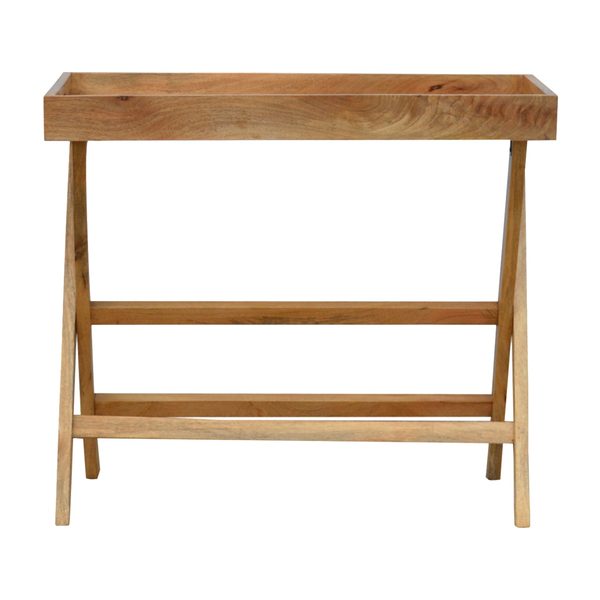

Measure the useful space inside the tray edge
Set out the intended objects within the actual inner tray dimensions. A raised rim can define the surface while occupying some of its overall width and depth. Check the usable shape and any handle or cut-out detail in the selected design.
Consider how objects are placed and reached from the nearby seat or room position. Compare the tray with its base height, rather than judge the top as a separate decorative bowl. The decorative bowls and trays guide helps when the main need is a contained display on existing furniture. Choose a tray table only when the complete surface and support provide the useful role you need.
Confirm what the tray and support actually do
Read how the tray connects to the base and which functions are allowed. If removal, carrying or folding is important, verify that specific feature and its instructions. A tray-shaped top can remain part of a fixed table.
Check the base footprint where the table will stand, including chair movement and the route past it. Do not infer load capacity or extra seating from the wood construction. Compare actual dimensions with the occasional side table guide when assessing a nearby fixed surface. Decide whether you need a fixed landing place or a tray that is expressly allowed to be removed. Check the actual attachment, usable tray area and handling instructions for that choice before planning the table beside the seat.
Choose visible mango character and finish care
Compare the full specified wood component with the objects and furniture around it. Mango can show golden-brown tones and darker grain, while the actual coating affects the appearance. Check construction and expected variation if a particular visual relationship matters.
Read the selected finish’s instructions for the intended contact, including any protection required for objects placed on the tray. A timber surface is not automatic evidence of food contact, water resistance or a suitable treatment. Choose the table through usable tray area, actual support and precise care, so the preferred wood character belongs to a practical occasional surface, with the supported functions and care clearly understood.