
Leather Benches
Leather benches are a material-led choice, so begin by confirming the actual covering. Identify which panels use leather and whether other parts are described differently. A smooth surface, brown shade or visible grain in a photograph does not establish genuine leather or leather throughout.
Read moreRead less
Then consider the seating job. A bench at the foot of a bed, beside an entrance or at a dining table has different fit and contact questions. The bench category helps separate those tasks. Compare the verified leather detail alongside usable dimensions and care. Brown benches offer the colour comparison across materials when warmth matters more to you than leather specifically.
Showing all 8 resultsSorted by recommended



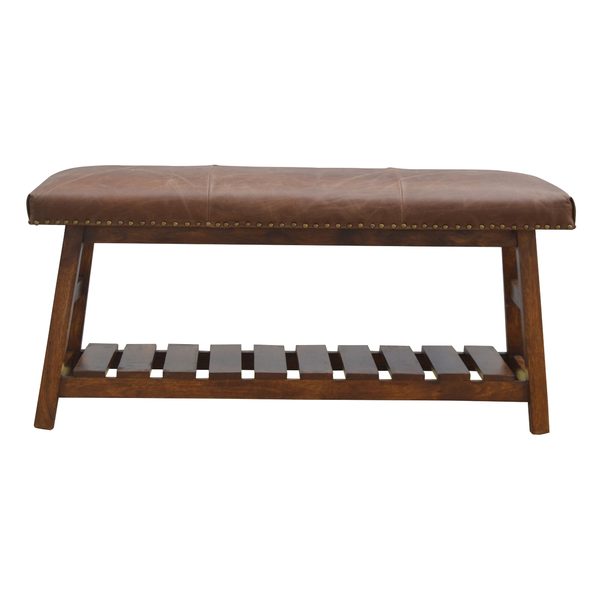
Which panels make this a leather-covered bench?
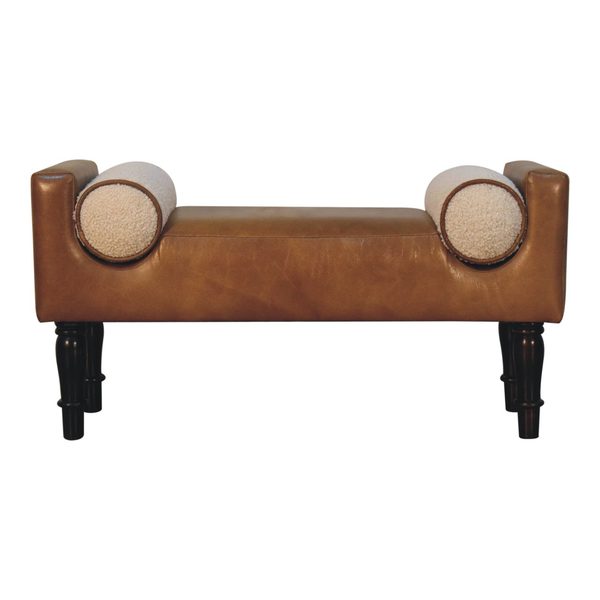
Read the covering specification for the long seating panel, upholstered ends and any rear surface. If the bench will stand away from a wall, those other panels will be visible too. Confirm which are leather and which use another material, so appearance and care can be compared for the whole piece.
For genuine leather, finish changes the surface you are choosing. Aniline leather retains visible natural grain with no coating or a non-pigmented coating; a pigmented finish conceals the natural grain or surface. Compare the actual finish description for a more visibly natural surface or a more uniform appearance. Then read filling and support separately: the covering does not decide the seat contour or padding.
How does the leather surface fit the room’s use?
At an entrance, hands, bags and shoe-changing routines affect contact. In a bedroom, a bench may sit beside bedding and be used for dressing. For dining, food care and the relationship with the table become relevant. Check intended use and maintenance for the chosen design rather than assuming one covering suits every task.
Read the recommended response to spills, cleaning products and placement near heat or direct sunlight. Follow the actual instructions, including care for any non-leather panels. A darker colour does not remove those responsibilities. Decide whether the routine suits your household before making the material the main reason for selecting the bench.
What seating form belongs beneath the leather?
Compare usable height, depth and length. Rounded upholstery or raised ends can reduce the seating area inside the outside dimensions. If two people will share the bench, plan their space and follow the product’s stated use rather than assigning a capacity from length alone.
Check filling and support separately if you want a cushioned seat. Upholstered benches focus on that form decision, while bedroom benches help place a dressing seat. Include the full base and route around the bench. A verified leather surface should sit on a practical form, not encourage you to overlook an unsuitable height or an occupied footprint that blocks nearby furniture.
Frequently Asked Questions
Use dining benches if the intended leather seat must work with a table, checking the actual seat height and product use.