
Fabric Desks
Fabric desks bring a textile detail into work furniture. First establish where that textile is used on the desk itself. The product should identify that component clearly. A chair, accessory or styled textile shown beside the desk does not describe the desk’s construction, and the label should not imply a fabric-covered working top.
Read moreRead less
Once the detail is clear, compare the actual useful surface and the seated opening. Texture can connect a work area with domestic furniture, but it cannot settle legroom or equipment fit. Desks cover the broader setup. Compare the specified textile component and its contact-point care with practical work dimensions before choosing the detail.
Showing the single result
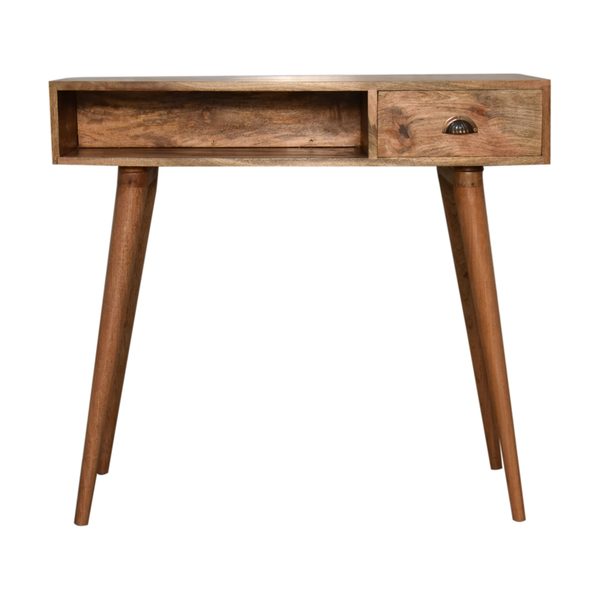

Where is the fabric used on the desk?
Read the desk’s material specification for top, frame and any other stated part. Identify the exact textile component and keep it separate from nearby objects included only in a photograph. Do not infer upholstery or a cloth working surface from the collection name.
Ask about unclear information if fabric is the reason for choosing. Composition, covering treatment and placement affect what needs care, while the desk’s supporting structure and useful top require their own descriptions. Check how much of that textile remains visible from your chair and the room entrance. Compare its texture with furniture you keep, using the desk’s own specification to identify the parts you see.
How will that textile detail be touched and maintained?
Consider the actual location named in the design and how hands, clothing or equipment may contact it. Read care for that specific covering instead of applying a routine for another household textile. Removable or washable features should only be treated as present when stated.
Compare the visible texture with the room’s upholstery and other materials. It can have a clear finishing role without performing the same job as the desktop. Home office desks help place the piece within a domestic work area. Choose fabric detail from accurate information and a practical maintenance routine, not an assumption that every textile adds the same softness or function.
Does the rest of the desk support the actual work task?
Measure the equipment and papers used together against the useful top, then check the opening below for knees, feet and the chair. Read any storage or mechanism separately from the fabric component. Material detail cannot establish an integrated feature.
Mark the occupied setup and nearby door or furniture movement. Desks with drawers provide a focused access comparison when that verified function matters. Follow assembly and surface-care instructions for all components. The textile should complete a desk that fits the routine, rather than become a reason to overlook an unsuitable top, limited legroom or a purpose imagined from its appearance.
Frequently Asked Questions
Explore timber desks for a different construction-led comparison while retaining the same work and room requirements.