
Oval Side Tables
Oval side tables give you a longer top with curved ends, useful when a lamp, book or drink needs to sit along the side of a seat. Compare length and width separately. The ends narrow, so the outside dimensions do not describe the placing space at every point on the surface.
Read moreRead less
Try the long direction beside the sofa, then across it, and decide which arrangement gives the best reach without occupying the walking route. Include the whole base in both positions. The side table guide covers height and useful surface area; the choices here focus on the oval’s orientation, curved placing space and relationship with the occupied seat.
Showing the single result
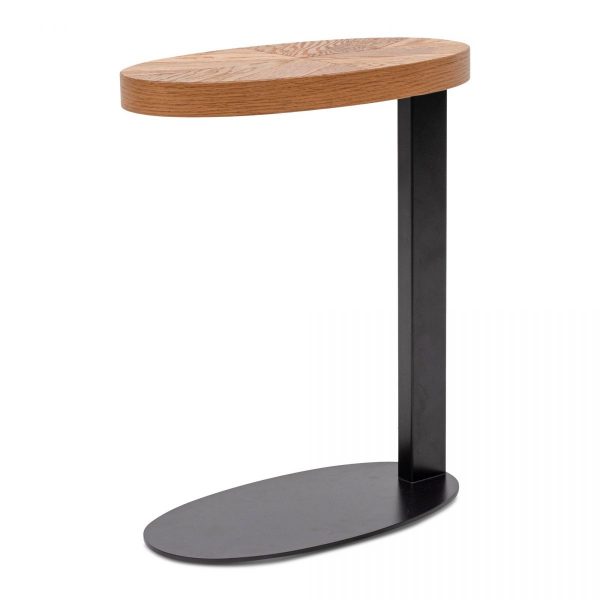

Which direction should the longer oval top face?
Measure the useful gap beside the chair or sofa and compare both top axes with it. Turning an oval changes the surface presented to the seat and walking route. Test where the everyday items would be reached, rather than choose orientation only for the room view.
Include the full base, which may not share the top’s exact oval outline. Mark projections with the seat occupied and room to enter or rise. Rectangular tables offer a different long-direction comparison where corners suit the layout. Mark both orientations on the floor before choosing. A long top beside the sofa may offer several reaching positions, while turning it across the seat could put one end closer to a walkway.
How do everyday objects fit inside the curved edge?
Measure the real lamp base, drink and book together within the usable top. Near the oval ends, the curve gives a different placing area from the centre. Outside length should not become a promise that wide objects fit anywhere along it.
Leave practical room to pick things up without crowding another item or reaching awkwardly across the seat. Check any lip or other stated top detail separately. Round tables provide another curved surface if a shorter overall direction suits. Place the widest object near the fuller part of the outline and check the remaining room beside it. Keep enough clear edge space to lift a drink or book without moving the lamp first.
Can the whole curved form work with the occupied seat?
Compare top height with the actual seated position, then mark complete base and circulation space. Curved corners do not remove the need to pass, enter the seat and stand comfortably. Include any storage openings if present and stated.
Read top and base construction, assembly and finish care individually. The oval label does not establish one material, loading or a child-safety feature. Sofa tables refine the specific seat relationship. Check the seat with someone sitting in it, not only when empty. Notice where feet rest and where the person turns to stand. Refine the table’s position until those movements and the useful top work together.
Frequently Asked Questions
For a shorter curved outline, compare round side tables against the same objects and seat-side space.