
Leather Bar Stools
Leather bar stools appeal to buyers who want the character of a leather-covered seat at a raised surface. That material choice needs a clear specification: identify which parts are leather, whether other panels use different coverings and what care the product requires. A brown colour or visible grain in a photograph is not enough to establish the upholstery.
Read moreRead less
Once the material is clear, compare the stool as seating. Height, usable depth, back support and footrest position still decide whether it belongs at your bar. For an imitation covering, faux leather bar stools provide a distinct comparison, with their own composition and care questions.
Showing the single result
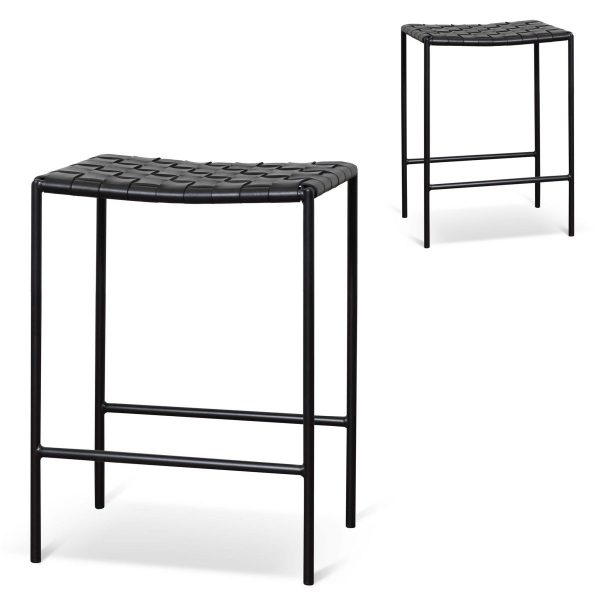

Which parts of the stool are actually leather?
Look for a material description that separates the seat, back and any rear panels. Mixed upholstery can be legitimate when stated clearly, but it should not be mistaken for leather throughout. Ask about a missing distinction before making the material central to your choice.
On documented genuine leather, aniline leaves natural grain visible without a surface coating or with a non-pigmented one. A pigmented finish conceals the natural grain or surface. Compare that visible variation with the more uniform-coated direction, then read care for the actual finish. The frame remains a separate construction question. Fabric bar stools offer another contact surface after support and material are clear.
How will leather sit beside your bar finishes?
A visible leather surface can bring a different texture from polished stone, painted cabinets or timber. Compare its colour and sheen with those fixed surfaces, and consider how much upholstery appears across the row. A small seat pad makes a different contribution from a broad covered back.
Ask for the selected finish and its expected appearance variation when several seats need to coordinate. Compare available full-seat views with that information, then choose how much grain character the row should show. Brown bar stools help compare the warm colour direction separately if you are still choosing between material and colour as your main priority.
What care and support belong in the same decision?
Read the leather care instructions before placing the stool near direct sunlight, heat or food preparation. Use the recommended products and method; bench cleaners and household sprays should not be assumed suitable. Check seams and frequently handled edges as part of normal care planning.
Then confirm the seated position. Compare the listed seat height with the bar underside, and check how the backrest and footrest meet your body. Leather upholstery alone does not establish cushioning or support. If longer sitting is the real need, upholstered bar stools broaden that comfort comparison. Choose a material you understand on a seat that fits the way your household uses the surface.
Frequently Asked Questions
Check the bar and counter stool category if you need to reconsider the height before committing to an upholstery material.