
Beige Bedside Tables
Beige bedside tables can bring a soft edge to a bedroom without relying on bright white or a dark accent. Beige is not one fixed shade: some finishes lean sandy or yellow, while others sit closer to pink or grey. Beside a bed, those differences are especially visible against pillows and linen.
Read moreRead less
Start with the colours you already see every day. A beige table should relate to the wall and bed, but still be clear enough to give the lamp and sleeping area a settled outline. This page helps you judge that balance alongside the furniture’s size and use. Compare any listed pieces with your own room, and check the stated finish rather than reading a material into the colour name.
Showing the single result
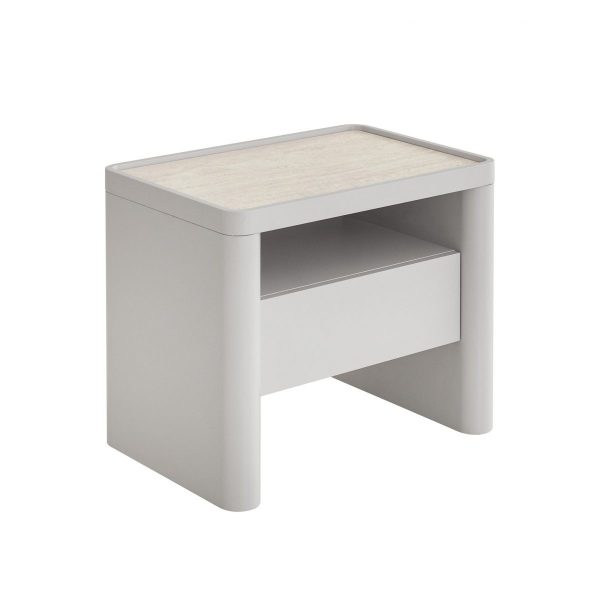

Which beige belongs beside your bedding?
Place your bedding and wall colours side by side before selecting a beige tone. A yellow-beige finish can look warmer against cream linen; a pink-beige may become more obvious beside grey fabric. Two shades described as neutral can pull in different directions when they sit close together.
Bedroom light changes the comparison. Look at photographs for clues about the finish, but remember that a screen and styled room do not reproduce your lighting exactly. If the distinction matters, ask about the particular colour. Ivory bedside tables provide a paler direction to compare when the room needs a lighter bedside edge rather than a deeper sandy tone.
Let a quiet colour carry a useful shape
Because beige may sit close to the wall colour, the table’s outline can become more important than the colour itself. A rounded top, a leg gap or the line of a drawer front can define the bedside without a strong contrast. Assess those details from the doorway and from the pillow.
Do not let a gentle palette distract from reach. Check the tabletop against the complete mattress height, and make sure the lamp and glass each have a clear position. Use the broader bedside tables category to compare practical layouts. If the table blends into both the wall and bedding, a more clearly shaped base or a contrasting lamp can give the arrangement enough definition.
Keep warmth balanced rather than layered everywhere
A beige bedside table does not require beige bedding, curtains and a bed frame as well. Repeating warm neutrals on every surface can make differences in tone more noticeable, while a small contrast can give each piece space. Consider a timber note, a restrained dark detail or a textile with a different lightness.
The surface material still matters for everyday care. Beige upholstery, painted timber and another beige finish behave differently, so use the product’s own description and instructions. Pay attention to contact points near the bed and under the lamp. Check the stated finish and protection guidance before placing a lamp or drink on the top.