
How Architects Choose the Best Dining Sets for Compact Dining Spaces
Estimated reading time: 5 minutes
Compact dining spaces are increasingly common in modern Australian homes, from inner-city apartments to open-plan living areas. As a result, dining sets designed specifically for small spaces have become essential rather than optional.
However, choosing the best dining set for a small space requires more than simply selecting a smaller table. We approach compact dining rooms with precision; prioritising proportion, circulation and material clarity to create spaces that feel open and intentional. If you’re selecting a dining table and chairs for a small dining room, here’s how we, as architects, approach the process.
Start With Scale: Choosing the Right Dining Table Size for Small Spaces
First, we begin with all measurements. The ideal dining table size for a small space depends on three key factors:
As a general rule, allow at least 900 mm of clearance around the dining table. This ensures chairs can pull out comfortably and walkways remain unobstructed. In apartments or tighter layouts, this clearance becomes essential for maintaining flow.
Why Round Tables Work in Compact Rooms
For square rooms, we recommend round dining tables. They remove sharp corners, improve circulation and soften the overall layout. As a result, the space feels more open and less rigid.
For example, a table such as the Monet Round Dining Table demonstrates how a circular silhouette can comfortably seat 2–4 people while maintaining visual balance. Importantly, the design supports movement rather than interrupting it.
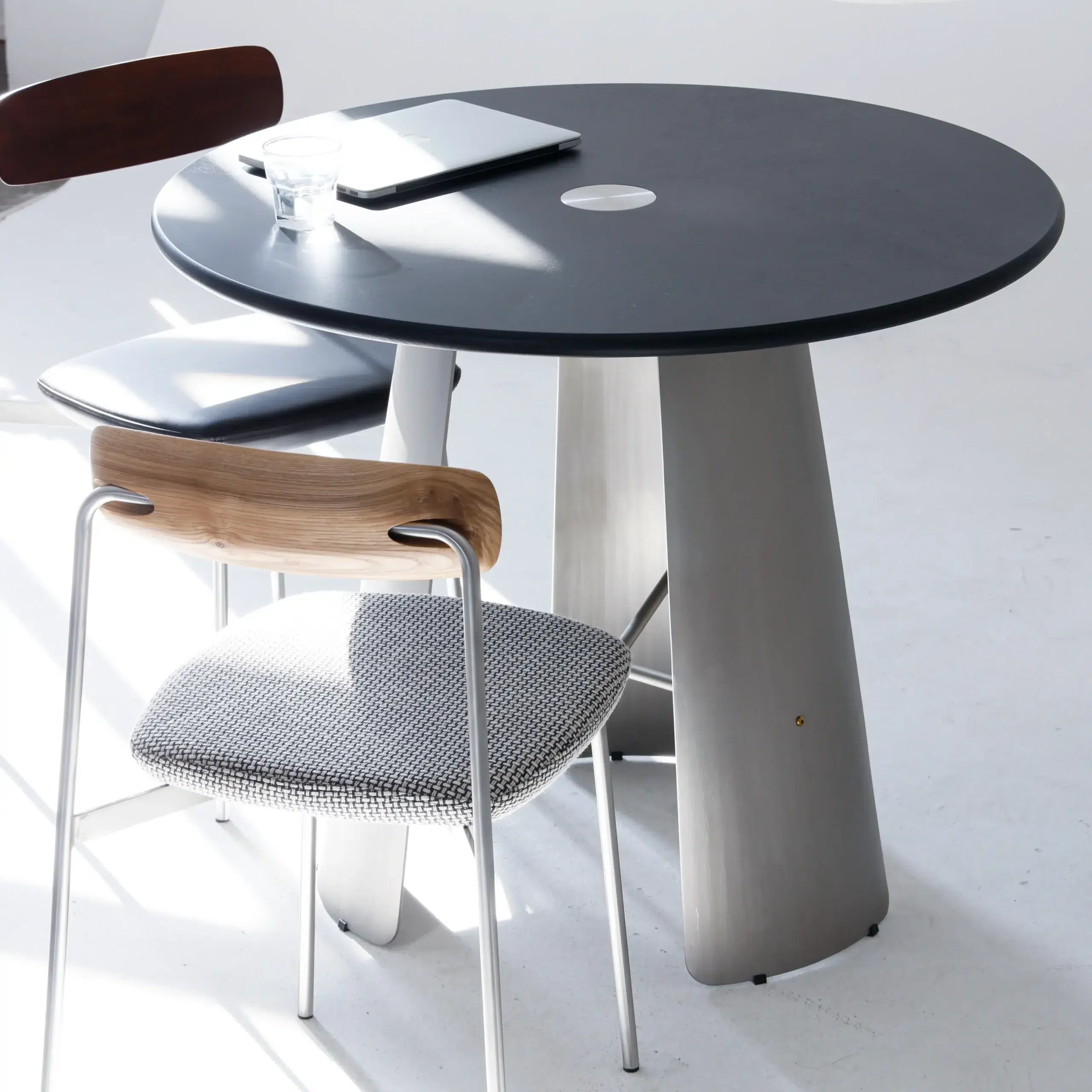
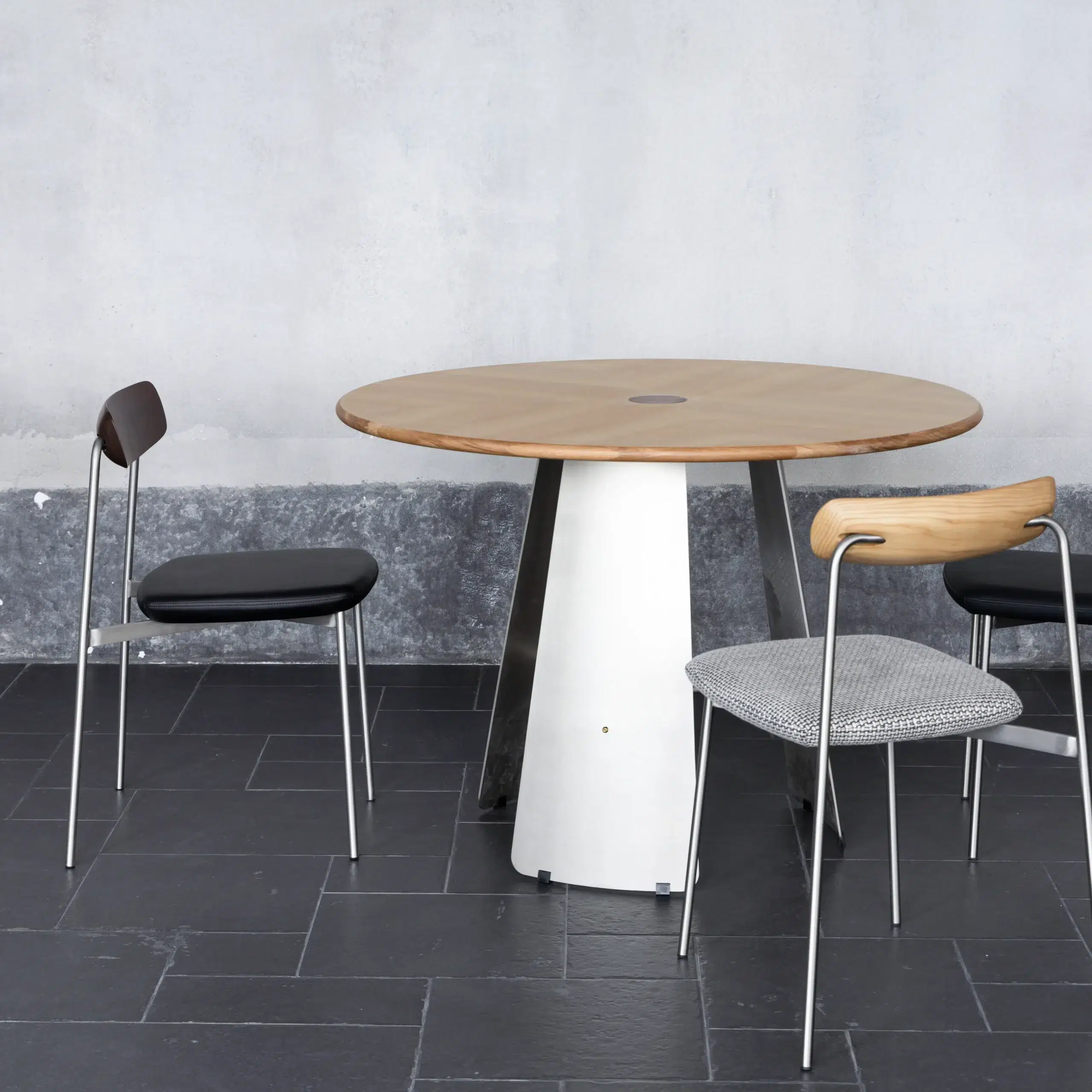
The Monet Round Dining Table in Black and Natural Timber
Rectangular Tables for Narrow Layouts
In contrast, long or narrow dining areas benefit from slim rectangular tables. Here, proportion matters more than length alone. A streamlined tabletop with slender legs prevents the room from feeling crowded.
A design such as the Shuge Dining Table illustrates this principle. Its refined profile maintains surface area without adding unnecessary bulk. Therefore, circulation remains uninterrupted even in tighter zones.
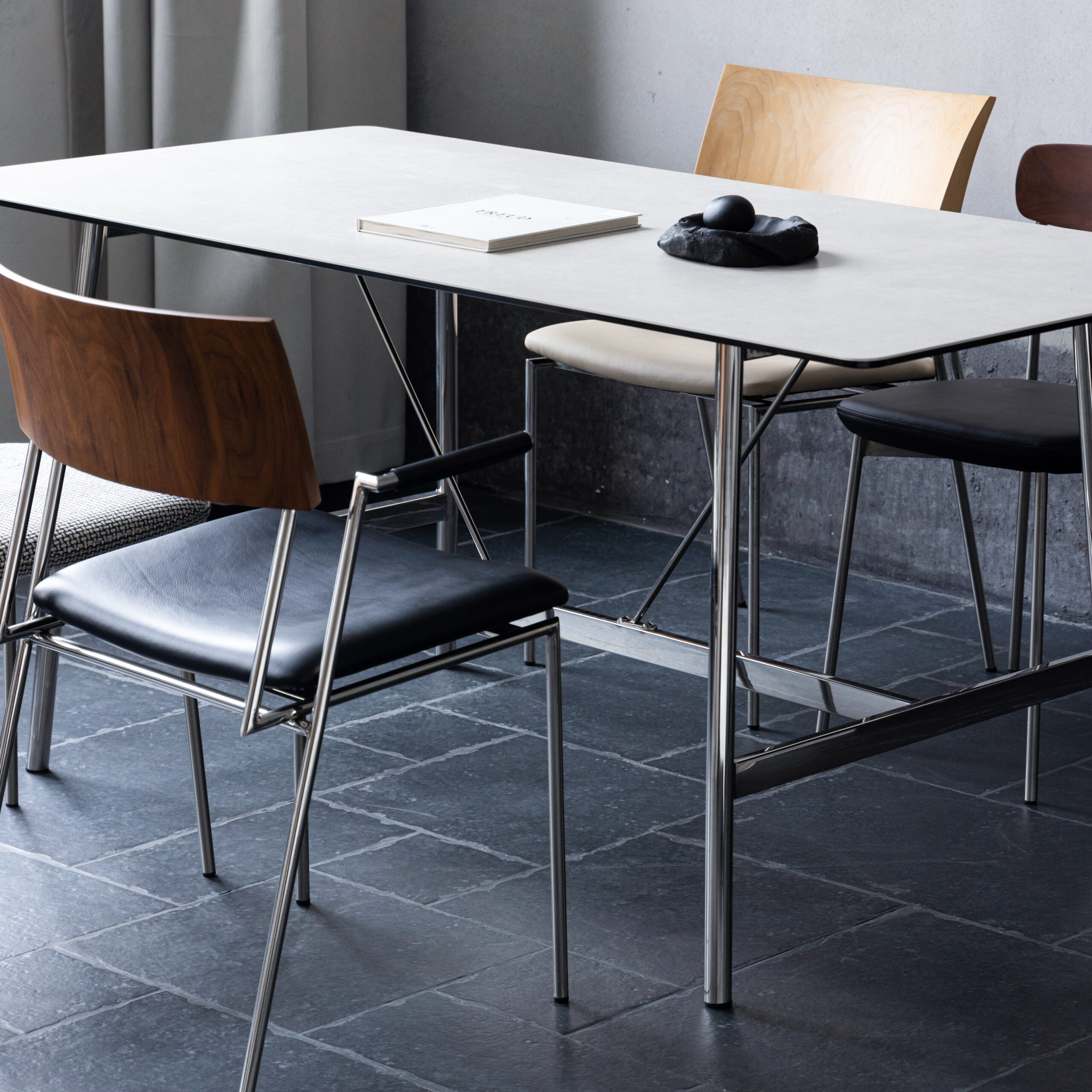
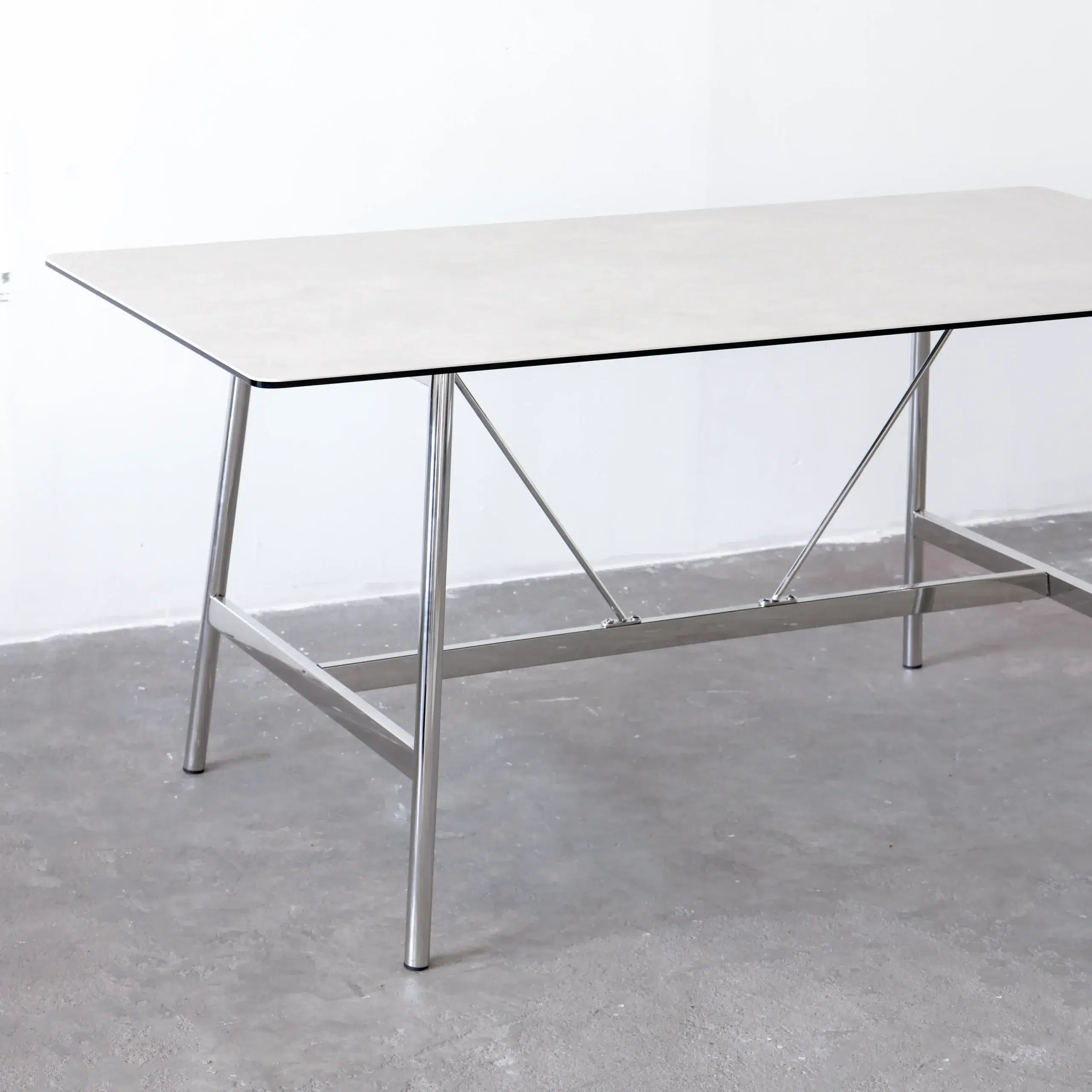
The Shuge Dining Table in Chrome Metal, Grey.
Flexibility for Entertaining
Finally, we consider how the space functions over time. For homes that entertain occasionally, an extendable dining table can provide flexibility without permanently increasing scale. During everyday use, the table remains compact. When needed, it expands to accommodate additional guests.
The Bauhaus Extendable Dining Table reflects this approach, expanding from 1.4 m to 1.8 m while maintaining balanced proportions.
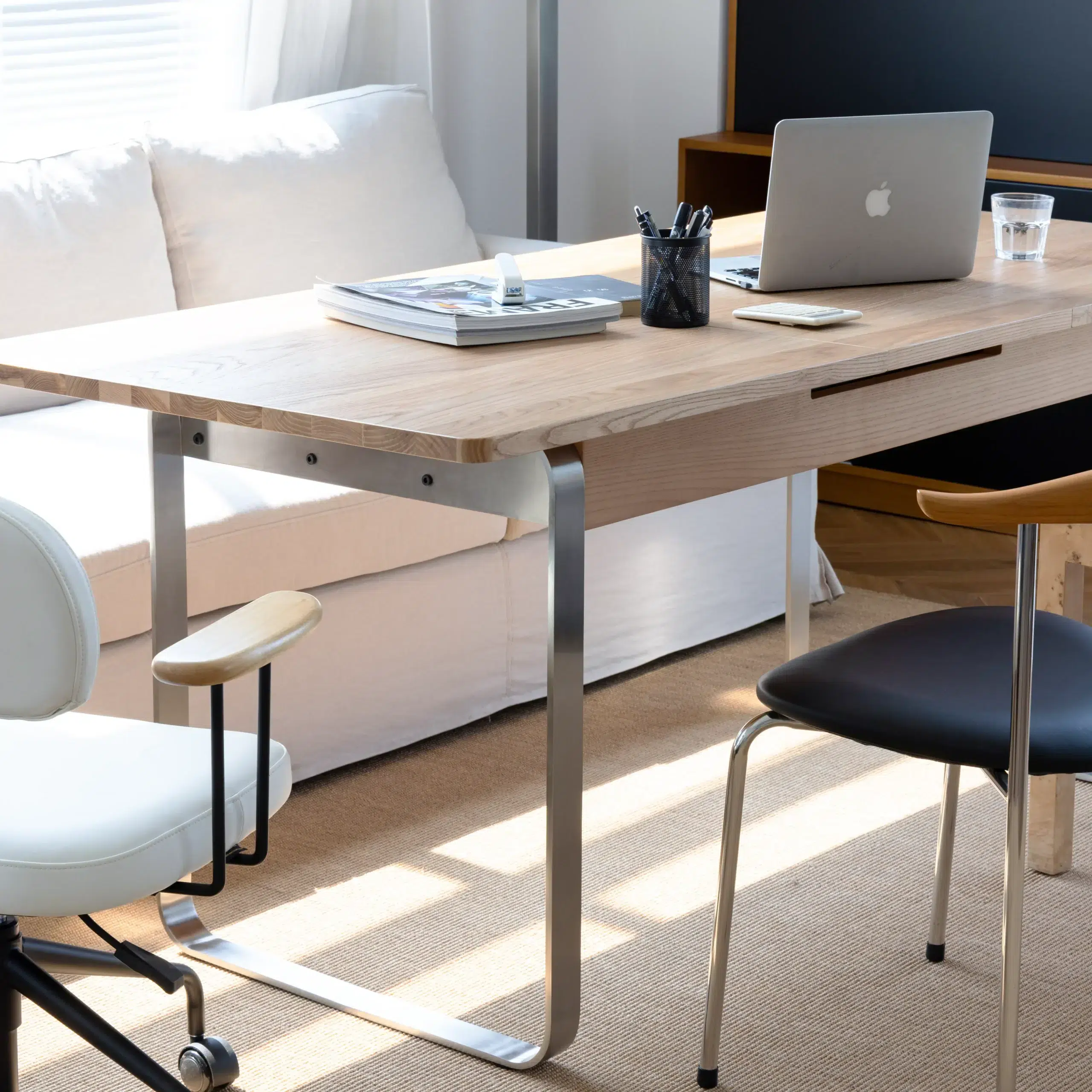
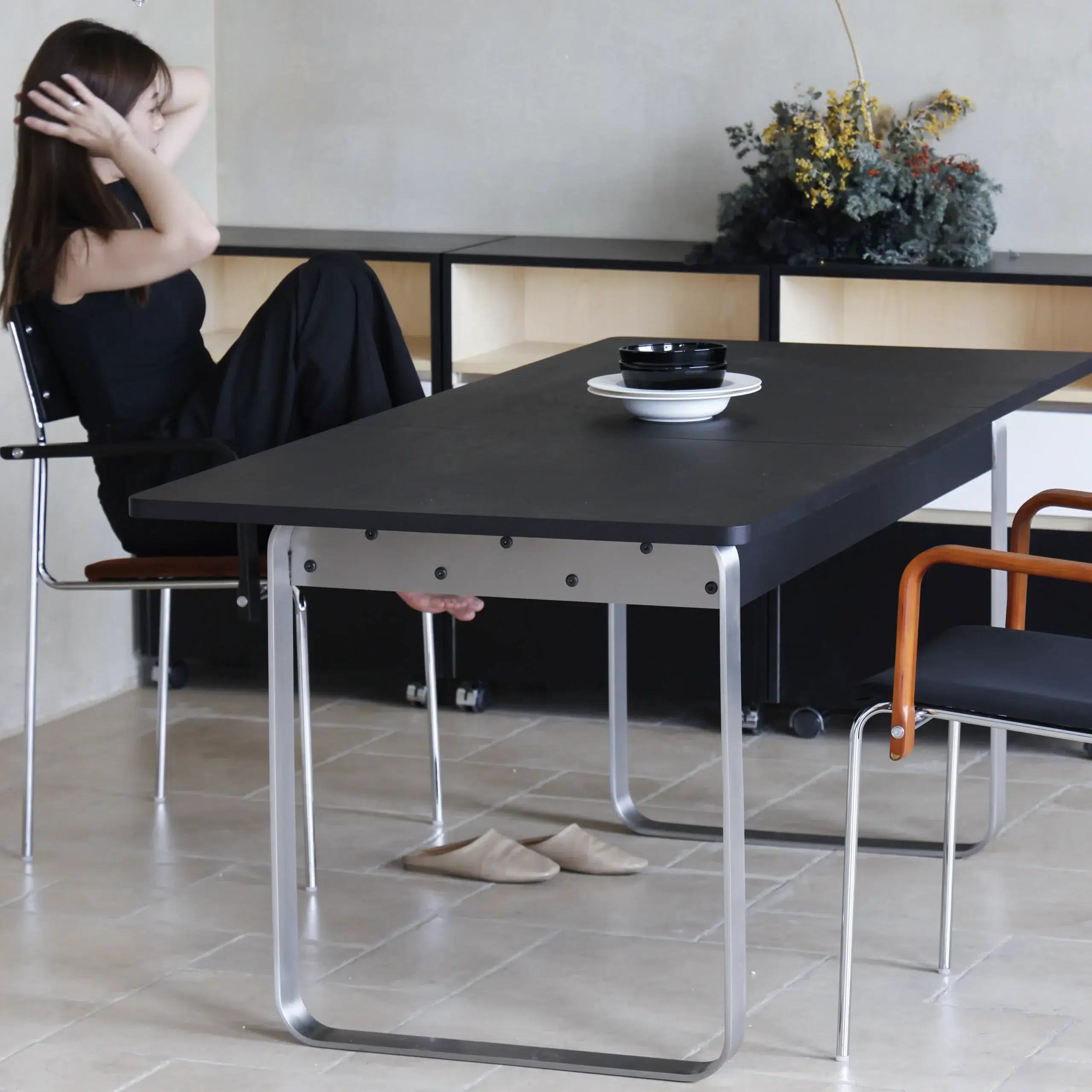
The Bauhaus Extendable Dining Table in Natural and Black.
Choosing Dining Chairs for Small Spaces
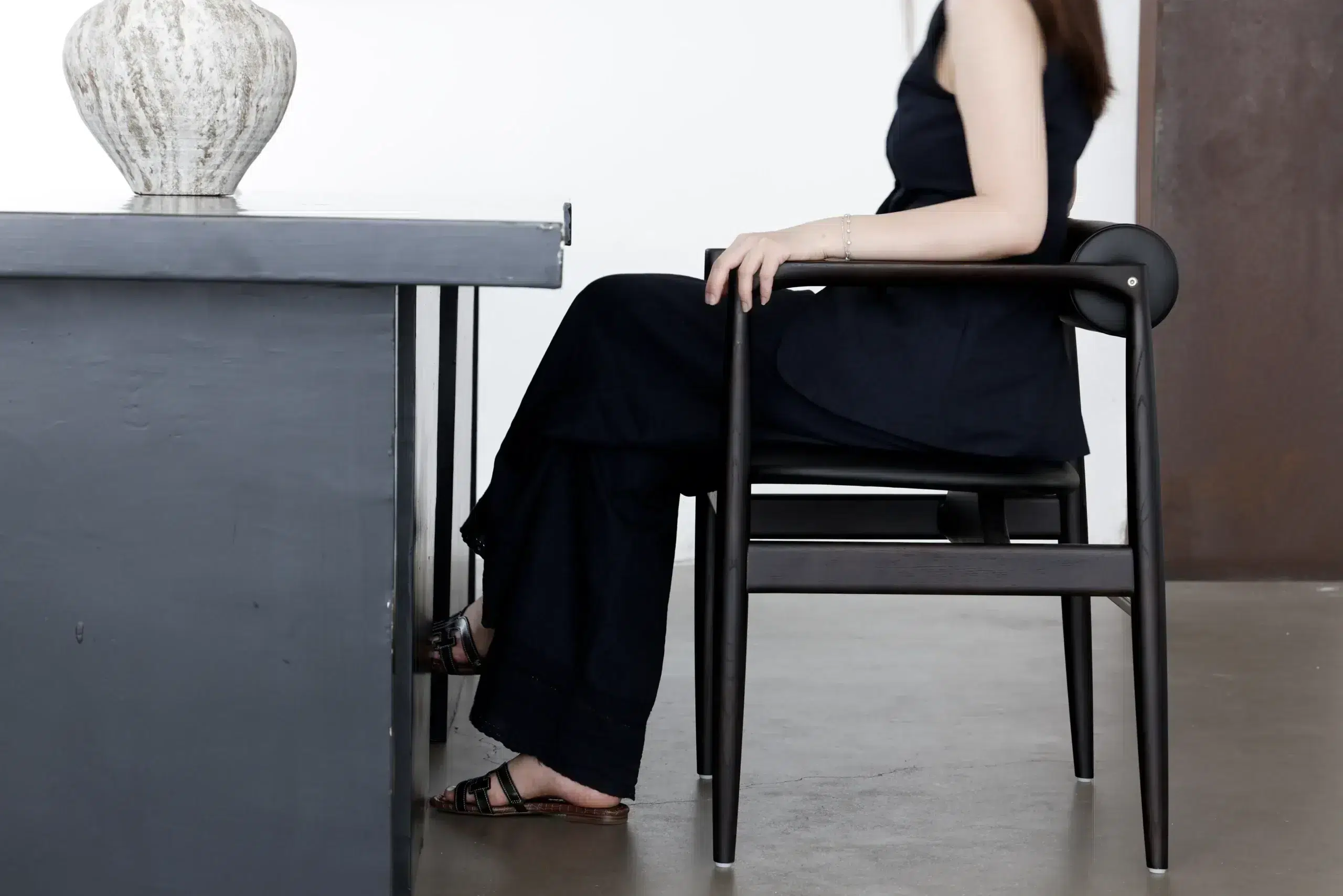
The best dining chairs for compact dining areas balance comfort with proportion. In small rooms, chairs shouldn’t feel heavy, wide or bulky, because every centimetre counts, especially when chairs are pulled out on a daily basis.
What Architects Prioritise
When selecting dining chairs for tight zones, we typically look for:
These criteria ensure that circulation remains intact and that sight lines stay open.
Design That Supports Space
In contemporary Australian interiors, well-designed chairs often mix warm timber detailing with refined metal frames. This pairing achieves a balance between softness and structural clarity. At the same time, it keeps the overall look clean and open. Open silhouettes and slender legs help light travel through the space. As a result, compact dining zones feel less crowded and more intentional.
The Walk Slowly Dining Chair features a refined, slender profile and a supportive upholstered seat. Its slim frame allows the chair to tuck neatly under most tables, enhancing circulation in tighter dining areas. The balance of material and form delivers comfort without excess bulk.
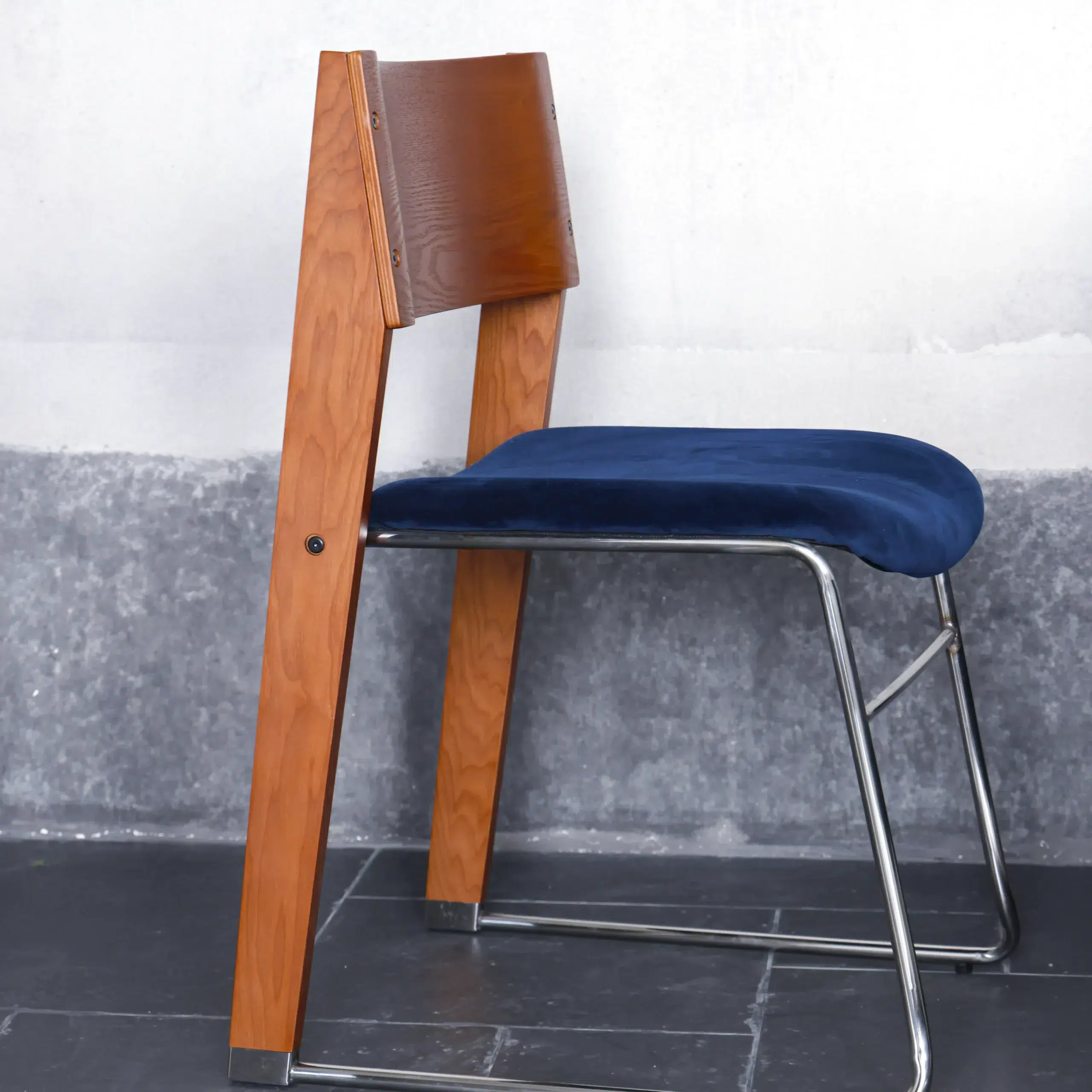
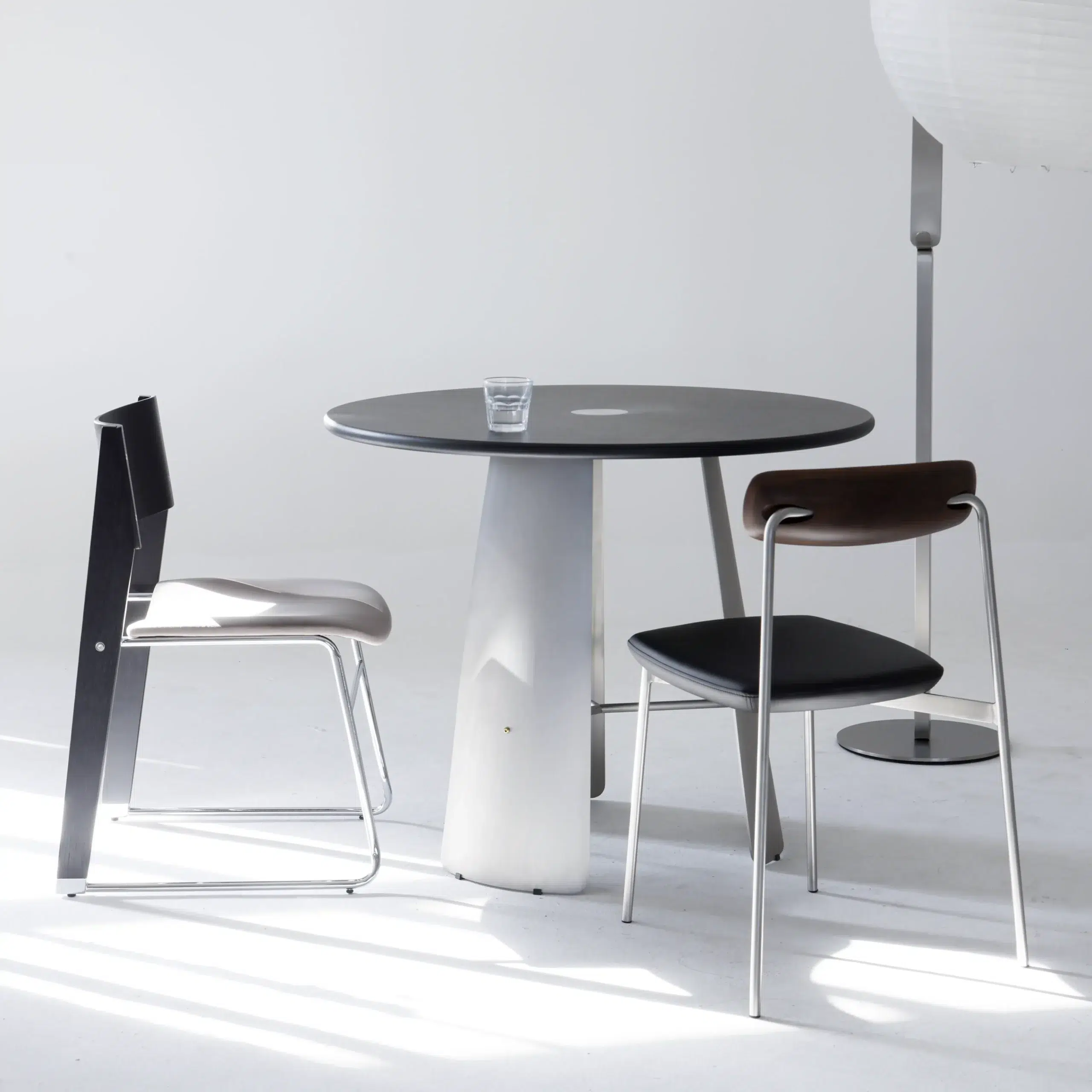
The Walk Slowly Dining Chair in Brown and Black, styled with the Monet Round Dining Table.
The Gentleman Dining Chair with subtle detailing and a streamlined silhouette, also maintains a refined presence without dominating the space. The gentle curve of the back and the structured seat offer comfort, while the minimal profile ensures that movement remains unobstructed.

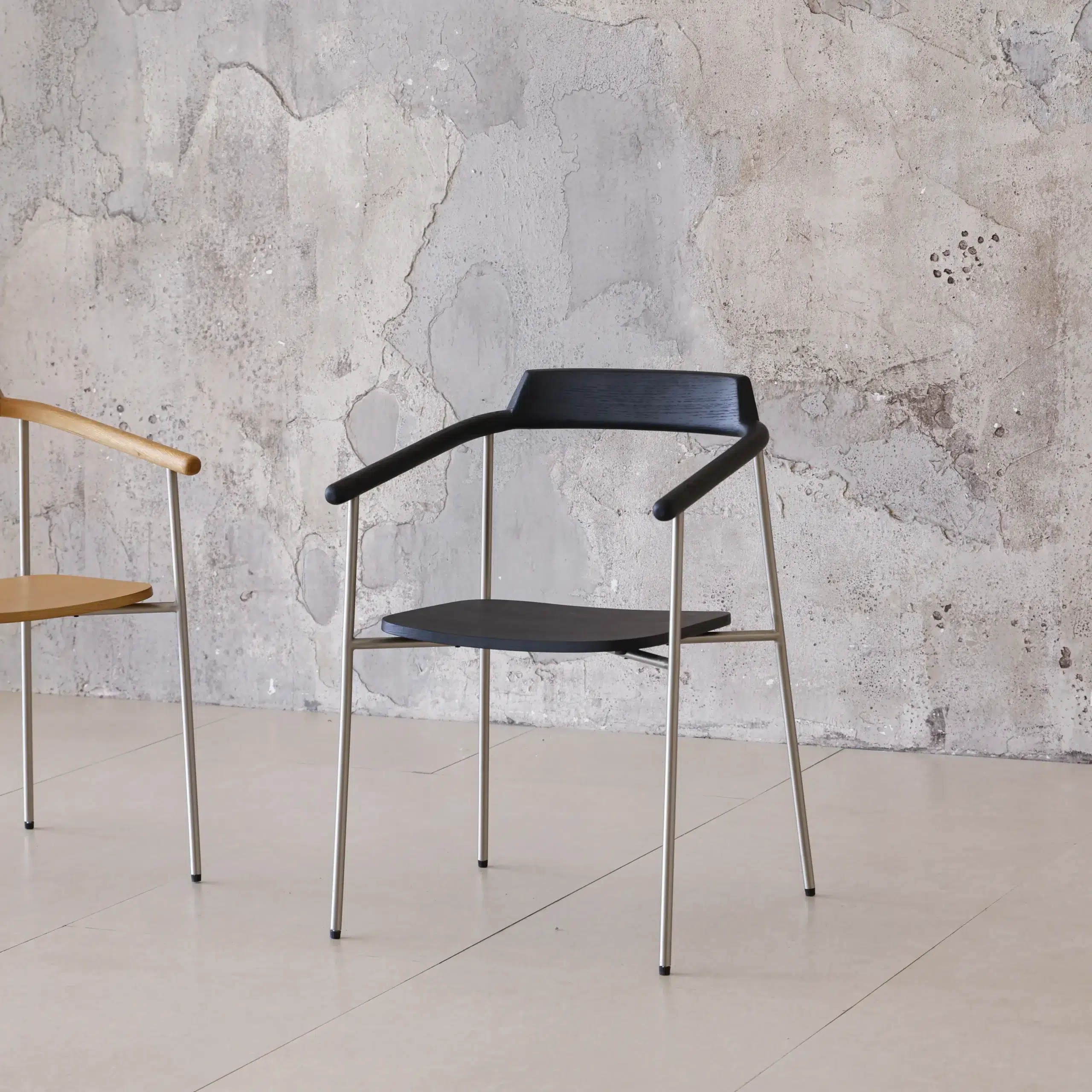
The Gentleman Dining Chair in Natural Timber and Black.
Why Proportion Matters
As architects, we always consider how a chair feels within a room, not just how it looks on its own. When chairs are well scaled:
In compact dining rooms, these details help the space feel intentional, comfortable and visually light, rather than crowded or heavy.
Common Mistakes When Choosing:
In compact dining rooms, small mistakes can significantly affect how the space feels. For this reason, avoid these mistakes:
Ignoring Clearance
The most common mistake is underestimating circulation space. As aforementioned, without at least 900 mm of clearance, chairs cannot pull out comfortably and walkways become restricted. As a result, the room feels cramped, even if the table size seems appropriate.
Choosing Bulky Chairs
Oversized armchairs and heavy cushioning increase visual weight. Although comfort matters, excessive bulk reduces openness. Therefore, slimmer profiles (such as metal frames) with structured support are often a better solution in small dining areas.
Prioritising Maximum Seating Over Proportion
Trying to fit too many seats into a compact room often disrupts balance. Instead, a slightly smaller, well-scaled dining set will always feel more intentional and functional. When chosen with intention, dining sets for small spaces can transform compact rooms into refined, functional environments that feel anything but constrained.
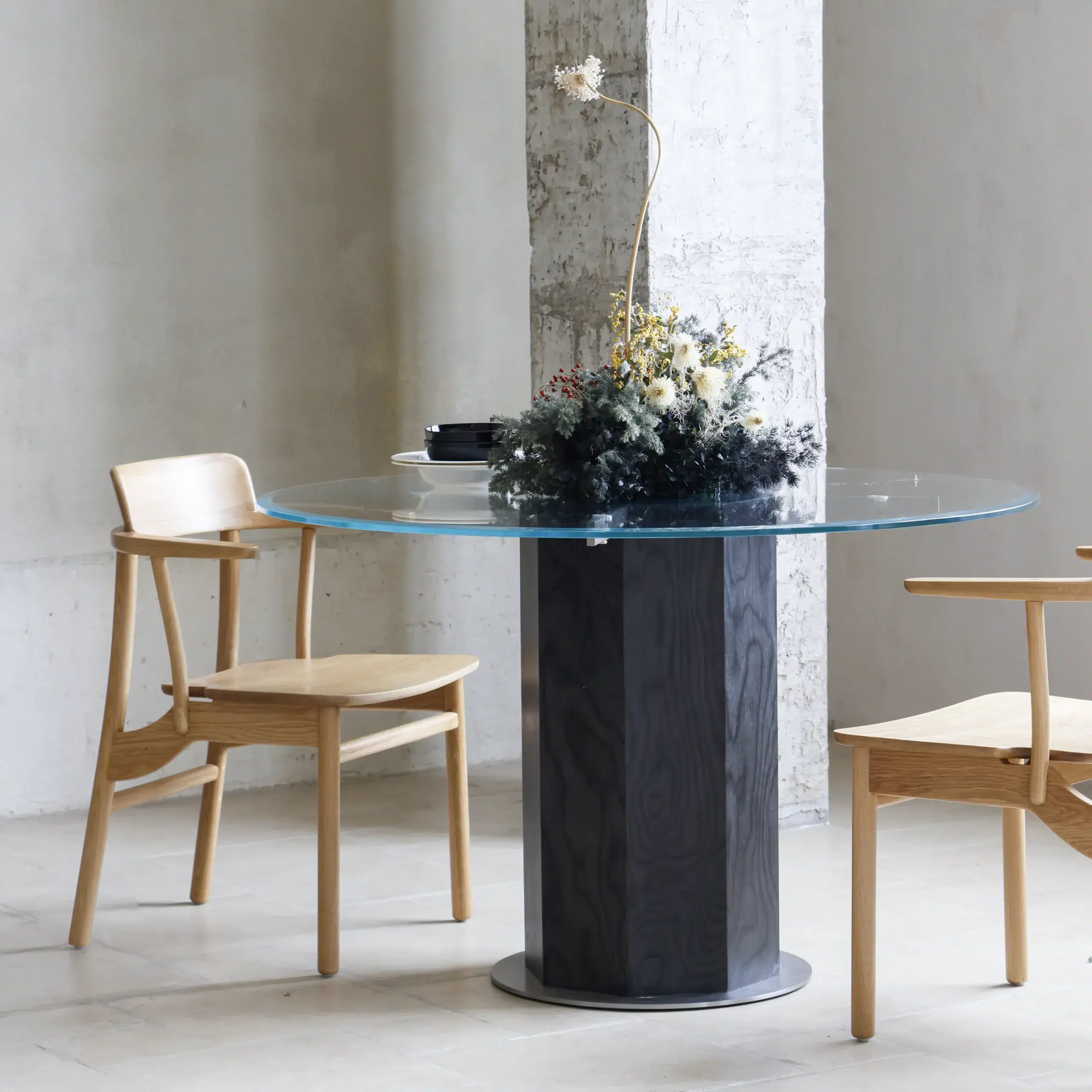
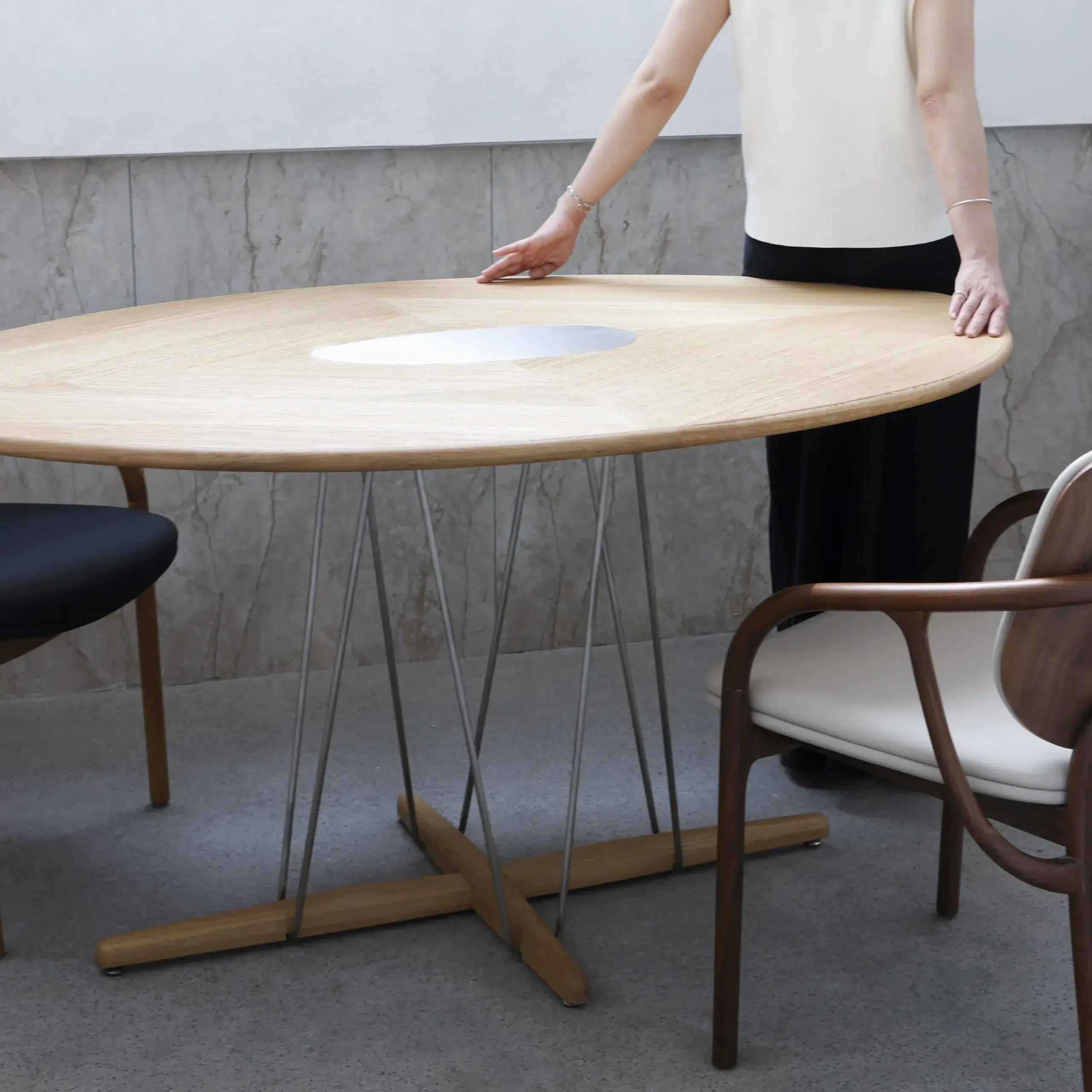
The Crown Dining Chair in Solid White Oak. The Pebble Dining Table in White Oak styled with the Mufan Dining Chair.