
Mobile Pedestals
Mobile pedestals bring movable storage close to a desk, but the useful choice starts with the space around your chair and legs. Check the full height beneath the desk, usable floor area and the movement needed to open the storage. A compact piece can still crowd a working position if it fills the knee space.
Read moreRead less
Then compare the actual drawers or compartments with your work items. Filing, locks and castor features should be read in the specification, rather than assumed from the office label. Home office storage provides the wider workday arrangement. Compare desk-side mobility with contents, clearance and the product’s movement guidance kept together.
Showing all 2 resultsSorted by recommended
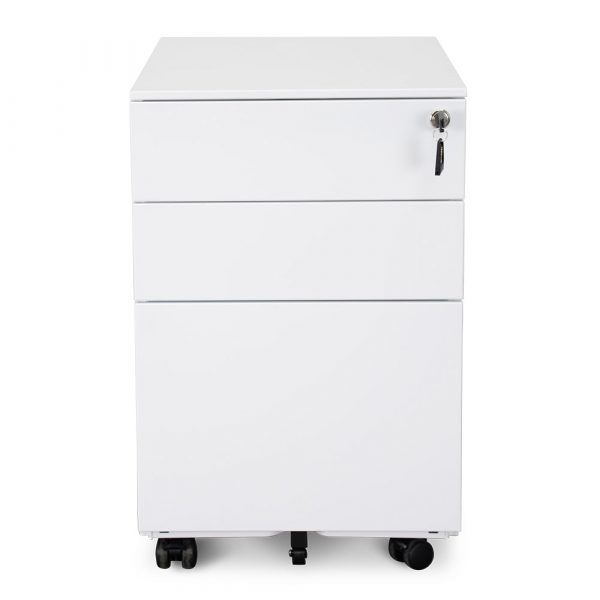


Can the pedestal fit without taking your sitting space?
Measure the opening beneath the desk at the point where the pedestal would stand. Include underside rails, legs and any fixed structure, not just tabletop height. Compare the full pedestal dimensions, including castors and top details where stated.
Leave practical room for knees, feet and the chair’s ordinary movement. A piece that fits as a rectangle may still make the working position awkward. If under-desk placement compromises those movements, consider a desk-side position instead. Desks are the separate comparison if the work surface or opening itself needs changing. Storage should support the sitting arrangement rather than occupy every available space beneath it.
Which drawers or compartments fit your work items?
Measure folders, stationery and larger everyday objects, then compare usable internal dimensions. A deeper-looking bottom drawer is not proof of a particular filing format. Check any file fittings, dividers and supplied accessories in the actual description.
Consider frequency of access as well as capacity. Frequently used items should be easy to retrieve without moving the chair into another route. Check the actual drawer-opening method and any stated extension feature. Cabinets with drawers offer a broader organisation comparison if mobility is optional. Choose the internal layout from your real work kit, rather than assuming every pedestal has the same office storage arrangement.
What does the mobile feature mean on your floor?
Read the castor and movement information for the chosen design. Confirm any locking function, stated surface suitability and instructions for moving the piece with contents. Do not assume every castor rolls or parks the same way on every floor.
Plan where the pedestal will stay during work and how its openings affect the chair or walkway. Follow assembly and use guidance, including any stated loading limits, before moving or filling it. If a fixed piece serves the routine better, office storage helps widen the comparison. Mobility should solve an actual access need, not become an extra feature that leaves storage repeatedly in the way.
Frequently Asked Questions
Compare office storage when larger or fixed compartments matter more than keeping a small unit movable beside the desk.