
Mango Wood Bookcases
Mango wood bookcases can show warm golden-brown grain and darker streaks around a reading collection. Decide how much of that character should remain visible after the shelves are filled. Broad sides or backing leave a different timber area from slim shelf edges, while varied book spines add another pattern to the same view.
Read moreRead less
Compare the selected mango components and finish with your floor and the furniture you keep. Then check clear shelf dimensions and stated loads for the real books. The timber bookcase guide helps compare wood constructions more broadly. Ask benssur about the actual components or expected grain variation when either matters to the storage wall you are planning.
Showing the single result
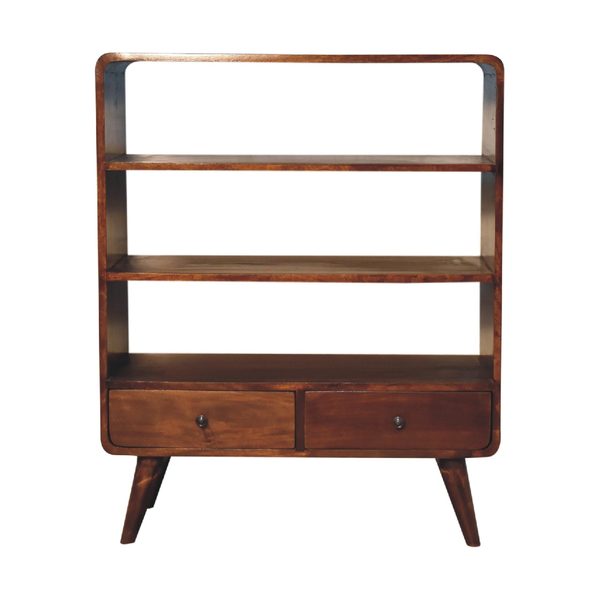

Choose mango grain on the faces that remain visible
Mango commonly has golden-brown areas and can show darker streaks or other tones. Look across the whole specified wood face rather than one close-up. A tall side panel can carry that variation through the room, while a backing may be largely hidden by densely packed books.
Compare the exposed faces with your actual book-spine colours and existing timber. Decide whether the bookcase should add another clear grain feature or show its character more quietly around the reading collection. Read which parts use mango, their construction and finish; ask about expected variation if a close colour relationship matters. Natural timber bookcases offer a wider appearance comparison without prescribing one species or shade.
Fit the book rows without hiding every timber surface
Measure your tallest and deepest books and compare clear shelf dimensions. Read stated loads, especially when whole rows of books are intended. Timber appearance is not proof of loading suitability. Check whether shelves adjust if your collection needs varied spacing.
Then decide which grain surfaces should remain visible. Closely packed books cover much of a shelf’s back, while shorter rows expose more timber. A display object may reveal a broad panel but should not be added at the expense of useful book capacity. Bookcases and bookshelves focus on this reading-collection organisation when the contents need to lead the decision. The best balance comes from your real books, not a sparse styled display.
Place and maintain the wood storage within the room
Compare the unit’s grain and finish with the floor and nearby furniture. Matching all timber is unnecessary, but the undertones and amounts of visible wood need a clear relationship. Plot the full depth beside the walking route and check the height against windows or wall features. Include any opening movement described for doors.
Follow the actual installation instructions and required wall attachment. Surface care depends on the specified finish, so do not apply oil or polish simply because mango wood is mentioned. Bookcases and shelving cover the wider placement decisions. Choose a position that keeps the book rows reachable while the mango faces you value remain visible from the room’s usual seats.